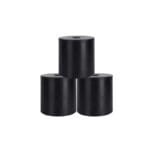
Replacing a noisy or wobbling roller without inspecting its shaft, bearings, brackets, and load often produces the same failure. A polymer conveyor roller can wear, crack, grow at the bearing seat, or run out because the surrounding system is misaligned or contaminated.
This troubleshooting guide uses the failure pattern to separate conveyor roller surface, bearing, shaft, bracket, material, and geometry causes before another replacement is installed.
Table of Contents
Capture Conveyor Roller Symptoms Under Safe Conditions
Record noise, vibration, tracking, product load, speed, washdown, temperature, and the point where the symptom occurs. Follow isolation and guarding procedures before touching the conveyor roller. OSHA 1910.212 and OSHA 1910.219 provide relevant U.S. references.
Mark roller orientation and photograph contact bands before cleaning or bearing removal.
Read Surface Wear and Tracking Marks
A centered uniform polish differs from one-sided edge wear, circumferential scoring, flat spots, or embedded debris. Map the conveyor roller surface and compare it with belt or product tracking. One-sided wear often leads back to brackets, shaft level, or frame distortion.
A flat spot may indicate seizure or long static loading. Scoring suggests contamination or a damaged mating surface.
| Symptom | Priority cause | Check |
|---|---|---|
| One-sided wear | Tracking or bracket skew | Frame and shaft alignment |
| Wobble | Runout, bearing seat, bent shaft | Dial runout by component |
| Cracked end | Thin wall or bearing press stress | Seat geometry and insertion |
| Bearing moves | Seat growth or poor retention | Installed fit and temperature |
| Surface softens | Heat or chemical attack | Service exposure and material |
Separate Roller Runout From Shaft Runout
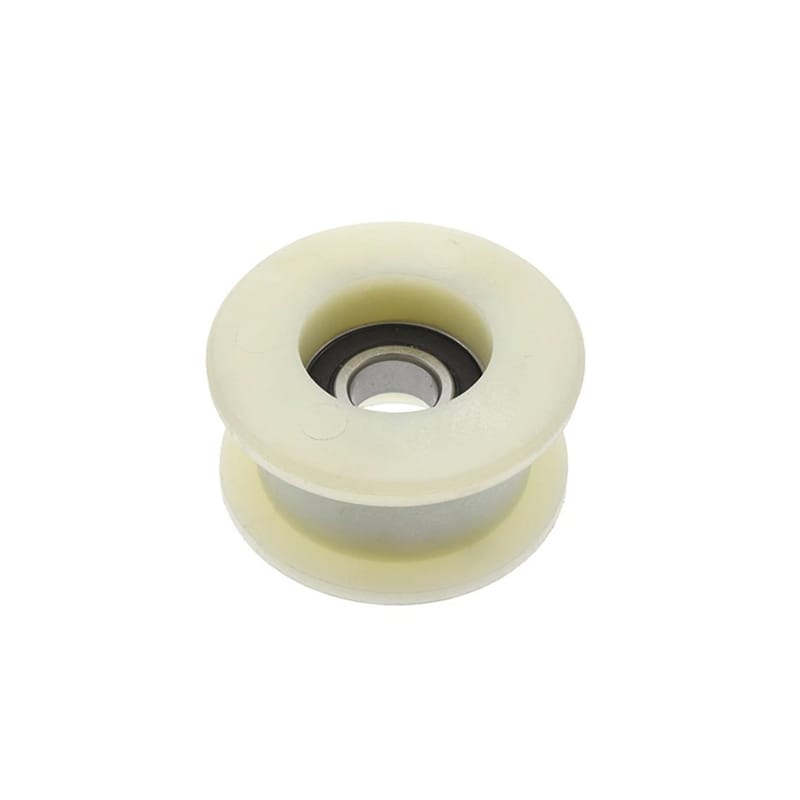
Measure the shaft alone, bearing inner race, bearing seat, and roller outside diameter using stable references. A complete assembly reading does not identify which element contributes. Rotate components separately where possible. Conveyor roller runout can also result from uneven bearing insertion.
Check both cold and operating-temperature behavior if the symptom develops after warmup.
Inspect Bearing Seats and End Walls
A press fit in an unsupported thin polymer wall creates hoop stress and distortion. Verify seat diameter, roundness, shoulder, insertion force, and tool support. The conveyor roller should retain the bearing without cracking or allowing creep to release it.
Consider metal inserts, thicker hubs, shoulders, or alternative retention when polymer alone cannot hold the fit over temperature and load.
- Support the bearing seat during insertion.
- Check shaft and bracket alignment.
- Measure conveyor roller runout before and after assembly.
- Inspect seals and contamination paths.
- Record failed-part orientation.
Review Load, Span, and Shell Thickness
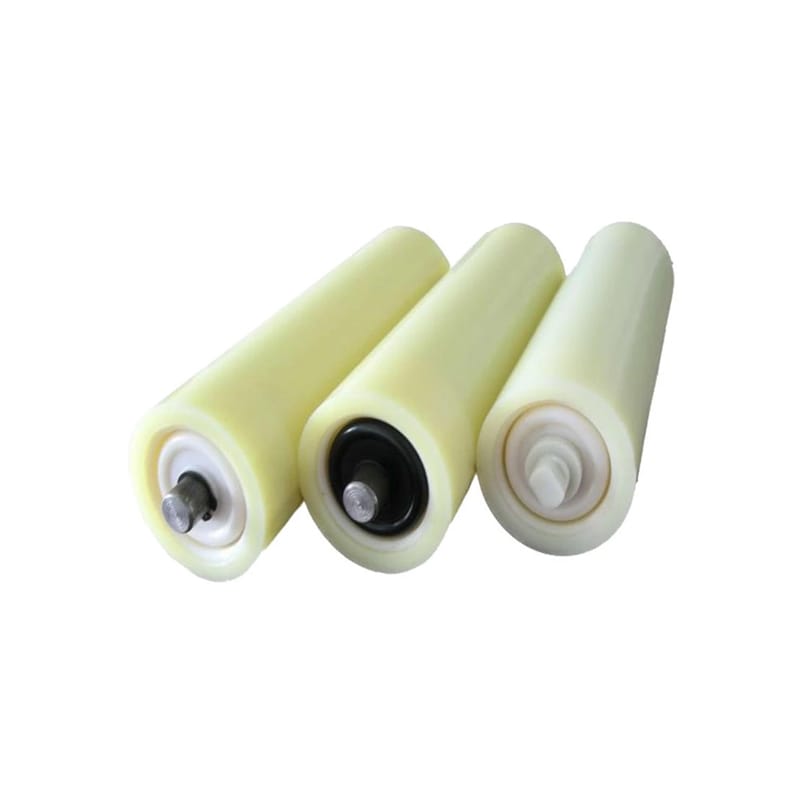
Radial load, impact, roller span, support spacing, and product distribution determine shell bending. A longer or thin conveyor roller can deflect enough to alter tracking or concentrate bearing load. Include startup jams and product drops, not only average weight.
If a crown or profile controls tracking, measure it separately from wear and runout.
Check Water, Chemicals, and Material Conditioning
Washdown can enter bearings, swell sensitive polymers, remove lubricant, or carry abrasive fines into seals. Confirm material grade and exact cleaning chemistry. ASTM D570 and ASTM D543 support controlled screening.
A nylon conveyor roller should be evaluated for moisture state; other polymers have different temperature and chemical behavior.
Verify Balance Only Where Speed Requires It
Concentricity and runout are always relevant, but dynamic balance becomes increasingly important with speed, diameter, mass distribution, and system sensitivity. Do not add a balance requirement without defining the grade, setup, and acceptance. ASTM D638 and ASTM D790 control material properties, not assembly balance.
Test the conveyor roller with production bearings and shaft support.
Confirm the Repair on the Conveyor
Correct the documented shaft, bracket, bearing, geometry, or material cause and run a controlled load trial. Measure temperature, noise, runout, tracking, and early wear. The custom nylon conveyor roller, plastic conveyor roller selection guide, and nylon conveyor roller maintenance guide provide related product and maintenance information.
Retain baseline photographs so a future conveyor roller inspection can identify change rather than relying on memory.
Bearing inspection should include seals, internal play, lubricant, and insertion damage. A contaminated or failing bearing can heat the polymer seat and enlarge it, making the loose outer ring look like the original cause. Compare bearing condition on both ends and, where possible, with another position exposed to similar load. Keep the removed components paired with their original sides.
Bracket stiffness matters when the conveyor carries intermittent side loads. A frame can align correctly while empty and spread under product, belt tension, or impact. Measure the shaft relationship in the loaded state where practical. Cracked paint, fretting, elongated holes, and shiny fastener interfaces can reveal movement that a static level check misses.
After corrective work, establish a short early-inspection interval. Check temperature, sound, surface contact, bearing retention, and runout before a developing issue damages the new assembly. Thereafter, set frequency from observed trend and risk rather than claiming the same interval for every conveyor roller installation.
Product contact can also drive the failure. Heavy items dropped near one end, belt tension, side guides, or an uneven accumulation zone can overload a position that appeared suitable from average load. Observe flow through startup, normal running, and jams. Map which operating event corresponds with temperature or noise, and protect measuring personnel using the approved safe procedure.
If the outer surface is intentionally crowned, grooved, or textured, verify that wear has not changed the profile enough to disturb tracking. Measure across the face at fixed axial positions. A uniform diameter reading can miss loss of crown, and replacing bearings will not restore the guiding geometry.
Guarding and product-contact requirements can constrain geometry and materials. Verify that end clearances do not create pinch or trapping hazards and that debris cannot enter a food, packaging, or clean process where applicable. Any regulatory or hygiene requirement should be tied to the exact grade and manufacturing route, not inferred from the polymer family.
Finally, compare the replacement assembly with an adjacent known-good position under the same load. Temperature, sound, current draw where relevant, and tracking differences can reveal whether the local frame or operating condition remains unresolved.
For product-contact applications, confirm that the selected grade, bearings, lubricant, cleaning method, and manufacturing controls meet the customer’s documented requirements. A general polymer description is not evidence of sector-specific compliance, and a change in color or additive package may require renewed review.
Frequently Asked Questions
Why does a conveyor roller wobble?
Possible causes include roller runout, an uneven bearing seat, bent shaft, loose bearing, bracket misalignment, shell distortion, or contamination.
Why does a conveyor roller crack near the bearing?
Excess press fit, thin unsupported walls, poor insertion support, impact, temperature, or a sharp seat transition can create high hoop stress.
Can a conveyor roller fail because of washdown?
Yes. Water and cleaners can affect bearings, lubricant, contamination paths, and some polymer grades. Review the complete exposure.
Should a conveyor roller be dynamically balanced?
It depends on speed, diameter, mass, support, and vibration sensitivity. Define a balance requirement only when the application needs it.
What data helps a roller failure review?
Provide roller and shaft drawings, bearings, brackets, speed, load, span, environment, washdown, tracking, photographs, wear map, runout, and installation method.
Request a Conveyor Roller Failure Review
Huadao can review custom nylon conveyor roller with shafts, bearings, brackets, loads, and failure evidence.
Share the assembly through the contact page before replacing the conveyor roller again.