Table of Contents
For CNC plastic turning, a specific review is needed when the application involves rotating sleeves with integral flanges. The central decision is to control the axis relationship rather than isolated diameters. A drawing, a material name and a low unit price do not resolve that decision on their own. The buyer needs a practical way to connect the proposed part with the assembly condition in which it must work.
This guide explains how to turn that concern into a drawing review, a sample trial and a clear purchase specification. It is intended for engineers and procurement teams evaluating CNC plastic turning, with the equipment or product designer setting the final performance limits. No universal tolerance, load rating or service-life figure is assumed.
CNC plastic turning: define the approval decision
For CNC plastic turning, start with the required outcome: control the axis relationship rather than isolated diameters. Write that outcome in a form that can be observed on the finished assembly. Include the operating situation, the part that mates with it and the point at which the result will be accepted. A supplier can respond more precisely when the function is visible than when the only instruction is to make the part “better” or “more durable”.
The application here is rotating sleeves with integral flanges. Separate its normal duty from occasional events such as startup, maintenance, cleaning or a format change. Those events may expose a weakness that does not appear in a short nominal-condition inspection. For a CNC plastic turning project, record which events are essential to the approval and which can be investigated later. This keeps the sample program focused without leaving the main uncertainty unresolved.
What changes the behavior of CNC plastic turning
Independent chucking operations can shift the bore axis relative to the flange. Soft jaws can also temporarily squeeze a thin sleeve out of round.
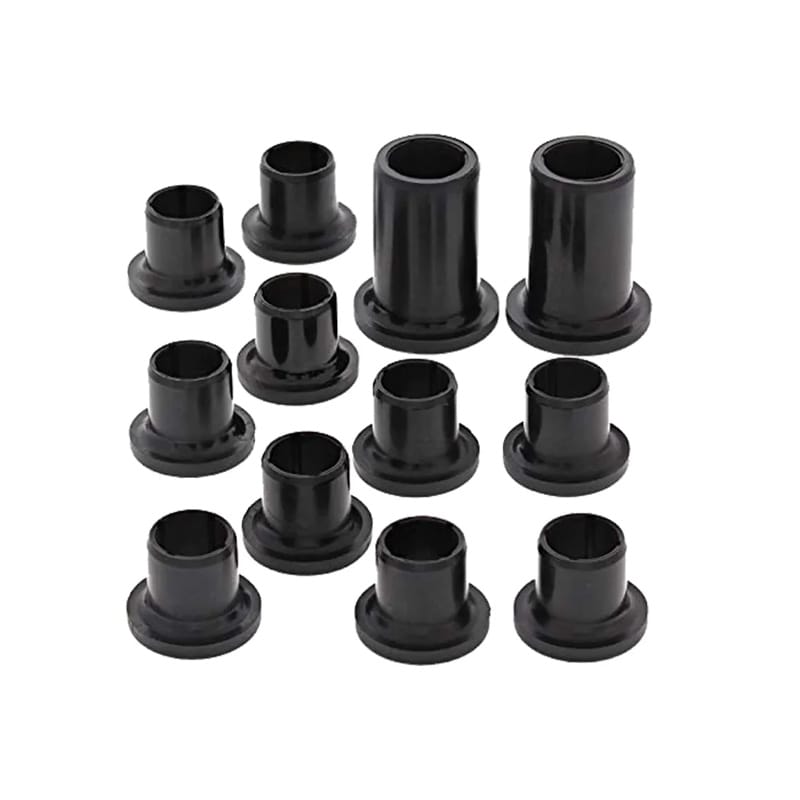
The practical implication is to evaluate the relevant interface, not just the isolated component. A flange that wobbles despite an acceptable outer diameter can force a connected assembly to oscillate. That observation should guide the sample review. Before changing material, geometry or supplier, determine whether the issue comes from the part itself, the mating hardware, the assembly procedure or the way the result is measured. Changing several of these at once can produce a different result without showing which change actually mattered.
Keep a short assumption list for CNC plastic turning. For every assumption that affects fit or function, identify an owner and a way to check it. Examples include an unverified mating dimension, an undefined contact condition or an unknown material grade. Resolve the highest-impact uncertainty before releasing expensive tooling or a large batch. An assumption that remains open should stay visible in the quotation and sample plan.
Application detail to resolve for CNC plastic turning
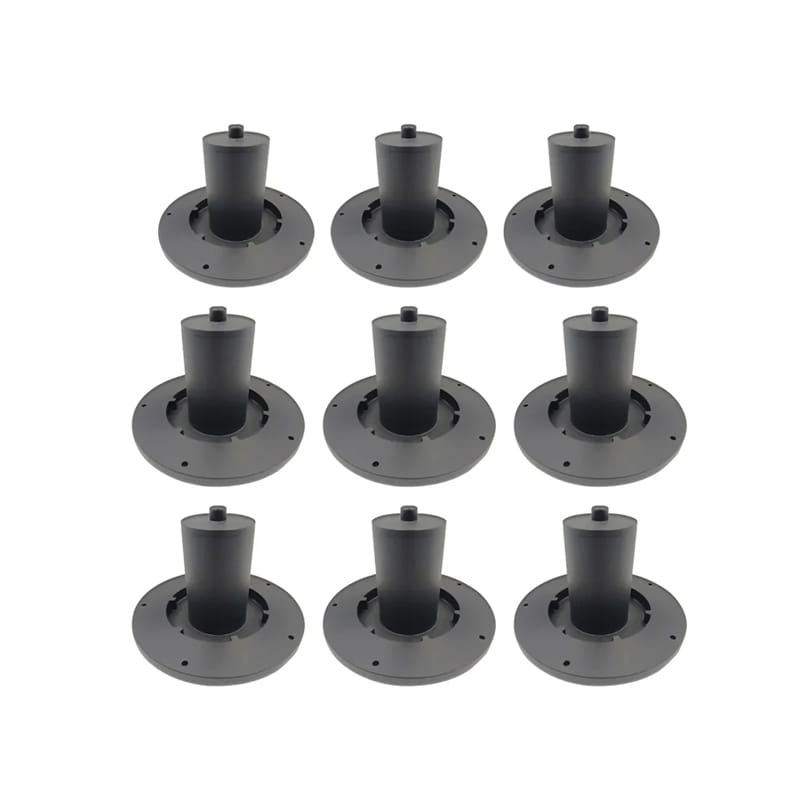
For a flanged sleeve, mark the face that actually contacts the rotating assembly. The opposite cosmetic face may be less important than the shoulder controlling axial position. Inspection should follow that load and location path. If the bore is interrupted or very thin, discuss a suitable locating mandrel before accepting a runout report. The inspection fixture must not force the sleeve into a roundness condition that the real shaft will not create.
Drawing requirements for CNC plastic turning
Reference the functional bore as a datum where appropriate and define face runout, wall thickness and the measurement state.
A useful drawing for CNC plastic turning also distinguishes the features that locate the component from those that only provide clearance. Identify the measurement reference and the condition in which the dimension applies. Where an assembly view communicates the load or contact path better than an isolated part view, include it. An annotated photograph can support the drawing, but it should not replace a dimension or a material callout that needs to be controlled.
Material state and machining route for CNC plastic turning
A machined plastic component should be specified by polymer grade and stock form as well as geometry. Machining makes individual features accessible for inspection, but workholding and heat can affect the shape seen during processing. Ask which dimensions are inspected after the part is released. If conditioning or stabilization is needed, agree on the method before comparing supplier and customer results. A material change may affect the machining plan and the functional fit even when the drawing dimensions remain unchanged.
Plan roughing, support and finishing together for CNC plastic turning
The stock blank, holding method and cutting sequence form one manufacturing plan. Removing a large pocket can leave a thin section that responds differently to the next operation. It can be useful to rough the geometry, allow the part to stabilize under an agreed condition and then finish critical interfaces, but the need depends on the material and shape. Ask the supplier to explain that choice rather than prescribing a universal rest time. Temporary supports or machining tabs should be agreed before production because their removal can affect appearance and access.
Close the loop on discrepancies for CNC plastic turning
When supplier and customer results disagree, first compare the samples and methods. Confirm that both teams used the same drawing revision and measured the same feature in the same condition. Review support, contact force and elapsed time before assuming that either instrument is wrong. Record the resolution as a change to the inspection plan if the method was ambiguous. A one-time concession should identify the affected lot and the accepted deviation. It should not silently replace the requirement for all future orders.
Compare evidence before committing to production
The following comparison helps a buyer of CNC plastic turning decide what evidence is still missing. Each route answers a different question. A completed dimensional report should not be used as a substitute for an application trial when the concern is contact, movement, exposure or assembly behavior.
| Review route | What it establishes | What remains to be checked |
|---|---|---|
| Drawing and specification review | Agreement on geometry, grade and the intended interface | Behavior of the physical component in the actual assembly |
| Identified sample inspection | Measured characteristics under a stated method and condition | Performance through the operating or exposure sequence |
| Assembly or application trial | Check the released component on the intended locating feature and compare several rotational positions with a low-force method. | Repeatability across the approved production configuration |
| Production lot acceptance | Identity, condition and agreed evidence for the delivered batch | Any changed duty, revision or unapproved material substitution |
Build a representative CNC plastic turning trial
Check the released component on the intended locating feature and compare several rotational positions with a low-force method.
Identify the samples and record their starting condition before testing. Use the intended mating parts, tools and assembly sequence where they affect the result. For CNC plastic turning, the first trial should answer the main question rather than combine every possible change. Compare a proposed change with a retained reference under the same conditions. If both the material and geometry must change, record that limitation so the result is not incorrectly attributed to only one variable.
Interpreting test results for CNC plastic turning
A flange that wobbles despite an acceptable outer diameter can force a connected assembly to oscillate.
When a project involving CNC plastic turning does not meet the intended outcome, preserve the sample and review the evidence in order. Confirm identity and revision first, then measurement method, assembly condition and exposure. Compare the result with the retained reference and inspect the mating component. A dimensional deviation and an assembly-method error require different corrective actions. Replacing the supplier or tightening every tolerance before this review can add cost without addressing the cause.
Prepare a quotation package for CNC plastic turning
Agree which features are finished in one setup and ask how chuck distortion is distinguished from genuine out-of-roundness.
Give every supplier of CNC plastic turning the same technical package and quantity assumptions. Separate prototype, first-article and repeat-production requirements. Identify included hardware, finishing, packaging and inspection work. Ask the supplier to state exceptions rather than leaving them hidden in a broad promise of compliance. A comparable quote identifies the work being purchased as well as the unit price.
Repeat orders and change control for CNC plastic turning
After approval, retain the reference information for CNC plastic turning with the part number. A repeat order should state the accepted drawing revision and material, and identify any change in duty or assembly. Review supplier-proposed substitutions before they enter production. If an old revision is still usable for a limited purpose, keep its disposition explicit so it does not become mixed with the current design.
Related products and technical reading for CNC plastic turning
For a related manufacturing route, review Huadao’s POM CNC Turning Parts and CNC Machining Plastic Product range. The customization service describes the design-to-sample workflow. Discuss project-specific availability and requirements before treating a listed capability as approval for a particular application.
For background terminology and material or design considerations, consult Ensinger machining FAQs. Use the current grade documentation and the applicable project specification for numerical design values. The checklists in this article are an original procurement and engineering review framework, not a replacement for a material data sheet or an equipment design approval.
Discuss the drawing and sample plan with Huadao
If your project involves CNC plastic turning, send Huadao the drawing revision, the application conditions, expected quantities and the main uncertainty to resolve. For rotating sleeves with integral flanges, explain that the objective is to control the axis relationship rather than isolated diameters. Include the mating-part information and any sample or test evidence already available.
Use the inquiry form below to request a feasibility review and a project-specific quotation for CNC plastic turning. Ask Huadao to identify unresolved assumptions before tooling or production begins.
Frequently asked questions
What should be confirmed first for CNC plastic turning?
Start with the application and the decision to control the axis relationship rather than isolated diameters. Independent chucking operations can shift the bore axis relative to the flange. Soft jaws can also temporarily squeeze a thin sleeve out of round. The first approval should therefore connect the proposed component with the real interface and operating condition, rather than rely only on appearance or a generic material description.
What drawing information is needed for CNC plastic turning?
Reference the functional bore as a datum where appropriate and define face runout, wall thickness and the measurement state. Include the approved revision and the mating-part information needed to interpret those features. Mark unresolved inputs explicitly so the supplier can raise questions before committing to production.
How should samples be evaluated for CNC plastic turning?
Check the released component on the intended locating feature and compare several rotational positions with a low-force method. Identify the sample and agree on the acceptance criteria before testing. Retain the starting measurements and repeat the same method after the relevant assembly, operating or exposure sequence.
What can a visual check miss when reviewing CNC plastic turning?
A flange that wobbles despite an acceptable outer diameter can force a connected assembly to oscillate. Visual inspection remains useful for condition and obvious damage, but it should be paired with the measurement or application check that addresses the functional concern.
What should a quotation for CNC plastic turning include?
Agree which features are finished in one setup and ask how chuck distortion is distinguished from genuine out-of-roundness. The proposal should also identify the drawing revision, material designation, quantity, sample requirements, included inspection work and any exceptions that still need buyer approval.