Table of Contents
UHMWPE wear parts are often small components, but they can decide whether a conveyor line runs smoothly or becomes a repeated maintenance problem. In many packaging, bottling, food processing, logistics, and industrial conveying systems, chains, belts, products, and frames all depend on low-friction plastic contact surfaces. When those contact surfaces are worn, misaligned, or made from the wrong profile, the result can be noise, unstable product movement, higher drive load, and avoidable downtime.
This guide is written for maintenance engineers, equipment buyers, and OEM teams who need a practical way to inspect and manage UHMWPE wear parts in conveyor systems. It does not try to turn every reader into a polymer scientist. Instead, it focuses on the questions that usually matter before replacement: what should be checked, when should a part be replaced, what information should be sent to a supplier, and how can the next batch perform more consistently?
Why UHMWPE Wear Parts Are Used in Conveyor Lines
UHMWPE wear parts are widely used because they combine low friction, good abrasion resistance, impact resistance, and stable performance in sliding applications. The material name UHMWPE means ultra-high molecular weight polyethylene. For a general material background, the UHMWPE overview on Wikipedia explains the polymer family and common uses. In real conveyor maintenance, the value is simpler: UHMWPE helps create a smoother contact surface between moving parts and the equipment structure.
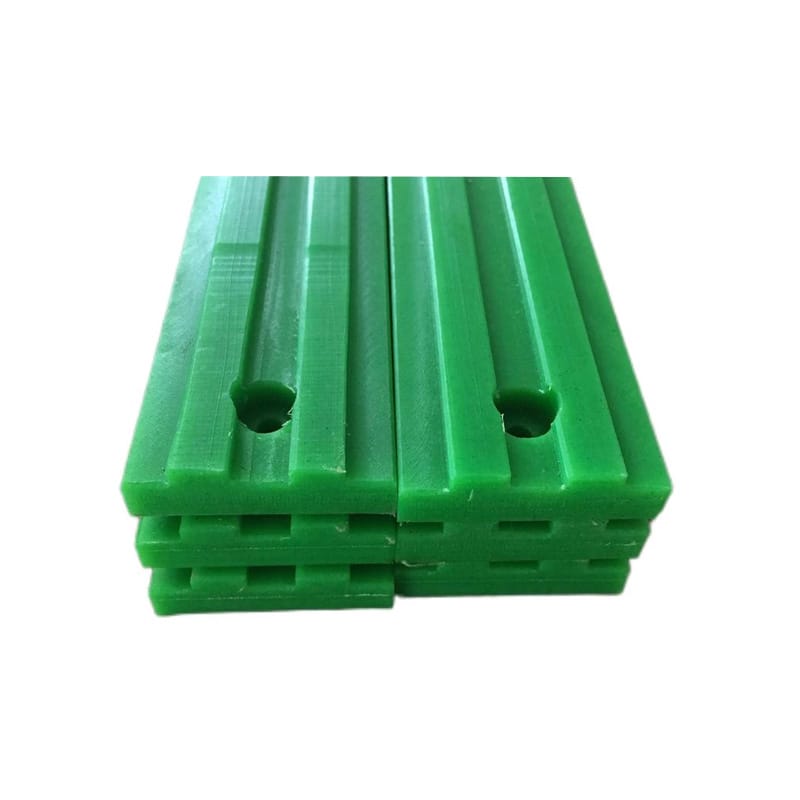
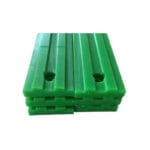
Common UHMWPE wear parts include conveyor wear strips, chain guide rails, sliding blocks, wear pads, liners, spacers, and custom CNC machined components. They are often installed where chains slide continuously, where products need controlled transfer, or where metal-to-metal contact would create too much noise or wear. Huadao supplies related UHMWPE conveyor wear strip products and broader custom CNC machined plastic wear parts for industrial equipment.
Where Conveyor Problems Usually Start
Most issues with UHMWPE wear parts do not appear suddenly. They develop from friction, abrasive contamination, incorrect mounting, poor alignment, heat, vibration, or a profile that does not match the chain or belt. A new wear strip may work well during the first installation, but if the frame is not straight or fasteners are too tight, the part can wear unevenly. If the conveyor is washed down with chemicals, the surrounding materials and fastening method also need review.
The maintenance team should treat UHMWPE wear parts as part of a system, not as isolated plastic strips. The chain condition, sprocket alignment, conveyor speed, product load, lubrication condition, cleaning method, and installation temperature all influence service life. A replacement part with the same shape may fail again if the real cause is a bent support rail or incorrect chain tension.
Inspection Checklist Before Replacing Parts
Before ordering new UHMWPE wear parts, inspect the existing parts carefully. This helps the supplier understand whether the project needs a direct replacement or a design adjustment. It also prevents the common mistake of copying a worn part without knowing which dimensions have already changed during service.
- Check whether wear is even across the full length or concentrated in one area.
- Look for grooves, melted surfaces, cracks, burrs, or deformation near fasteners.
- Measure the original mounting hole positions if they are still reliable.
- Confirm whether the chain, belt, or product touches the intended surface.
- Review whether cleaning chemicals, heat, dust, or abrasive particles are present.
- Take photos from the top, side, end profile, and installation position.
If a part is only polished on the contact surface, replacement may be routine. If it is deeply grooved, cracked, warped, or worn more on one side, the equipment condition should be reviewed before another batch of UHMWPE wear parts is installed.
Common Wear Patterns and What They Mean
| Observed condition | Possible cause | What to check next |
|---|---|---|
| One side wears faster | Frame misalignment or uneven chain load | Rail straightness, chain path, sprocket position |
| Deep grooves appear early | Abrasive dust, hard particles, rough chain surface | Cleaning routine, chain condition, material grade |
| Surface looks melted or glossy | Excessive friction heat or speed | Speed, load, contact pressure, lubrication |
| Cracks near fasteners | Over-tightened screws or poor hole design | Hole clearance, countersink design, thermal movement |
| Noise increases after replacement | Wrong profile, poor edge finish, alignment error | Profile dimensions, chamfers, mounting position |
This type of inspection is useful because UHMWPE wear parts rarely fail for only one reason. A wear strip may be the visible problem, while the root cause is poor alignment or a chain that has stretched beyond its normal operating condition. For broader conveyor safety and guarding awareness, maintenance teams can also review the OSHA machine guarding guidance when working around moving equipment.
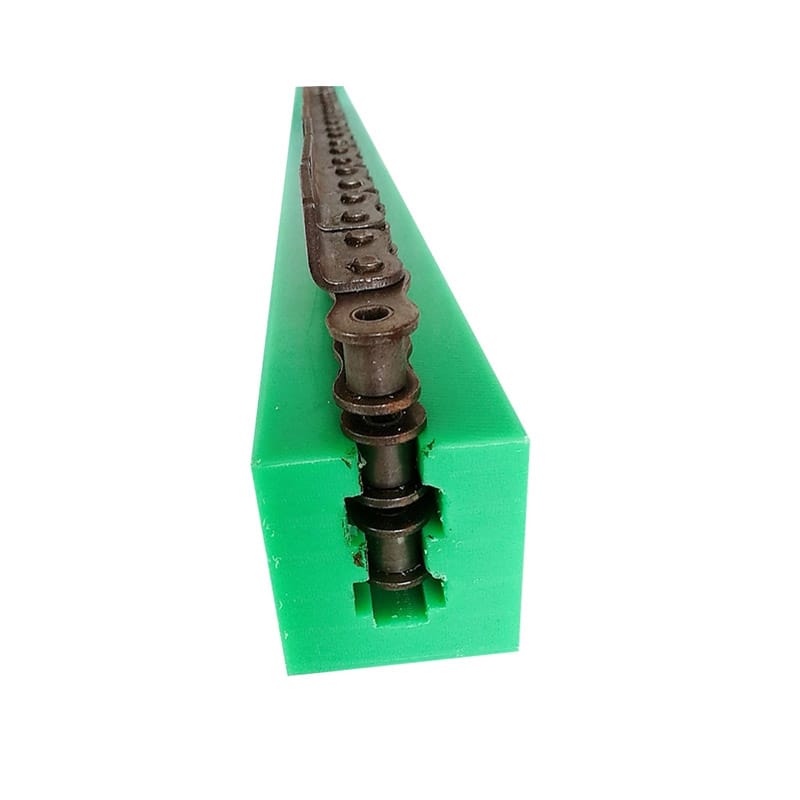
Maintenance Practices That Improve Service Life
Good maintenance does not mean replacing UHMWPE wear parts as late as possible. It means replacing them before they affect chain movement, product transfer, or machine stability. A planned replacement is usually easier to manage than an emergency stop caused by a broken guide, loose strip, or damaged mounting surface.
Keep the conveyor path clean enough for the application. Dust, product residue, metal particles, or broken chain fragments can act like abrasives. Check fasteners during scheduled maintenance, but avoid over-tightening plastic components. UHMWPE wear parts need secure installation, yet they also need enough practical allowance for thermal movement and normal material behavior.
Where possible, record installation dates, operating hours, line speed, product type, and replacement reason. Even a simple maintenance note can reveal whether service life is stable or becoming shorter. If one line consumes UHMWPE wear parts much faster than similar lines, it is a signal to review alignment, load, cleaning, and operating conditions.
When to Replace Instead of Rework
Some UHMWPE wear parts can continue working after light surface polishing or minor edge wear. Others should be replaced because their geometry controls the chain or product path. If the part has lost its guiding profile, if the mounting holes are elongated, or if the surface has deep uneven grooves, replacement is usually the better choice.
Replacement is also recommended when the part creates abnormal noise, increases drive resistance, or allows the chain to move outside the intended track. A guide rail or wear strip is not only a sacrificial surface. It also supports repeatable movement. Once the shape is no longer reliable, the conveyor may begin damaging other components.
Design Details to Confirm With a Supplier
When ordering custom UHMWPE wear parts, the drawing should show more than the outside size. The most important details are often the contact surface, groove profile, hole type, hole spacing, edge finish, and installation direction. If the supplier only receives a worn sample, they may copy damage as if it were part of the original design.
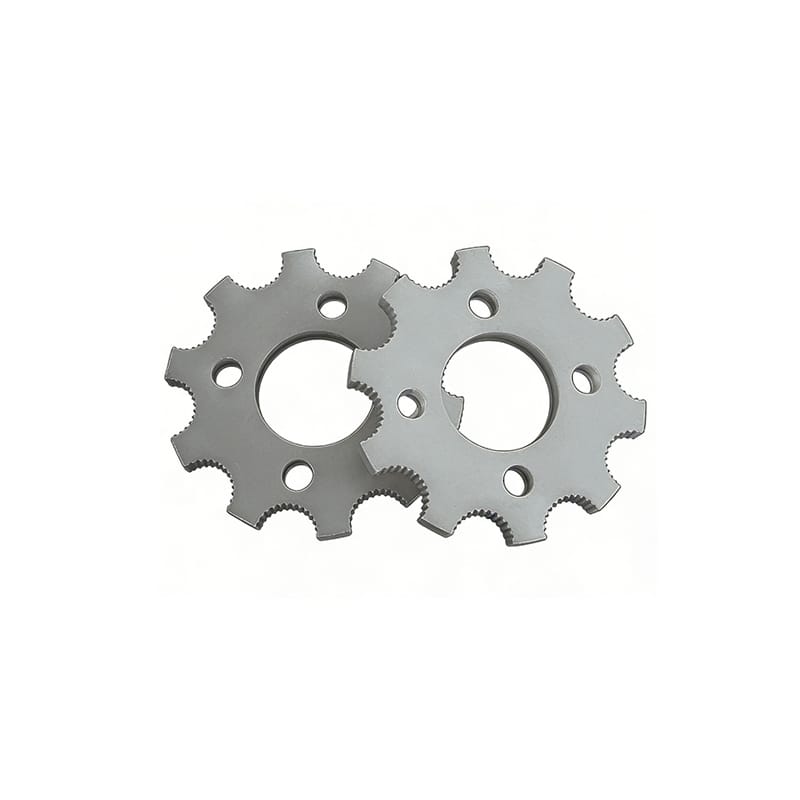
For custom projects, send a 2D drawing or 3D file when available. If there is no drawing, send clear photos with a ruler or caliper for scale. Mark the worn areas and explain the problem in plain language. For example: the chain is noisy, the strip wears faster at the inlet, the part cracks near screws, or the conveyor needs smoother product transfer. Huadao can review drawings and samples through its customized rubber and plastic parts service.
It is also useful to compare related parts in the system. A conveyor may use UHMWPE guide rails, plastic rollers, and PU belt cleaners in the same area. If the maintenance issue involves product movement or belt cleaning, related components may need review. Huadao’s guides on custom plastic chain guide rail selection and plastic conveyor rollers can help buyers evaluate nearby parts as part of the same conveyor system.
Material and Quality Questions Buyers Should Ask
Not every white or green plastic guide is automatically suitable for the same job. Buyers should confirm whether UHMWPE, HDPE, nylon, POM, or another engineering plastic is more appropriate for the load, speed, environment, and tolerance requirement. UHMWPE wear parts are often a strong choice for sliding and abrasion-contact applications, but very tight tolerance parts or high-temperature areas may need a different discussion.
Ask whether the supplier can control dimensions, hole positions, surface finish, burr removal, and batch consistency. Quality management references such as ISO 9001 can help buyers understand general quality system language, but the practical question is still whether the supplier checks the details that matter for the actual part. For food or hygiene-sensitive equipment, material compliance must be reviewed for the specific application and market. Some polymer applications may involve regulatory references such as the U.S. FDA food-contact polymer regulations in 21 CFR Part 177, but suitability depends on the exact material grade and use condition.
Information to Send for an Accurate Quotation
A complete inquiry helps avoid delays and wrong assumptions. For UHMWPE wear parts, include the part name, drawing, quantity, dimensions, material preference, color, working temperature, conveyor speed if relevant, contact material, and the reason for replacement. If the part is used with a chain, include chain type or photos. If it is a liner or sliding block, show how it is mounted and what surface moves across it.
- 2D drawing, 3D file, sample, or clear photos
- Overall length, width, thickness, and profile dimensions
- Critical tolerances and mounting hole details
- Operating environment, cleaning method, and product contact condition
- Wear problem, noise issue, or replacement target
- Prototype, maintenance batch, or long-term production requirement
For buyers comparing machining and material options, Huadao’s custom CNC plastic parts DFM guide explains why tolerance, wall thickness, holes, and edge finishing should be discussed before production. These points are especially relevant when UHMWPE wear parts are copied from old samples or redesigned for a new conveyor frame.
Practical FAQ
How often should UHMWPE wear parts be replaced?
There is no universal replacement interval. It depends on load, speed, chain condition, abrasive contamination, cleaning method, and part profile. The best approach is to inspect UHMWPE wear parts during planned maintenance and record wear patterns over time.
Can worn UHMWPE wear parts be copied from samples?
Yes, but the worn areas should be clearly marked. A supplier needs to know which surfaces are original and which surfaces have changed during use. Photos of the installation position are very helpful.
Are UHMWPE wear parts always better than HDPE?
Not always. UHMWPE is commonly selected for sliding and abrasion resistance, while HDPE can be practical for support pads, blocks, and general industrial components. The best material depends on the function and working condition. Huadao also offers UHMWPE and HDPE plastic mechanical parts for different equipment needs.
What is the most common ordering mistake?
The most common mistake is sending only a part name or a worn sample without application details. UHMWPE wear parts should be ordered with information about load, movement, mounting, profile, and the problem the replacement should solve.
Conclusion
UHMWPE wear parts can improve conveyor reliability when they are selected, installed, and maintained as part of the full machine system. The key is to look beyond the plastic component itself. Wear pattern, chain path, alignment, surface finish, fasteners, and operating environment all influence performance.
For maintenance teams, regular inspection helps identify problems before they become line stoppages. For buyers, a clear inquiry with drawings, photos, working conditions, and replacement goals helps the supplier recommend a more suitable solution. If your conveyor system needs custom wear strips, chain guides, liners, or other UHMWPE wear parts, visit Huadao’s UHMWPE parts category or contact Huadao to discuss drawings, samples, and application requirements.