목차
For CNC plastic turning, a specific review is needed when the application involves rotating sleeves with integral flanges. The central decision is to control the axis relationship rather than isolated diameters. A drawing, a material name and a low unit price do not resolve that decision on their own. The buyer needs a practical way to connect the proposed part with the assembly condition in which it must work.
This guide explains how to turn that concern into a drawing review, a sample trial and a clear purchase specification. It is intended for engineers and procurement teams evaluating CNC plastic turning, with the equipment or product designer setting the final performance limits. No universal tolerance, load rating or service-life figure is assumed.
CNC plastic turning: define the approval decision
For CNC plastic turning, start with the required outcome: control the axis relationship rather than isolated diameters. Write that outcome in a form that can be observed on the finished assembly. Include the operating situation, the part that mates with it and the point at which the result will be accepted. A supplier can respond more precisely when the function is visible than when the only instruction is to make the part “better” or “more durable”.
The application here is rotating sleeves with integral flanges. Separate its normal duty from occasional events such as startup, maintenance, cleaning or a format change. Those events may expose a weakness that does not appear in a short nominal-condition inspection. For a CNC plastic turning project, record which events are essential to the approval and which can be investigated later. This keeps the sample program focused without leaving the main uncertainty unresolved.
What changes the behavior of CNC plastic turning
Independent chucking operations can shift the bore axis relative to the flange. Soft jaws can also temporarily squeeze a thin sleeve out of round.
The practical implication is to evaluate the relevant interface, not just the isolated component. A flange that wobbles despite an acceptable outer diameter can force a connected assembly to oscillate. That observation should guide the sample review. Before changing material, geometry or supplier, determine whether the issue comes from the part itself, the mating hardware, the assembly procedure or the way the result is measured. Changing several of these at once can produce a different result without showing which change actually mattered.
Keep a short assumption list for CNC plastic turning. For every assumption that affects fit or function, identify an owner and a way to check it. Examples include an unverified mating dimension, an undefined contact condition or an unknown material grade. Resolve the highest-impact uncertainty before releasing expensive tooling or a large batch. An assumption that remains open should stay visible in the quotation and sample plan.
Application detail to resolve for CNC plastic turning
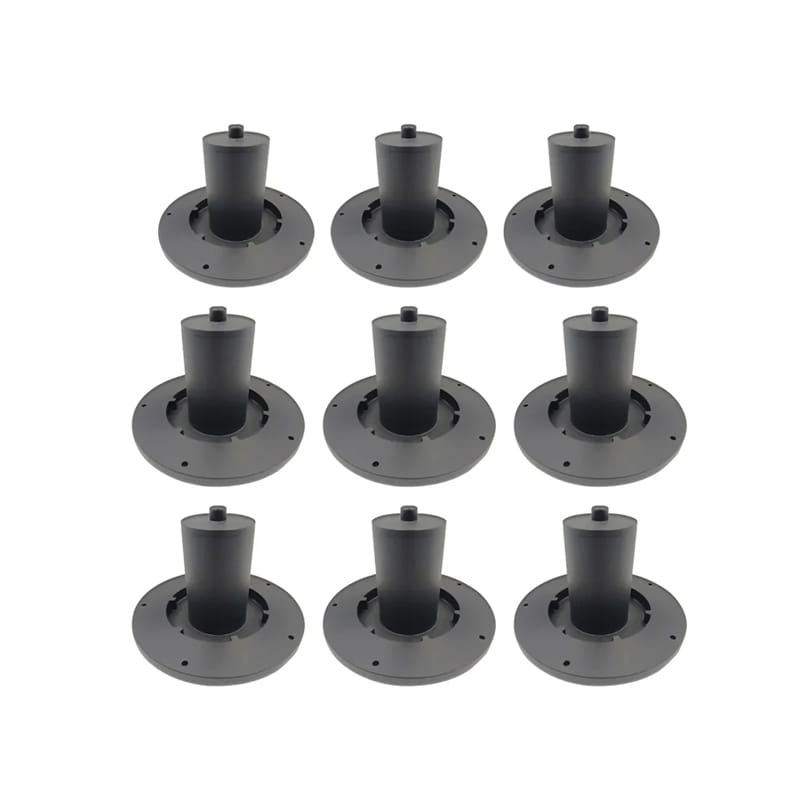
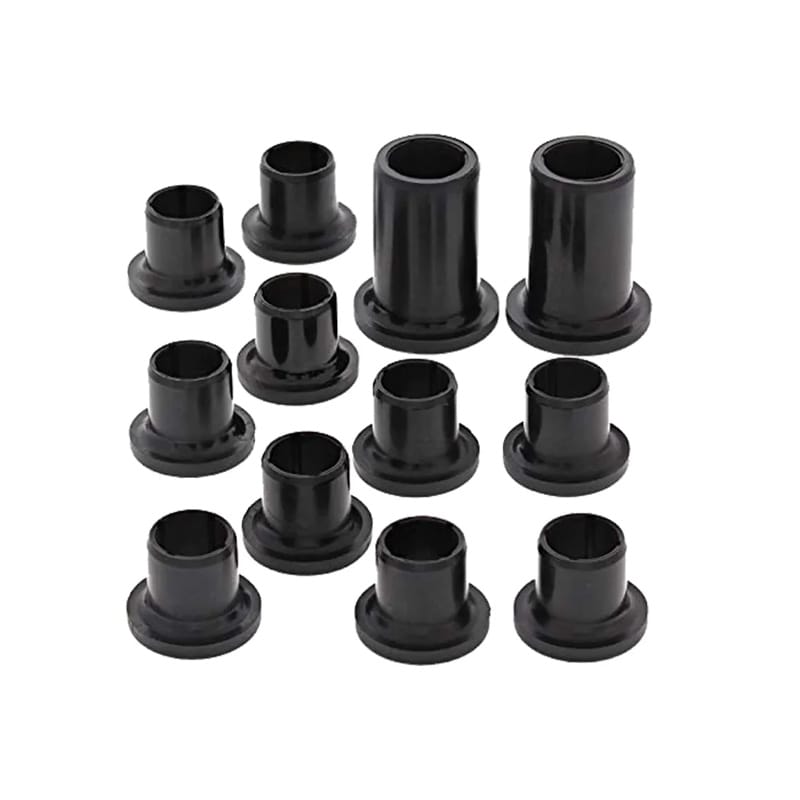
For a flanged sleeve, mark the face that actually contacts the rotating assembly. The opposite cosmetic face may be less important than the shoulder controlling axial position. Inspection should follow that load and location path. If the bore is interrupted or very thin, discuss a suitable locating mandrel before accepting a runout report. The inspection fixture must not force the sleeve into a roundness condition that the real shaft will not create.
Drawing requirements for CNC plastic turning
Reference the functional bore as a datum where appropriate and define face runout, wall thickness and the measurement state.
A useful drawing for CNC plastic turning also distinguishes the features that locate the component from those that only provide clearance. Identify the measurement reference and the condition in which the dimension applies. Where an assembly view communicates the load or contact path better than an isolated part view, include it. An annotated photograph can support the drawing, but it should not replace a dimension or a material callout that needs to be controlled.
Material state and machining route for CNC plastic turning
가공된 플라스틱 부품은 폴리머 등급과 스톡 형태뿐만 아니라 형상에 따라 지정해야 합니다. 가공을 통해 개별 기능을 검사에 접근할 수 있지만,작업 유지 및 열은 가공 중에 보이는 형상에 영향을 줄 수 있습니다. 부품이 해제된 후 어떤 치수를 검사하는지 물어보거나 컨디셔닝 또는 안정화가 필요한 경우 공급업체와 고객의 결과를 비교하기 전에 방법에 동의하십시오. 도면 치수가 변경되지 않은 경우에도 재료 변경이 가공 계획 및 기능적 적합성에 영향을 미칠 수 있습니다.
Plan roughing, support and finishing together for CNC plastic turning
재고 공백,유지 방법 및 절단 순서는 하나의 제조 계획을 형성합니다. 큰 포켓을 제거하면 다음 작업에 다르게 반응하는 얇은 부분이 남을 수 있습니다. 형상을 거칠게하고 부품이 합의 된 조건에서 안정화되도록 한 다음 중요한 인터페이스를 마무리하는 것이 유용 할 수 있지만 필요성은 재료와 모양에 따라 다릅니다. 공급 업체에 보편적 인 휴식 시간을 규정하기보다는 선택을 설명하도록 요청하십시오. 임시 지지대 또는 가공 탭은 제거가 외관 및 접근에 영향을 줄 수 있기 때문에 생산 전에 합의해야합니다.
Close the loop on discrepancies for CNC plastic turning
공급자와 고객 결과가 일치하지 않을 경우,먼저 샘플과 방법을 비교합니다. 두 팀 모두 동일한 도면 개정을 사용했으며 동일한 조건에서 동일한 기능을 측정했음을 확인합니다. 두 장비 중 하나가 잘못되었다고 가정하기 전에 지원,접촉력 및 경과 시간을 검토합니다. 방법이 모호한 경우 검사 계획의 변경으로 해상도를 기록합니다. 일회성 양보는 영향을받는 로트와 허용 된 편차를 식별해야합니다. 향후 모든 주문에 대한 요구 사항을 조용히 대체해서는 안됩니다.
생산을 약속하기 전에 증거를 비교하십시오
The following comparison helps a buyer of CNC plastic turning decide what evidence is still missing. Each route answers a different question. A completed dimensional report should not be used as a substitute for an application trial when the concern is contact, movement, exposure or assembly behavior.
| 경로 검토 | 그것이 확립하는 것 | 남은 것은 확인해야합니다 |
|---|---|---|
| 도면 및 사양 검토 | 형상, 등급 및 의도된 인터페이스에 대한 합의 | 실제 어셈블리에서 물리적 구성 요소의 동작입니다 |
| 확인된 샘플 검사 | 명시된 방법 및 조건에서 측정된 특성 | 작동 또는 노출 순서를 통한 성능 |
| 조립 또는 신청 재판 | Check the released component on the intended locating feature and compare several rotational positions with a low-force method. | 승인된 생산 구성 전반에 걸친 반복성 |
| 생산 로트 수락 | 배송된 배치에 대한 신원, 조건 및 합의된 증거 | 변경된 의무, 개정 또는 승인되지 않은 재료 대체 |
Build a representative CNC plastic turning trial
Check the released component on the intended locating feature and compare several rotational positions with a low-force method.
Identify the samples and record their starting condition before testing. Use the intended mating parts, tools and assembly sequence where they affect the result. For CNC plastic turning, the first trial should answer the main question rather than combine every possible change. Compare a proposed change with a retained reference under the same conditions. If both the material and geometry must change, record that limitation so the result is not incorrectly attributed to only one variable.
Interpreting test results for CNC plastic turning
A flange that wobbles despite an acceptable outer diameter can force a connected assembly to oscillate.
When a project involving CNC plastic turning does not meet the intended outcome, preserve the sample and review the evidence in order. Confirm identity and revision first, then measurement method, assembly condition and exposure. Compare the result with the retained reference and inspect the mating component. A dimensional deviation and an assembly-method error require different corrective actions. Replacing the supplier or tightening every tolerance before this review can add cost without addressing the cause.
Prepare a quotation package for CNC plastic turning
Agree which features are finished in one setup and ask how chuck distortion is distinguished from genuine out-of-roundness.
Give every supplier of CNC plastic turning the same technical package and quantity assumptions. Separate prototype, first-article and repeat-production requirements. Identify included hardware, finishing, packaging and inspection work. Ask the supplier to state exceptions rather than leaving them hidden in a broad promise of compliance. A comparable quote identifies the work being purchased as well as the unit price.
Repeat orders and change control for CNC plastic turning
After approval, retain the reference information for CNC plastic turning with the part number. A repeat order should state the accepted drawing revision and material, and identify any change in duty or assembly. Review supplier-proposed substitutions before they enter production. If an old revision is still usable for a limited purpose, keep its disposition explicit so it does not become mixed with the current design.
Related products and technical reading for CNC plastic turning
관련 제조 루트는 후아다오의 검토 POM CNC 터닝 부품 그리고 CNC 가공 플라스틱 제품 범위. 그만큼 커스터마이징 서비스 설계-샘플 워크플로우에 대해 설명합니다. 나열된 기능을 특정 애플리케이션에 대한 승인으로 처리하기 전에 프로젝트별 가용성 및 요구 사항에 대해 논의합니다.
배경 용어와 자료 또는 디자인 고려 사항을 보려면 문의하세요 엔싱거 가공 FAQ. 수치 설계 값에 대해 현재 등급 문서와 해당 프로젝트 사양을 사용하십시오. 이 문서의 체크리스트는 원본 조달 및 엔지니어링 검토 프레임워크이지 재료 데이터 시트 또는 장비 설계 승인을 대체하는 것이 아닙니다.
Huadao 와 도면 및 샘플 계획에 대해 토론하십시오
If your project involves CNC plastic turning, send Huadao the drawing revision, the application conditions, expected quantities and the main uncertainty to resolve. For rotating sleeves with integral flanges, explain that the objective is to control the axis relationship rather than isolated diameters. Include the mating-part information and any sample or test evidence already available.
Use the inquiry form below to request a feasibility review and a project-specific quotation for CNC plastic turning. Ask Huadao to identify unresolved assumptions before tooling or production begins.
자주 묻는 질문
What should be confirmed first for CNC plastic turning?
Start with the application and the decision to control the axis relationship rather than isolated diameters. Independent chucking operations can shift the bore axis relative to the flange. Soft jaws can also temporarily squeeze a thin sleeve out of round. The first approval should therefore connect the proposed component with the real interface and operating condition, rather than rely only on appearance or a generic material description.
What drawing information is needed for CNC plastic turning?
Reference the functional bore as a datum where appropriate and define face runout, wall thickness and the measurement state. Include the approved revision and the mating-part information needed to interpret those features. Mark unresolved inputs explicitly so the supplier can raise questions before committing to production.
How should samples be evaluated for CNC plastic turning?
Check the released component on the intended locating feature and compare several rotational positions with a low-force method. Identify the sample and agree on the acceptance criteria before testing. Retain the starting measurements and repeat the same method after the relevant assembly, operating or exposure sequence.
What can a visual check miss when reviewing CNC plastic turning?
A flange that wobbles despite an acceptable outer diameter can force a connected assembly to oscillate. Visual inspection remains useful for condition and obvious damage, but it should be paired with the measurement or application check that addresses the functional concern.
What should a quotation for CNC plastic turning include?
Agree which features are finished in one setup and ask how chuck distortion is distinguished from genuine out-of-roundness. The proposal should also identify the drawing revision, material designation, quantity, sample requirements, included inspection work and any exceptions that still need buyer approval.