Table of Contents
Introduction
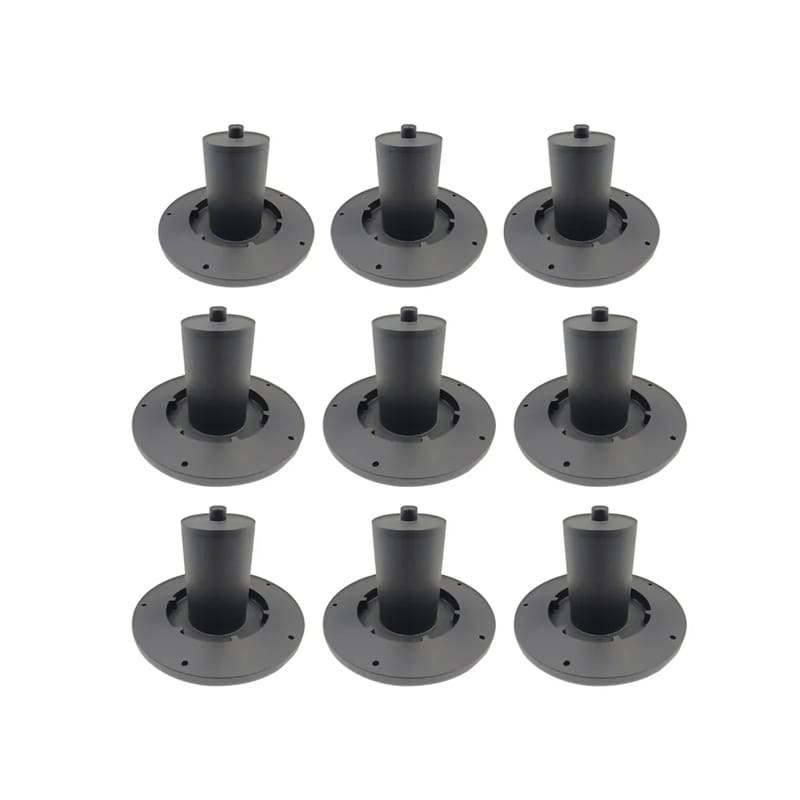
In precision machinery, a small turned plastic component can affect the entire assembly. A bushing that is too tight may increase shaft friction. A spacer that is too soft may deform after installation. A roller with poor concentricity may create vibration. That is why many machinery, automation, conveyor, packaging, and equipment projects rely on POM CNC turning parts for stable dimensions, smooth movement, and repeatable assembly performance.
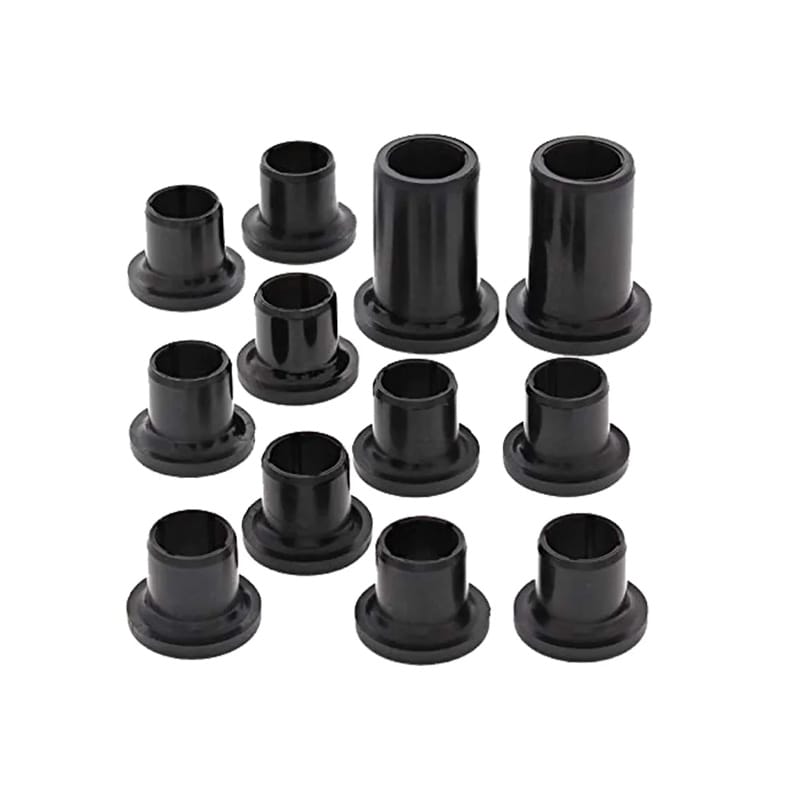
POM CNC turning parts are custom-machined components made from POM, also known as acetal or polyoxymethylene. They are commonly used as bushings, sleeves, rollers, rings, spacers, washers, guide wheels, and other cylindrical or round plastic components. Compared with many general plastics, POM offers a useful balance of rigidity, low friction, wear resistance, and clean machinability.
This guide explains how to choose POM CNC turning parts from a practical engineering and manufacturing perspective. It covers material behavior, part types, tolerance planning, surface finish, shaft fit, groove and thread design, application environments, and the information needed for a clear custom manufacturing request.
What Are POM CNC Turning Parts?
POM CNC turning parts are plastic components shaped on CNC turning equipment, usually from POM rods, tubes, or blanks. The turning process is suitable for round, cylindrical, stepped, grooved, threaded, and hole-centered parts.
A general explanation of computer numerical control helps show how CNC machines follow programmed tool paths to create accurate parts. In real industrial use, the key value is that CNC turning can produce repeatable plastic parts according to drawings, samples, or equipment dimensions.
Common POM CNC turning parts include:
POM bushings
POM sleeves
POM rollers
POM spacers
POM rings
POM washers
Guide wheels
Plastic shaft supports
Threaded plastic parts
Stepped cylindrical parts
Custom round machine components
Unlike molded parts, CNC turned plastic parts can be made without mold tooling. This makes them useful for prototypes, maintenance replacement, small batches, and OEM equipment projects that need flexible customization.
Why POM Is Popular for Turned Plastic Components
POM is often selected for precision plastic components because it combines strength, dimensional stability, low friction, and good machinability. In many mechanical assemblies, the material provides a cleaner and quieter alternative to metal parts, especially where corrosion resistance, insulation, weight reduction, or low-friction movement is important.
As an engineering plastic, polyoxymethylene is widely recognized for stiffness, low friction, and dimensional stability. These characteristics make it suitable for components that must maintain shape while supporting movement or spacing.
POM CNC turning parts are often used when the application needs:
Stable size performance
Smooth rotating or sliding movement
Low friction against shafts or contact surfaces
Good wear resistance under medium load
Clean machined surface
Lightweight structure
Electrical insulation
Corrosion resistance in common industrial environments
Repeatable machining quality
For parts that require round geometry, shaft holes, grooves, threads, or stepped diameters, CNC turning can produce practical and consistent components from POM material.
Common Applications of POM CNC Turning Parts
POM CNC turning parts are used in many industrial assemblies because they can serve as motion-support, spacing, guiding, and protective components.
Typical applications include:
Automation equipment
Packaging machinery
Conveyor systems
Electrical equipment
Industrial fixtures
Mechanical assemblies
Material handling systems
Agricultural machinery
Custom machine tools
Replacement plastic parts
In automation equipment, POM sleeves and spacers may help maintain alignment and reduce metal-to-metal contact. In conveyor systems, POM rollers and guide wheels can support smoother movement. In packaging machinery, POM bushings and rings may help reduce noise and friction during repeated motion. In electrical assemblies, POM parts may provide insulation and stable positioning.
Huadao also provides broader CNC machining plastic product solutions for blocks, bushings, rollers, wheels, gears, guide rails, and custom plastic machine components.
POM Bushings, Sleeves, Rollers, and Spacers: What Is the Difference?
Different POM CNC turning parts may look similar, but their functions are different. Understanding the function helps define the right material, tolerance, and surface finish.
| Part Type | Main Function | Key Design Focus | Common Application |
|---|---|---|---|
| POM bushing | Supports shafts and reduces friction | Inner diameter, outer diameter, wall thickness, fit clearance | Shafts, rotating parts, hinge points |
| POM sleeve | Protects or separates components | Length, wall thickness, bore accuracy, edge finish | Spacing, shaft protection, insulation |
| POM roller | Supports rolling or guiding movement | Concentricity, outer diameter, bore fit, surface finish | Conveyors, guide wheels, handling equipment |
| POM spacer | Controls distance between parts | Thickness, flatness, hole position, compression behavior | Assemblies, fixtures, equipment frames |
| POM washer | Provides spacing and surface protection | Thickness, inner diameter, outer diameter | Fasteners, support points, insulation |
| POM ring | Supports fitting, guiding, or positioning | Diameter tolerance, groove compatibility | Mechanical assemblies and custom fittings |
A POM bushing usually requires more attention to shaft fit and lubrication conditions. A POM roller needs good roundness and concentricity. A POM spacer needs consistent thickness and compression resistance. A POM washer may need clean edges and stable dimensions.
The best design starts with the part’s actual job inside the machine.
POM vs Nylon, UHMWPE, HDPE, and ABS
POM is not the only engineering plastic used for CNC turning. The correct choice depends on load, tolerance, friction, impact, temperature, moisture, and chemical exposure.
| Material | Main Strength | Common Use | Selection Note |
| POM | Dimensional stability, low friction, clean machining | Bushings, sleeves, rollers, spacers, precision parts | Strong option for accurate turned components |
| Nylon | Toughness and mechanical strength | Rollers, pulleys, bushings, wheels | Moisture absorption may affect dimensions |
| UHMWPE | Very low friction and strong wear resistance | Guide rails, wear strips, slide blocks | Better for sliding wear than tight precision parts |
| HDPE | Impact resistance and chemical resistance | Pads, blocks, simple turned parts | Better for general support than precision fit |
| ABS | Toughness and clean appearance | Covers, housings, brackets | More common for structural or visible parts |
POM is often a good choice when the component requires stable dimensions and a smooth machined finish. Nylon may be chosen for toughness. UHMWPE may be preferred for high sliding wear applications. HDPE may suit simple support components. ABS is often better for covers and housings.
For projects that need multiple engineering plastics, Huadao’s general engineering plastics category can help compare POM, nylon, HDPE, ABS, PP, PU, and UHMWPE-related options.
Tolerance Planning for POM CNC Turning Parts
Tolerance is one of the most important details for POM CNC turning parts. POM can usually be machined more accurately than many softer plastics, but it is still a plastic material. It responds differently from metal under heat, clamping pressure, load, and long-term use.
Important tolerance areas include:
Outer diameter
Inner diameter
Wall thickness
Length
Concentricity
Roundness
Groove width and depth
Thread fit
Shoulder position
Flatness of end faces
For a POM bushing, the inner diameter and shaft clearance are often critical. For a roller, concentricity may be more important than a non-contact edge. For a spacer, length or thickness may be the most important dimension. For a threaded part, thread engagement and installation force must be considered.
A practical drawing should separate critical dimensions from general dimensions. This helps the manufacturer focus inspection on the features that affect performance most.
For example, a POM spacer may not need tight tolerance on the outside diameter if it only provides separation between two plates. But the thickness may need better control because it affects assembly distance. A POM bushing may need accurate bore size, while the outer edge chamfer may only need to be clean and safe for installation.
Shaft Fit and Clearance: A Key Detail for Bushings and Rollers
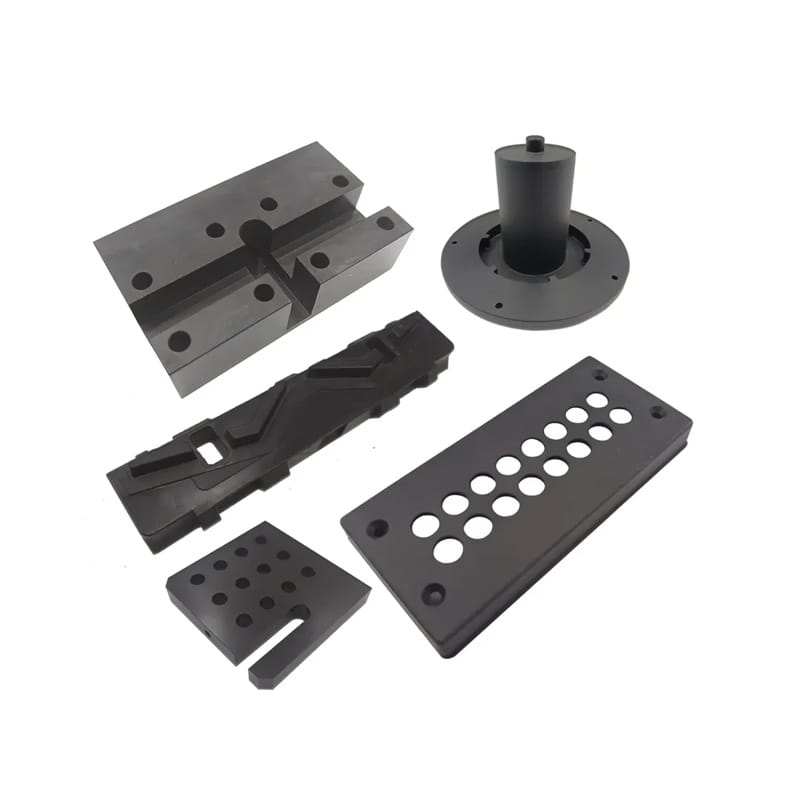
Many POM CNC turning parts are used around shafts. In these cases, bore size and clearance are critical.
If the bore is too tight, the part may bind, overheat, or create excessive friction. If the bore is too loose, the assembly may vibrate, misalign, or wear unevenly. The right clearance depends on shaft material, shaft diameter, speed, load, lubrication, temperature, and required movement.
When designing shaft-related POM parts, confirm:
Shaft diameter
Rotation speed
Load direction
Dry or lubricated operation
Continuous or intermittent movement
Operating temperature
Required clearance
Whether the part is fixed or rotating
Whether a bearing is used
Whether a press fit or slip fit is required
For rollers, bore accuracy and concentricity are especially important. A roller with poor concentricity can create vibration even if the material is correct. For bushings, wall thickness and shaft clearance should be reviewed together because a thin wall may deform more easily during installation.
Huadao also manufactures custom nylon plastic pulley with bearing products for applications where bearing-supported rotation is more suitable than a simple turned plastic bore.
Groove, Thread, and Step Design for CNC Turned POM Parts
CNC turning is well suited for cylindrical features such as grooves, shoulders, threads, chamfers, tapers, and stepped diameters. These details are common in POM CNC turning parts because they help with assembly, location, sealing support, fastening, or motion control.
Common design features include:
External grooves
Internal grooves
Threaded holes
External threads
Stepped outer diameters
Shoulders for positioning
Chamfered edges
Rounded edges
Through holes
Blind holes
Relief cuts
When designing grooves, avoid overly sharp internal corners where possible. A small radius can improve machinability and reduce stress concentration. For threads, confirm whether the part needs repeated assembly and disassembly. Plastic threads may not behave the same as metal threads under high tightening force.
For stepped parts, define which shoulder is functional. If the shoulder controls assembly location, it should be marked as a critical dimension. If it only reduces weight or creates clearance, a wider tolerance may be acceptable.
Surface Finish and Edge Control
A clean machined surface is one reason many projects choose POM. However, the surface finish should match the function of the part.
For sliding or rotating components, surface finish affects friction, heat, noise, and wear. For spacers and washers, flatness and burr control may be more important. For visible equipment components, appearance may also matter.
Surface finish requirements may include:
Smooth turned surface
Deburred edges
Chamfered edges
Polished surface
Grooved surface
Threaded finish
Flat end faces
Non-scratching contact surface
Buyers sometimes only specify size and material, but forget to specify edge treatment. This can create installation problems. Sharp edges may scratch nearby parts or make assembly harder. Burrs around holes can interfere with shafts or fasteners. A chamfer can make installation smoother and reduce the chance of damage during assembly.
A simple note such as “deburr all edges” or “chamfer shaft entry edge” can improve the final part significantly.
CNC Turning vs CNC Milling for Plastic Parts
CNC turning and CNC milling are both useful, but they are suited to different shapes.
CNC turning is generally better for round or cylindrical parts. CNC milling is better for blocks, plates, brackets, slots, pockets, and irregular shapes.
| Process | Best For | Typical POM Parts |
| CNC turning | Round, cylindrical, symmetrical parts | Bushings, sleeves, rollers, washers, rings, spacers |
| CNC milling | Flat, block-like, or irregular components | Blocks, plates, brackets, guide parts, fixtures |
| Turning + milling | Parts with round shape plus side holes or slots | Custom rollers, stepped sleeves, special machine parts |
Some parts require both processes. For example, a POM roller may be turned first to control diameter and bore, then milled or drilled to add side holes or special features. A POM sleeve may need turning for the round profile and drilling for fastening holes.
For parts that require multiple processing methods, Huadao provides custom CNC machined plastic parts based on drawings, samples, and equipment requirements.
When POM CNC Turning Parts Are Better Than Metal Parts
POM does not replace metal in every application, but it can be a better option in many mechanical assemblies.
POM CNC turning parts may be suitable when the project needs:
Lower component weight
Reduced operating noise
Lower friction against shafts or contact surfaces
Corrosion resistance in common environments
Electrical insulation
Cleaner movement without metal-to-metal contact
Easier customization for non-standard machinery
Replacement parts with shorter development time
Metal parts may still be necessary for very high loads, extreme temperatures, structural support, or high-impact environments. The selection should depend on the actual working condition, not only on part shape.
A practical example is a metal spacer or roller that creates noise and wears the contact surface. A POM version may reduce noise and protect adjacent parts while still maintaining enough rigidity for the assembly. Another example is a metal bushing that requires lubrication and corrodes in a humid environment. A POM bushing may provide smoother movement and better corrosion resistance under suitable load conditions.
Application Conditions That Affect Service Life
The service life of POM CNC turning parts depends on more than material quality. Working conditions often determine whether a part performs well or fails early.
Key operating factors include:
Load weight
Shaft speed
Sliding or rotating contact
Impact or vibration
Moisture exposure
Dust and abrasive particles
Chemical contact
Temperature range
Lubrication condition
Installation force
Maintenance frequency
For dusty environments, particles may accelerate wear between the plastic part and shaft. For humid environments, POM is usually more dimensionally stable than nylon, but the full application should still be reviewed. For high-speed rotation, heat buildup and shaft fit become more important. For repeated disassembly, thread design and fastening method should be checked carefully.
Machine safety should also be considered at the full equipment level. The OSHA machine guarding standard is a useful reference for guarding principles around moving machinery. For plastic processing and related machinery environments, OSHA also provides a dedicated plastics machinery guarding resource.
How to Prepare Drawings or Samples for Custom Production
A clear technical request helps the manufacturer understand the part and reduce back-and-forth communication.
For POM CNC turning parts, prepare:
Product drawing or sample
Material requirement
Outer diameter
Inner diameter
Length or thickness
Groove dimensions
Thread details
Step dimensions
Tolerance requirements
Surface finish requirement
Color requirement
Quantity requirement
Application environment
Photos of installation position
If the part is a replacement component and no drawing is available, send photos from multiple angles with a ruler or caliper reference. Mark worn areas on the old part so the manufacturer knows which dimensions may no longer represent the original design.
For a shaft-related part, include the shaft diameter and explain whether the POM part rotates, slides, supports, spaces, or protects another component. This information is often more useful than a product name alone.
Huadao’s CNC machined POM and ABS plastic parts page is a useful reference for projects involving custom POM parts, ABS components, spacers, bushings, covers, brackets, and irregular plastic machine parts.
Quality Inspection Points for POM Turned Components
Quality inspection should focus on the features that affect assembly and function.
Common inspection points include:
Outer diameter
Inner diameter
Length
Concentricity
Groove size
Thread quality
End-face flatness
Surface finish
Edge burrs
Color and material consistency
Quantity and packaging
For OEM projects, batch consistency is important. The first sample may fit correctly, but later production must maintain the same critical dimensions. This is why drawings, inspection standards, and clear tolerance notes matter.
For replacement parts, trial fitting may be useful before batch production. A sample can confirm that the bore, groove, shoulder, and length match the machine. After the sample is confirmed, the same data can be used for repeat production.
Common Mistakes to Avoid
Many problems with POM CNC turning parts can be prevented before manufacturing begins.
Common mistakes include:
Selecting POM without checking load and temperature
Using metal-style tolerances without considering plastic behavior
Ignoring shaft clearance
Forgetting burr control around holes and edges
Making walls too thin for stable machining
Not defining critical dimensions
Copying a worn sample without marking damaged areas
Ignoring concentricity for rollers
Using plastic threads in high-tightening-force assemblies
Not sending installation photos for replacement parts
The best approach is to define the function first. A POM bushing, spacer, roller, sleeve, or washer should be designed according to how it fits, moves, supports, separates, or protects the surrounding assembly.
Conclusion
POM CNC turning parts are valuable for precision machinery because they combine dimensional stability, low friction, clean machining, and practical customization. They are widely used as bushings, sleeves, rollers, spacers, rings, washers, and custom round plastic components in automation equipment, conveyors, packaging machinery, fixtures, and industrial assemblies.
To get reliable results, the part should be designed around its real function. Shaft clearance, tolerance, wall thickness, groove design, thread structure, surface finish, and working environment all influence performance. A complete drawing, sample, installation photo, and application description can help the manufacturer recommend a suitable material and machining method.
Huadao supports custom production of POM CNC turning parts, CNC machined plastic parts, guide rails, rollers, pulleys, gears, and other industrial rubber and plastic components. Visit the POM CNC Turning Parts page or contact Huadao to discuss your custom plastic part requirements.
FAQ
What are POM CNC turning parts used for?
POM CNC turning parts are used for bushings, sleeves, rollers, spacers, rings, washers, guide wheels, and other precision plastic components in machinery, automation equipment, conveyors, fixtures, and industrial assemblies.
Why is POM suitable for CNC turned plastic parts?
POM is suitable because it offers good dimensional stability, low friction, wear resistance, rigidity, and clean machinability. These properties make it useful for precision plastic parts that need smooth movement and repeatable fitting.
Can POM CNC turning parts be customized from a sample?
Yes. POM CNC turning parts can be made according to drawings, samples, photos, or equipment dimensions. If the sample is worn, the worn areas should be marked before manufacturing.
What dimensions are important for POM bushings?
Important dimensions include inner diameter, outer diameter, length, wall thickness, shaft clearance, chamfer, groove details, and tolerance requirements. The shaft diameter and operating condition should also be provided.
Is POM better than nylon for precision turned parts?
POM is often preferred when dimensional stability and smooth machining are important. Nylon may be better for toughness and certain wear applications, but its moisture absorption should be considered.
Can POM parts replace metal parts?
POM can replace metal parts in some applications where lower weight, lower friction, corrosion resistance, insulation, or noise reduction is required. However, metal may still be needed for high-load, high-temperature, or structural applications.
What should I send when requesting custom POM CNC turning parts?
You should send drawings or samples, material requirements, outer diameter, inner diameter, length, grooves, threads, tolerance, surface finish, color, quantity, application environment, and installation photos if available.