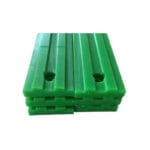
A conveyor system can only run smoothly when every moving part is guided correctly. Chains, belts, rollers, sprockets, and support structures all matter, but one small component often decides whether the line operates quietly or suffers from friction, vibration, and early wear: the custom plastic chain guide rail.
A custom plastic chain guide rail is designed to guide conveyor chains, reduce metal-to-chain contact, support stable movement, protect equipment frames, and reduce operating noise. It is commonly used in packaging lines, bottling lines, food processing equipment, logistics conveyors, automated machinery, material handling systems, and OEM conveyor projects.
Unlike standard guide rails, a custom guide rail is made according to the chain type, conveyor layout, mounting structure, groove size, operating environment, and replacement requirements. This makes it especially useful for non-standard conveyor systems, equipment upgrades, and replacement parts based on drawings or samples.
This guide explains how to choose the right custom plastic chain guide rail from a practical engineering and procurement perspective.
Table of Contents
What Is a Custom Plastic Chain Guide Rail?
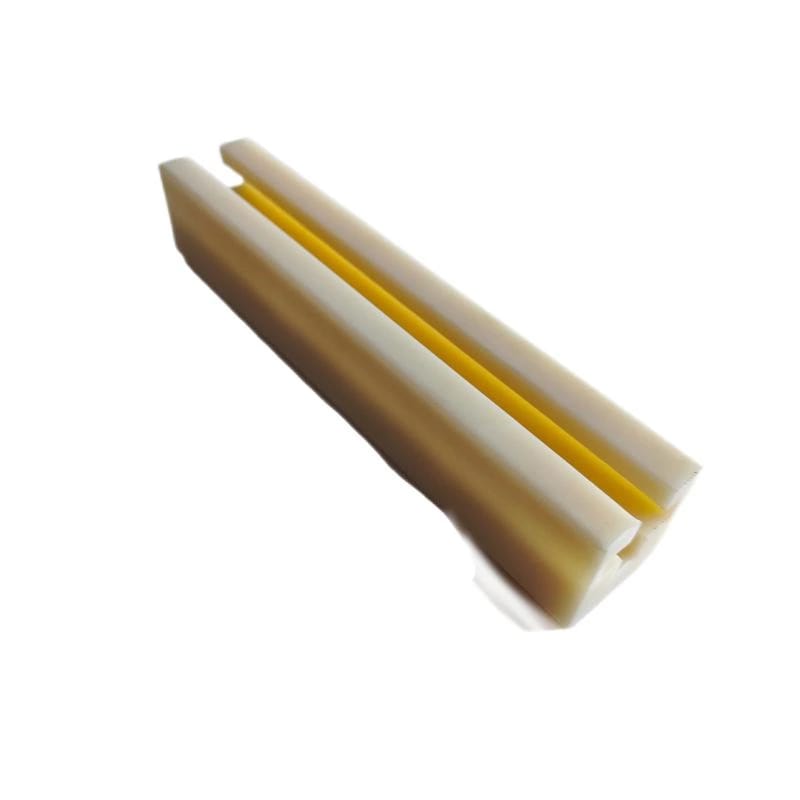
A custom plastic chain guide rail is a machined or formed plastic component installed along a conveyor path to guide chain movement. It provides a controlled sliding surface between the chain and the machine frame, helping reduce friction and protect the conveyor structure.
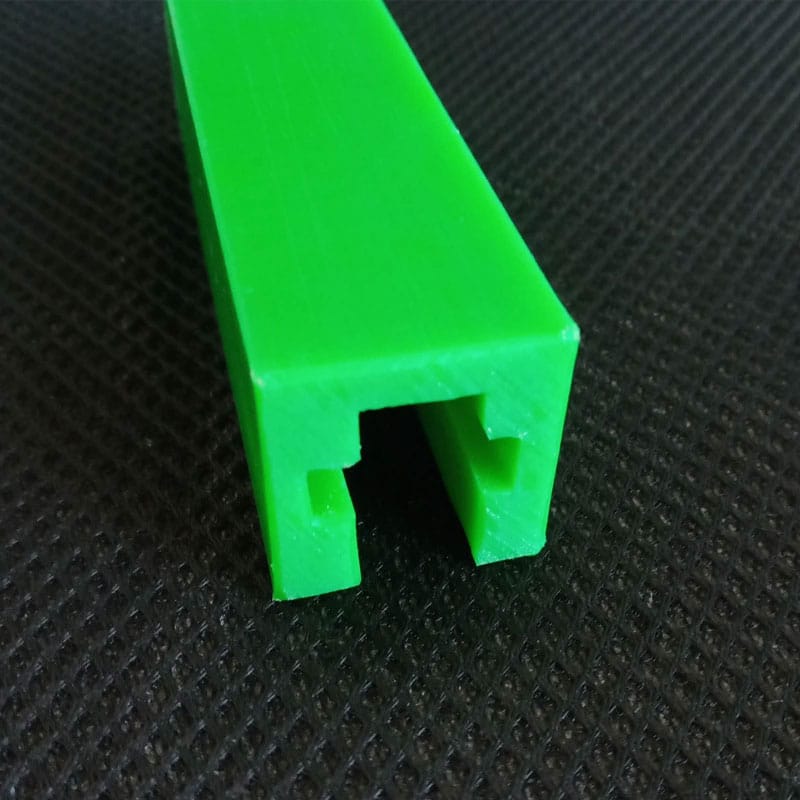
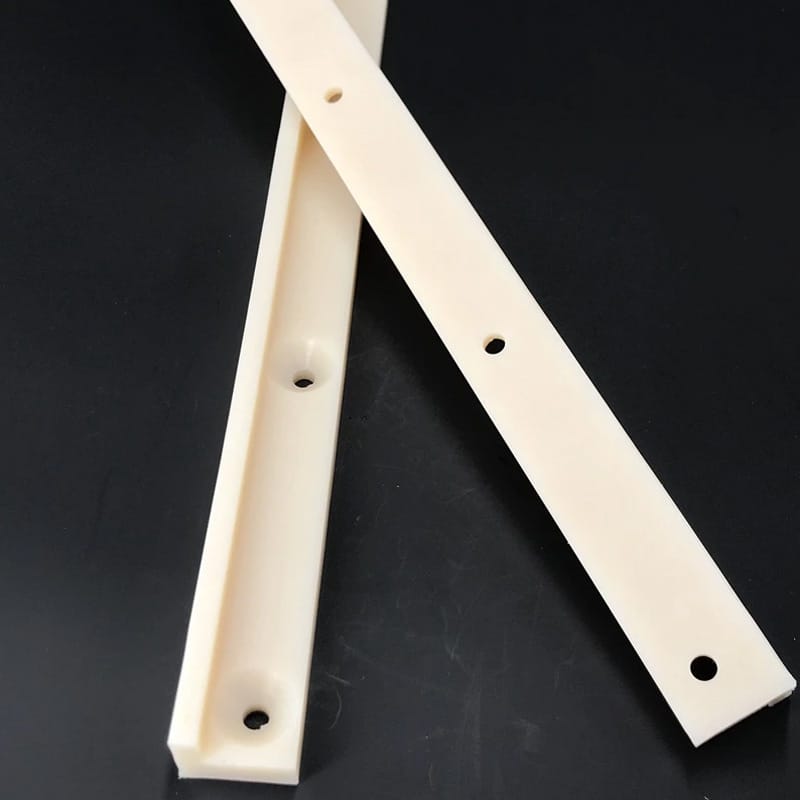
In many conveyor systems, the guide rail may appear as a straight rail, curved rail, U-shaped profile, T-shaped profile, grooved rail, side guide, or special machined profile. The right design depends on how the chain moves, where it contacts the rail, and how the rail is mounted.
For general background, a chain conveyor uses a continuous chain arrangement to move materials through a production or handling line. In this type of system, the chain guide rail helps keep movement stable and predictable.
A custom plastic chain guide rail may be used to:
Guide conveyor chains along straight sections
Support side-flexing chain movement through curves
Reduce friction between chain and metal structure
Protect machine frames from wear
Lower operating noise
Improve chain tracking stability
Simplify maintenance replacement
Fit non-standard equipment layouts
For OEM buyers, the key point is that a guide rail is not just a plastic strip. It is a functional conveyor component that must match the equipment structure.
Why Plastic Guide Rails Are Used Instead of Metal Rails
Metal rails can provide strength, but they are not always ideal for chain guidance. When a moving chain runs directly against metal, the system may create more noise, require more lubrication, and accelerate chain wear.
A plastic guide rail provides a smoother sliding surface. Depending on the material, it may also offer low friction, self-lubricating behavior, corrosion resistance, impact resistance, and easier replacement.
Common advantages include:
Lower chain friction
Quieter conveyor operation
Reduced wear on chains and frames
Less need for lubrication in many applications
Better corrosion resistance than some metal guide parts
Custom groove and profile options
Lower equipment maintenance pressure
Controlled replacement of the wearing component
The design idea is simple: let the guide rail become the replaceable wear part instead of allowing the conveyor frame or chain support structure to wear directly.
Huadao also provides UHMWPE conveyor wear strip products for conveyor sliding surfaces, chain tracks, side rails, and other wear protection applications.
Common Materials for Plastic Chain Guide Rails
Material selection is one of the most important decisions when ordering a custom plastic chain guide rail. Different plastics behave differently under load, speed, temperature, chemicals, moisture, and friction.
| Material | Main Advantage | Suitable Applications | Key Consideration |
|---|---|---|---|
| UHMWPE | Low friction, excellent wear resistance, impact resistance | Chain guides, slide rails, conveyor wear strips | Strong choice for continuous sliding applications |
| Nylon / PA | Good strength, toughness, wear resistance | Medium-load guide rails, rollers, pulleys, gears | Moisture absorption should be considered |
| POM / Acetal | Dimensional stability, smooth machining, low friction | Precision guide parts, small conveyor components | Useful when tighter fit is needed |
| HDPE | Chemical resistance, lightweight structure, easy machining | Light-duty rails, support strips, wet environments | Lower wear resistance than UHMWPE in many cases |
| PU | Elasticity, abrasion resistance, cushioning | Impact-contact parts, flexible support components | Better for elastic or shock-absorbing uses |
UHMWPE is often selected for conveyor guide rails because ultra-high-molecular-weight polyethylene is known for low friction, low moisture absorption, impact strength, and abrasion resistance. For guide rails that carry continuous chain movement, these properties are highly useful.
However, UHMWPE is not always the only choice. POM may be better for tighter dimensional control. Nylon may be better when toughness and mechanical strength are more important. HDPE may be suitable for lighter-duty environments where chemical resistance matters.
For buyers comparing materials, Huadao’s general engineering plastics page is a useful reference for POM, nylon, HDPE, PP, PU, ABS, and related plastic materials.
How to Choose the Right Guide Rail Profile
The profile of a custom plastic chain guide rail must match the chain path and conveyor structure. A good material with the wrong profile can still cause poor tracking, vibration, or installation problems.
Common guide rail profiles include:
Flat guide rail for simple chain support
U-shaped guide rail for partial chain enclosure
T-shaped guide rail for channel-mounted structures
Grooved guide rail for accurate chain tracking
L-shaped side guide for edge protection
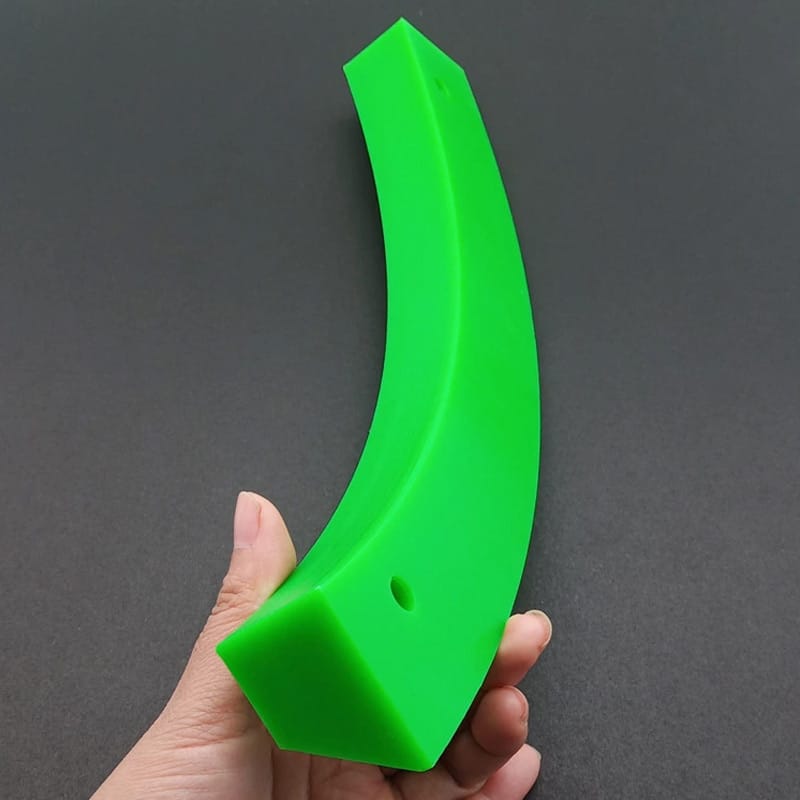
Curved guide rail for turning sections
Wear strip profile for sliding support
Fully custom machined profile for non-standard machines
When selecting a profile, confirm how the chain contacts the rail. Some chains need bottom support only. Some need side guidance. Some need a groove to prevent lateral movement. Side-flexing chains may require curved rails with accurate radius control.
A profile should be selected based on:
Chain type
Chain width
Chain pitch
Contact direction
Line speed
Straight or curved conveyor section
Mounting channel shape
Available installation space
Replacement method
Expected wear area
A custom guide rail should not only fit the chain. It should also be easy to install and replace during maintenance.
Straight Rails vs Curved Chain Guide Rails
Straight rails are commonly used along linear conveyor sections. Their main role is to support smooth chain movement and reduce friction. Curved guide rails are more complex because they must control chain movement through a turning section.
A curved custom plastic chain guide rail needs careful attention to:
Curve radius
Chain side-flexing ability
Inner and outer guide contact
Mounting hole position
Rail thickness
Thermal expansion space
Surface finish
Chain tension through the curve
If the curve radius is too tight, the chain may generate higher side pressure and wear faster. If the rail profile does not match the chain, the chain may climb, vibrate, or jam. If the mounting holes do not align with the conveyor frame, installation may require rework.
For complex conveyor layouts, it is helpful to send the supplier a drawing of the full rail path, not only the rail cross-section. This allows the supplier to understand whether the guide rail is used in a straight section, transfer section, curve, incline, or compact machine structure.
Key Dimensions Buyers Should Confirm Before Ordering
Many problems with custom plastic chain guide rails come from incomplete dimensions. A supplier can manufacture according to drawings or samples, but the inquiry should include enough information to avoid assumptions.
Before ordering, prepare:
Overall rail length
Width and height
Cross-section profile
Groove width and depth
Mounting hole diameter
Hole spacing
Countersink or counterbore requirements
Straight or curved shape
Curve radius if applicable
Material requirement
Color requirement
Tolerance requirement
Surface finish requirement
Quantity requirement
Installation photos
Chain model or chain dimensions
If the guide rail is a replacement part and the original drawing is unavailable, a sample can be used. However, buyers should mark worn areas because old guide rails may have changed shape after long-term use. Measuring a heavily worn sample without context can lead to inaccurate reproduction.
For rails requiring grooves, holes, countersinks, or complex shapes, Huadao’s CNC machining plastic product capability can support drawing-based and sample-based customization.
Tolerance Design for Plastic Chain Guide Rails
Tolerance is important, but it must be realistic for plastic materials. Plastics do not behave exactly like metals. They may expand, flex, deform, or absorb moisture depending on the material and operating environment.
A custom plastic chain guide rail should control the dimensions that directly affect conveyor performance. These may include groove width, rail height, mounting hole location, straightness, curve radius, and chain contact surface.
Important tolerance areas include:
Groove width
Rail thickness
Mounting hole position
Straightness along the rail length
Curved rail radius
Contact surface flatness
Cut length
Profile symmetry
Critical fit dimensions
Not every dimension needs the tightest tolerance. For example, a mounting hole position may be critical, while a non-contact outer edge may be less important. Marking critical dimensions on the drawing helps the manufacturer focus quality control on the areas that truly affect performance.
For precision plastic parts, Huadao also provides custom CNC machined plastic parts for spacers, blocks, bushings, gears, brackets, and other non-standard industrial components.
Operating Conditions That Affect Guide Rail Performance
The same guide rail design may perform differently in different conveyor environments. Material and profile selection should consider real operating conditions.
Important conditions include:
Chain speed
Load weight
Chain tension
Start-stop frequency
Dust and abrasive particles
Moisture exposure
Cleaning chemicals
Operating temperature
Impact or vibration
Indoor or outdoor use
Food processing requirements
Maintenance access
For dusty environments, particles trapped between the chain and guide rail can accelerate wear. For wet or chemical environments, material resistance should be confirmed. For high-speed systems, friction, heat buildup, and noise control become more important.
In food processing or packaging equipment, buyers may also need to confirm whether the selected plastic material meets the documentation needs of the target market. For conveyor safety, guide rail selection should be considered together with guarding, emergency stops, and operator access. The OSHA conveyor safety standard and OSHA machine guarding standard are useful references for general safety principles.
How Chain Type Influences Guide Rail Design
Different conveyor chains require different guide rail designs. A guide rail that works well with one chain may not fit another chain properly.
Common chain-related factors include:
Chain width
Chain pitch
Roller diameter
Side plate height
Attachment position
Side-flexing capability
Load direction
Sprocket position
Transfer point design
Required clearance
For roller chains, the guide rail may need to support or guide the side plates without interfering with roller movement. For plastic modular chain conveyors, the rail may need to support a broader sliding contact area. For side-flexing chains, the guide rail may need a curved profile and controlled clearance.
A conveyor system can include different conveyor types, layouts, and motion paths. This is why a custom plastic chain guide rail should be designed based on the actual conveyor structure instead of selected only by material name.
When sending an inquiry, include photos of the chain and installation position. This helps the supplier understand whether the guide rail is used for bottom support, side guidance, curved guidance, or frame protection.
When to Replace a Plastic Chain Guide Rail
A plastic chain guide rail is designed to wear gradually. The goal is controlled wear, not permanent use without inspection. Regular checks help avoid chain instability and unexpected downtime.
Common replacement signs include:
Deep grooves on the contact surface
Uneven wear along the rail
Increased conveyor noise
Chain vibration
Chain tracking instability
Cracking or deformation
Loose mounting holes
Rough sliding surface
Excessive heat or friction marks
Product transfer becoming unstable
If a guide rail wears faster in one section, the root cause may not be the material alone. The conveyor may have misalignment, excessive chain tension, uneven loading, abrasive contamination, incorrect mounting, or an unsuitable curve radius.
Maintenance teams should record wear patterns and replacement intervals. This makes it easier to improve the next guide rail design instead of repeatedly replacing the same part.
Custom Chain Guide Rail vs Standard Stock Rail
Standard guide rails may work for simple conveyor systems, but custom guide rails are often better for OEM equipment and replacement projects.
A standard rail may be enough when:
The conveyor uses a common chain size
The profile is simple
The operating load is light
The installation space is not restricted
The rail does not require special holes or grooves
A custom plastic chain guide rail is better when:
The conveyor structure is non-standard
The chain path includes curves or transfers
The original part is discontinued
The rail must match existing mounting holes
A special groove is required
The working environment is demanding
The equipment needs repeatable OEM production
A sample-based replacement is needed
For OEM buyers, custom rails also make it easier to standardize equipment designs. Once the profile, material, and hole layout are confirmed, the same guide rail can be repeated for future production or spare parts.
Practical Example: Improving a Noisy Chain Conveyor
A packaging line may begin producing more noise after long-term operation. The chain still moves, but the contact surface shows uneven wear. Operators notice vibration near a transfer section, and maintenance teams need to adjust the chain more often.
Instead of replacing only the chain, the engineering team reviews the guide rail. The original rail is too narrow, and the groove does not fully match the chain contact area. The mounting holes are also slightly misaligned, causing the rail to sit unevenly.
A custom plastic chain guide rail can solve the problem through:
A corrected groove width
Better support for the chain contact surface
Accurate mounting hole spacing
A smoother edge finish
A suitable plastic material for sliding wear
A rail length designed for easier replacement
After testing the sample, the team can standardize the design and order repeat parts for future maintenance. This kind of improvement is common in packaging, bottling, logistics, and automated production lines.
How to Send a Clear Inquiry to a Supplier
A clear inquiry helps the supplier recommend the right material, profile, and machining method. Instead of only asking for a custom guide rail, provide the working context.
A good inquiry should include:
Product name: custom plastic chain guide rail
Material preference if known
Drawing or sample photos
Overall size
Cross-section profile
Groove dimensions
Mounting hole details
Straight or curved rail requirement
Chain type or chain size
Application industry
Working temperature
Load condition
Line speed if available
Quantity requirement
Current problem to solve
If the part is a replacement guide rail, send photos of the old part and installation position. If the part is for new equipment, send a drawing or layout of the conveyor section.
Huadao can support custom production according to drawings, samples, equipment dimensions, or working conditions. For project communication, buyers can use the Contact Us page to submit drawings, samples, and technical requirements.
Related Conveyor Plastic Parts to Consider
A conveyor guide rail is often only one part of a larger plastic component system. Buyers may also need related wear-resistant and motion-support parts.
Common related parts include:
Plastic conveyor rollers
Plastic pulleys
Wear strips
Slide blocks
Plastic gears
Bushings and sleeves
Support pads
Side guides
Spacer blocks
Machine protection plates
For conveyor roller applications, Huadao provides custom nylon conveyor roller products for conveyor idlers, guide rollers, and material handling systems. For transmission and rotating components, Huadao also supplies custom plastic spur gear and custom nylon plastic pulley with bearing options.
Using one supplier for multiple plastic conveyor parts can simplify communication, material selection, drawing management, and repeat ordering.
Common Mistakes Buyers Should Avoid
Selecting a custom plastic chain guide rail is not difficult, but several mistakes can lead to poor performance.
Avoid these mistakes:
Choosing material only by appearance
Ignoring chain type and chain contact area
Using a flat rail where a grooved rail is needed
Copying a worn sample without identifying worn surfaces
Not confirming mounting hole position
Ignoring curved rail radius
Forgetting thermal expansion clearance
Overusing tight tolerance on non-critical dimensions
Not considering dust, moisture, or chemicals
Failing to send installation photos
Ordering without testing a sample when the design is new
The best approach is to define the function first. A guide rail should be selected based on how the chain moves, where friction occurs, how the rail is mounted, and how the component will be replaced during maintenance.
FAQ
What is a custom plastic chain guide rail used for?
A custom plastic chain guide rail is used to guide conveyor chains, reduce friction, protect machine frames, lower noise, and support stable chain movement in conveyor systems.
Which material is best for a plastic chain guide rail?
UHMWPE is commonly used for low-friction and wear-resistant chain guide rails. Nylon, POM, and HDPE may also be selected depending on load, tolerance, moisture, chemical exposure, and application requirements.
Can a plastic chain guide rail be made from a sample?
Yes. A guide rail can be manufactured according to a sample, drawing, photo, or equipment dimensions. If the sample is worn, the damaged areas should be marked before production.
What information is needed for a custom guide rail quotation?
Buyers should provide material requirements, drawings or samples, profile dimensions, groove size, mounting holes, straight or curved shape, quantity, application environment, and installation photos.
Are plastic guide rails suitable for curved conveyors?
Yes. Curved plastic guide rails can be customized according to conveyor radius, chain type, profile shape, mounting method, and side-flexing chain movement.
How do I know when a chain guide rail needs replacement?
Replacement may be needed when the rail has deep grooves, uneven wear, cracks, deformation, loose mounting holes, increased noise, chain vibration, or unstable chain tracking.
Can Huadao customize guide rails for OEM equipment?
Yes. Huadao can customize plastic chain guide rails based on OEM drawings, samples, installation requirements, material needs, and batch production requirements.
Conclusion
A custom plastic chain guide rail may look like a simple conveyor component, but it directly affects chain movement, friction, noise, wear, maintenance planning, and equipment reliability. The right guide rail should match the chain type, profile design, material requirement, mounting structure, tolerance, and working environment.
For buyers, the most effective way to avoid mistakes is to provide complete technical details before production. Drawings, samples, installation photos, chain dimensions, and operating conditions allow the supplier to recommend a more suitable solution.
Huadao manufactures custom plastic chain guide rails, UHMWPE wear strips, conveyor rollers, plastic pulleys, gears, and other industrial rubber and plastic components. Visit the Custom Plastic Chain Guide Rail page or contact Huadao to discuss your conveyor guide rail requirements.