Table of Contents
Introduction
In modern production lines, many products need to be picked, transferred, positioned, sorted, or packed quickly and safely. When the surface of a product cannot be scratched, clamped, or pressed too hard, rubber suction cups become a practical solution. They use vacuum force to hold objects during movement, helping equipment handle materials with better stability and less surface damage.
Rubber suction cups are widely used in industrial automation, packaging machinery, glass handling, sheet material transfer, electronic component assembly, printing equipment, woodworking machinery, and many other production systems. Although the part itself may look simple, its performance directly affects gripping stability, production speed, safety, and equipment efficiency.
For B2B buyers, choosing the right rubber suction cup is not just about diameter. The material, shape, hardness, lip design, mounting method, vacuum level, product surface, and working environment all matter. A suitable suction cup can improve handling accuracy, reduce product drop risk, and support smoother automated production.
What Is a Rubber Suction Cup?
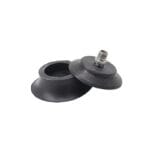
A rubber suction cup is a flexible vacuum gripping component used to hold and move objects. When connected to a vacuum system, the cup creates negative pressure between its inner surface and the object surface. This pressure difference allows the suction cup to grip the product during lifting, transferring, or positioning.
Rubber suction cups are often used as end-of-arm tooling parts in automated equipment. They are also used in packaging systems, material loading machines, printing machines, glass lifting equipment, and other handling devices.
Compared with mechanical clamps, rubber suction cups can provide softer contact. This makes them suitable for products that need careful surface protection, such as glass panels, coated sheets, printed cartons, plastic boards, metal plates, tiles, electronic parts, and packaging materials.
Why Rubber Suction Cups Matter in Industrial Automation
Automation equipment depends on repeatable motion. If a suction cup cannot grip consistently, the whole process may be affected. A small gripping failure may cause product misalignment, production interruption, material damage, or safety risks.
Rubber suction cups help solve these problems by providing flexible contact and stable holding force. In automated production lines, they support fast picking and placing while reducing the need for direct mechanical clamping.
For manufacturers, the right suction cup can help improve:
Handling stability
Production efficiency
Product surface protection
Positioning accuracy
Equipment safety
Process repeatability
Maintenance convenience
Instead of using a hard fixture that may leave marks or damage product edges, a rubber suction cup adapts to the surface and distributes holding force more evenly.
How Rubber Suction Cups Work
Rubber suction cups work with a vacuum source. When the suction cup contacts the product surface, air is removed from the space between the cup and the object. This creates a pressure difference. Atmospheric pressure then pushes the cup against the object, allowing the equipment to lift or move the product.
The gripping process usually includes four steps.
First, the suction cup contacts the surface of the object.
Second, the vacuum system removes air from inside the cup.
Third, the pressure difference creates holding force.
Fourth, the vacuum is released when the object reaches the target position.
The actual holding force depends on the suction cup size, vacuum level, surface condition, material weight, movement speed, and cup sealing performance.
Main Benefits of Rubber Suction Cups
Soft Contact for Surface Protection
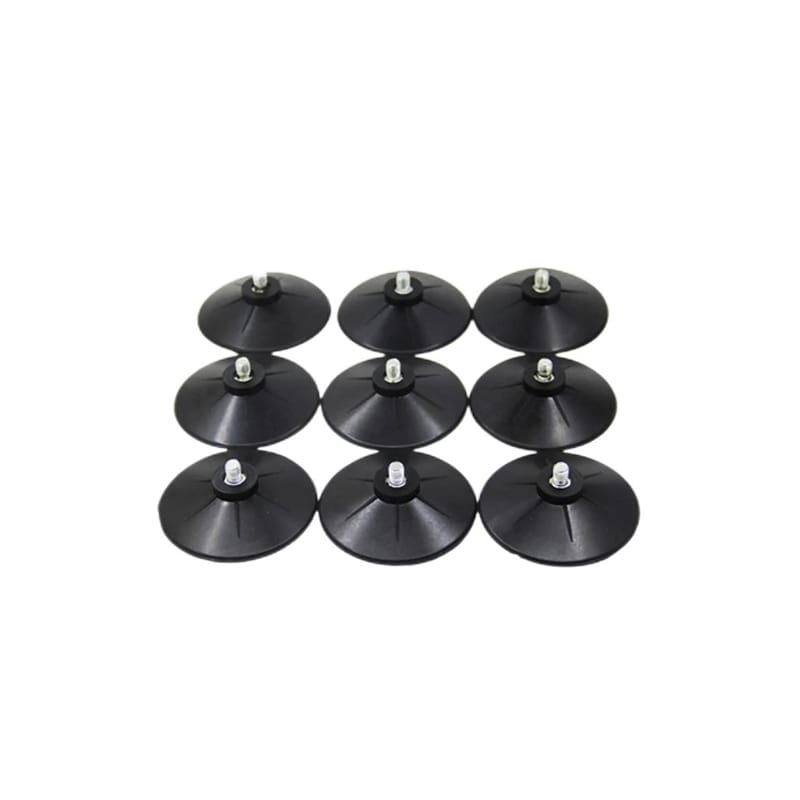
Rubber suction cups are often used when the product surface must remain clean and undamaged. Because rubber is flexible, it can contact the surface without the hard pressure created by metal clamps or rigid grippers.
This is important for glass, coated panels, plastic sheets, printed materials, electronic parts, polished metal surfaces, and fragile packaging products.
Stable Gripping for Automated Handling
A properly selected suction cup provides stable vacuum contact during movement. This helps reduce slipping, dropping, and positioning errors. In high-frequency production lines, stable gripping is essential for consistent output.
Adaptability to Different Product Shapes
Rubber suction cups are available in flat, bellows, oval, deep, and custom-shaped designs. This allows them to handle flat surfaces, curved surfaces, thin sheets, flexible materials, and uneven products.
Reduced Mechanical Damage
Mechanical clamps may create edge damage, pressure marks, or deformation, especially on thin or delicate products. Rubber suction cups reduce direct clamping pressure and help protect product quality during transfer.
Efficient Pick-and-Place Operation
In packaging, sorting, feeding, and loading systems, suction cups make pick-and-place movement faster and more flexible. They are especially useful where equipment needs frequent product changes or repetitive handling.
Simple Replacement and Maintenance
Rubber suction cups are consumable parts in many automation systems. They are usually easy to replace, which helps reduce downtime when maintenance is needed.
Common Applications of Rubber Suction Cups
Rubber suction cups are used wherever products need to be lifted or held without rigid clamping. In packaging machinery, they help pick cartons, bags, labels, film, paper sheets, and finished packages. Their soft contact helps prevent visible marks while supporting fast feeding and transfer.
In glass handling equipment, rubber suction cups are used to hold glass panels during lifting, positioning, cutting, or installation. The cup must provide stable sealing and enough holding force because glass is smooth, heavy, and fragile.
For sheet material handling, suction cups are used with plastic boards, metal sheets, wood panels, acrylic sheets, rubber sheets, and composite panels. These applications often require several suction cups working together to distribute load evenly.
In printing and paper processing equipment, suction cups help separate, feed, and position sheets. The cup must respond quickly and release cleanly to avoid slowing down the production line.
In electronic assembly and small-part automation, compact suction cups are used for delicate components that cannot be scratched or clamped directly. Material softness, cleanliness, and dimensional accuracy are important in these applications.
Types of Rubber Suction Cups
Different suction cup designs are used for different product surfaces and handling requirements.
| Type | Main Feature | Suitable Application |
|---|---|---|
| Flat Suction Cup | Short stroke, stable grip on smooth surfaces | Glass, metal sheets, plastic panels |
| Bellows Suction Cup | Flexible movement and height compensation | Packaging, uneven surfaces, curved products |
| Oval Suction Cup | Larger contact area in one direction | Long or narrow parts, sheets, profiles |
| Deep Suction Cup | Stronger wrapping contact | Curved or irregular products |
| Thin-Lip Suction Cup | Gentle surface contact | Paper, film, labels, delicate items |
| Custom Rubber Suction Cup | Designed for special shape or material | OEM automation equipment |
Choosing the right structure is important. A flat suction cup may work well on smooth glass, but a bellows suction cup may perform better when the object surface is uneven or when height compensation is needed.
Rubber Suction Cup Materials
The material of a rubber suction cup determines its flexibility, wear resistance, temperature resistance, oil resistance, and surface compatibility.
| Material | Main Advantage | Common Use |
|---|---|---|
| Natural Rubber | Good elasticity and grip | General handling applications |
| NBR Rubber | Oil and grease resistance | Industrial parts exposed to lubricants |
| Silicone Rubber | High temperature resistance and soft contact | Food-grade, medical, heat-related, delicate surfaces |
| EPDM Rubber | Weather and ozone resistance | Outdoor or moisture-exposed applications |
| Polyurethane | High abrasion resistance | High-frequency handling and rougher surfaces |
The best material should be selected according to the application. For example, silicone suction cups are often used when soft contact or temperature resistance is required. NBR suction cups are more suitable when the part may contact oil or grease. For frequent movement and abrasion, polyurethane may be considered.
How to Choose the Right Rubber Suction Cup
Product Weight
The suction cup must provide enough holding force for the product weight. The required holding force should also consider safety factor, movement speed, acceleration, and the number of suction cups used.
A heavier product usually requires larger suction cups, more suction points, or stronger vacuum support.
Surface Condition
Surface condition has a major impact on vacuum gripping. Smooth and non-porous surfaces are easier to hold, while rough, porous, oily, dusty, or curved surfaces may require special cup designs.
For example, glass and polished metal are usually suitable for flat suction cups. Corrugated cartons, bags, and uneven materials may need bellows suction cups with better flexibility.
Movement Speed
High-speed automation creates additional force during acceleration and stopping. If the suction cup is too small or the material is not suitable, the product may slip or fall during movement.
For fast production lines, buyers should consider vacuum response time, cup rebound behavior, and release speed.
Product Shape
Flat products, curved products, narrow strips, and irregular parts require different suction cup shapes. Oval suction cups are often useful for long and narrow items, while bellows suction cups offer better compensation when surface height varies.
Working Environment
Temperature, oil, dust, moisture, cleaning agents, and outdoor exposure can affect rubber performance. The suction cup material should match the environment to avoid swelling, cracking, hardening, or loss of flexibility.
Mounting Method
Rubber suction cups may use different mounting structures, such as threaded fittings, push-in fittings, metal inserts, or custom connections. The mounting method must match the equipment’s vacuum line and end tooling design.
Vacuum Level
A suction cup’s actual holding force depends on the vacuum level. If the vacuum system is weak or unstable, even a large suction cup may not perform well. Buyers should confirm the vacuum source, air leakage, tube length, and response time when selecting suction cups.
Rubber Suction Cups vs Mechanical Grippers
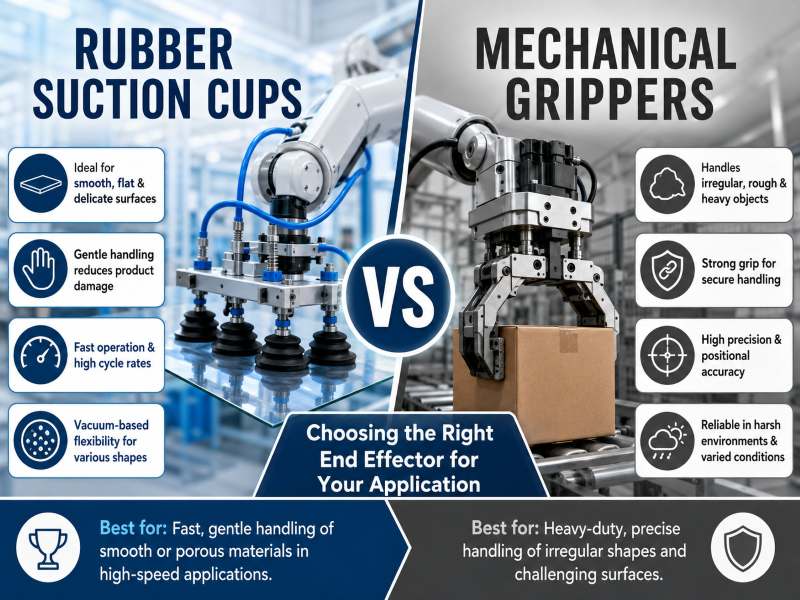
Rubber suction cups and mechanical grippers are both used for automated handling, but they are suitable for different situations.
| Comparison Item | Rubber Suction Cup | Mechanical Gripper |
|---|---|---|
| Contact Method | Vacuum contact on surface | Clamping force on edges or sides |
| Surface Protection | Better for delicate surfaces | May leave pressure marks |
| Product Shape | Best for surfaces that can seal | Better for parts with strong edges |
| Speed | Fast for pick-and-place tasks | Depends on actuator design |
| Flexibility | Easy to change cup type | May require fixture adjustment |
| Holding Limit | Depends on vacuum and surface | Depends on clamp force |
| Common Use | Sheets, panels, cartons, glass, packaging | Rigid parts, shaped components, heavy blocks |
In many automation systems, suction cups are preferred when surface protection, fast picking, and simple tooling are important. Mechanical grippers are more suitable when the product surface cannot create a vacuum seal or when edge clamping is more reliable.
Why Custom Rubber Suction Cups Are Needed
Standard suction cups are suitable for many common applications, but some production lines require custom solutions. A product may have a special curve, limited contact area, unusual surface material, high temperature, oil exposure, or special mounting structure.
Custom rubber suction cups can be designed based on the actual product and equipment requirements. Customization may include:
Specific cup diameter
Special lip thickness
Custom bellows structure
Oval or irregular shape
Custom rubber hardness
Oil-resistant or heat-resistant material
Metal insert or threaded connection
Special color
OEM production according to drawings or samples
For equipment manufacturers, custom suction cups can improve machine compatibility and reduce gripping problems during operation.
Manufacturing Process of Rubber Suction Cups
Requirement Confirmation
The process begins with product drawings, samples, photos, or application details. The manufacturer needs to understand the object being handled, its weight, surface condition, equipment speed, vacuum system, mounting method, and working environment.
Material Selection
The rubber material is selected according to temperature, surface protection, oil resistance, wear resistance, flexibility, and application requirements. Material choice has a direct impact on suction stability and service life.
Mold Design
Custom suction cups require accurate mold design. The cup lip, wall thickness, internal cavity, mounting area, and sealing surface must be designed carefully. Small design changes can affect vacuum performance.
Rubber Molding
Rubber suction cups are produced through molding processes. Temperature, pressure, curing time, and compound consistency must be controlled to ensure stable elasticity and dimensional accuracy.
Trimming and Surface Inspection
After molding, excess flash is removed. The lip area must be checked carefully because it affects sealing performance. Any defect on the sealing edge may cause air leakage.
Quality Testing
Quality checks may include dimensions, hardness, appearance, sealing edge inspection, elasticity, and fitting compatibility. For critical applications, sample testing on actual equipment is recommended.
Common Problems and Solutions
Weak Suction Force
Weak suction force may be caused by wrong cup size, poor vacuum level, air leakage, unsuitable material, or rough product surface. The solution is to check the vacuum system first, then review cup design and material compatibility.
Product Dropping During Movement
Product dropping often happens when movement speed is too high, safety factor is too low, or the suction cup does not match the surface. Larger cups, more suction points, or a different cup structure may be needed.
Fast Wear
Fast wear can result from rough surfaces, high-frequency operation, unsuitable material, or friction during movement. A more wear-resistant material or improved equipment alignment may help.
Poor Release
Poor release may happen when the cup material is too soft, vacuum release is slow, or the product surface creates strong adhesion. Adjusting the release system or using a different cup design may improve the process.
Surface Marks
If the product surface shows marks after handling, the cup may be too hard, too small, or pressing too strongly. Softer material, larger contact area, or lower contact pressure may be better.
Information Buyers Should Provide Before Ordering
To receive a suitable recommendation, buyers should provide detailed application information. The most useful details include the product being handled, product weight, surface material, surface condition, required lifting speed, vacuum system, working temperature, oil or dust exposure, installation method, expected quantity, and whether drawings or samples are available.
If the suction cup is used for a replacement project, photos of the old suction cup and equipment mounting area can help the manufacturer identify the correct structure.
Why Work With a Custom Rubber Product Manufacturer
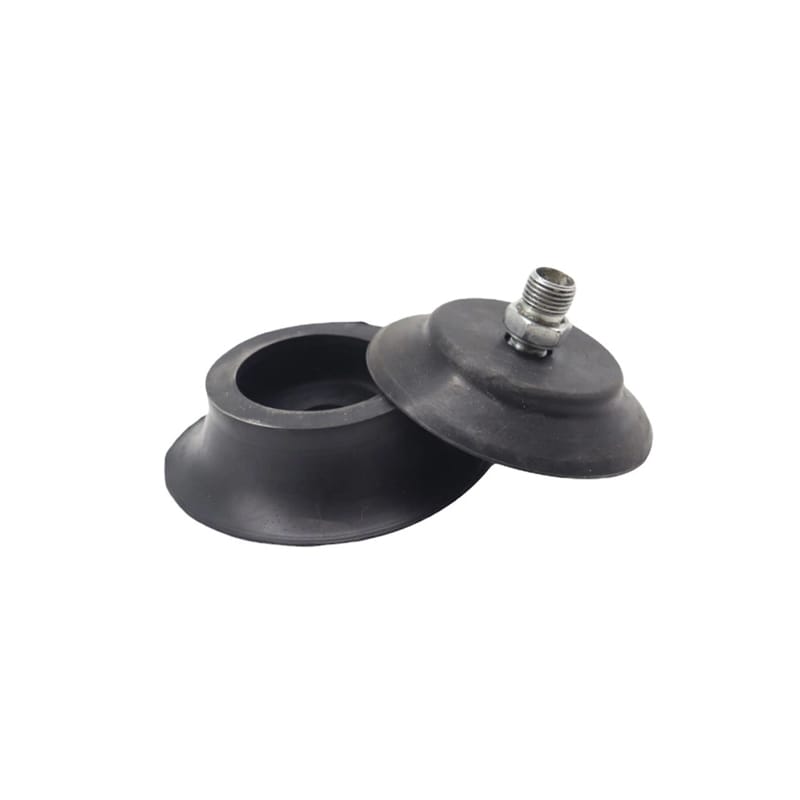
A professional rubber product manufacturer can help buyers choose suitable materials, develop molds, adjust hardness, and produce suction cups according to real equipment needs. This is especially important for OEM machinery, automated production lines, and replacement projects where standard parts do not perform well.
A reliable supplier should be able to work from drawings or samples, offer material suggestions, control dimensional accuracy, inspect sealing surfaces, and support stable batch production. For companies that also need rubber buffer springs, molded rubber parts, gaskets, seals, or plastic injection molded components, a manufacturer with broader rubber and plastic capability can simplify sourcing and improve project efficiency.
Conclusion
Rubber suction cups are important components in industrial automation and material handling. They help equipment pick, move, position, and release products efficiently while reducing surface damage and improving process stability.
When choosing a rubber suction cup, buyers should consider product weight, surface condition, cup shape, material, hardness, vacuum level, movement speed, working environment, and mounting method. For special equipment or demanding applications, custom rubber suction cups can provide better fit and more reliable performance than standard parts.
For automation equipment manufacturers, packaging machinery companies, industrial production lines, and maintenance buyers, the right rubber suction cup can improve handling efficiency, reduce product damage, and support stable long-term operation.
FAQ
What is a rubber suction cup used for?
A rubber suction cup is used to grip, lift, move, or position products through vacuum force. It is commonly used in automation equipment, packaging machinery, glass handling, sheet material transfer, printing equipment, and electronic assembly.
How do I choose the right rubber suction cup?
You should consider product weight, surface condition, movement speed, vacuum level, cup shape, rubber material, hardness, working temperature, and mounting method.
Which material is best for rubber suction cups?
The best material depends on the application. Natural rubber is suitable for general handling, NBR is better for oil resistance, silicone is useful for heat resistance and soft contact, and polyurethane is suitable for high wear resistance.
Why does a suction cup lose grip?
A suction cup may lose grip because of air leakage, poor vacuum level, wrong cup size, rough or porous surface, worn sealing lip, unsuitable material, or excessive movement speed.
Can rubber suction cups be customized?
Yes. Rubber suction cups can be customized by size, shape, material, hardness, lip design, bellows structure, mounting connection, color, and OEM drawing requirements.