Table of Contents
- Why Nylon Plastic Pulley Selection Matters
- Where Nylon Plastic Pulleys Are Used
- Key Design Details to Confirm
- Material and Bearing Considerations
- Quotation Checklist for Custom Pulleys
A nylon plastic pulley may look like a simple wheel, but in industrial equipment it controls alignment, motion, friction, load transfer, and maintenance stability. When the groove, bearing seat, shaft hole, or material is poorly matched to the application, the pulley can create noise, uneven wear, belt tracking problems, or early bearing failure. This guide explains how to choose a nylon plastic pulley for custom industrial use, especially when the part must be produced according to a drawing, sample, or special working condition.
Why Nylon Plastic Pulley Selection Matters
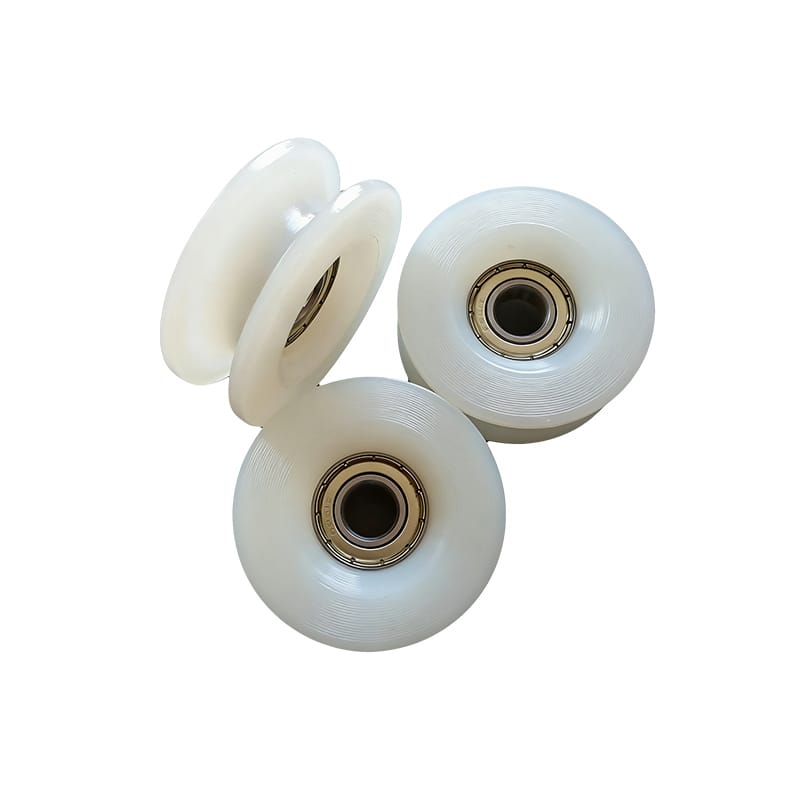
A nylon plastic pulley is often selected because it is lighter than many metal pulleys, can reduce operating noise, and can protect belts, cables, ropes, or guide surfaces from harsh contact. Nylon also offers useful toughness and wear resistance for many moving parts. However, a nylon plastic pulley should not be chosen only because nylon is a familiar engineering plastic. The correct design depends on the load, speed, groove shape, shaft support, bearing arrangement, and surrounding environment.
For OEM buyers and maintenance teams, the practical question is whether the nylon plastic pulley supports the motion safely and consistently. A pulley used for light guide movement has different requirements from a pulley carrying higher radial load or working in a dusty conveyor area. A pulley running continuously also needs different attention than one used only during short equipment cycles.
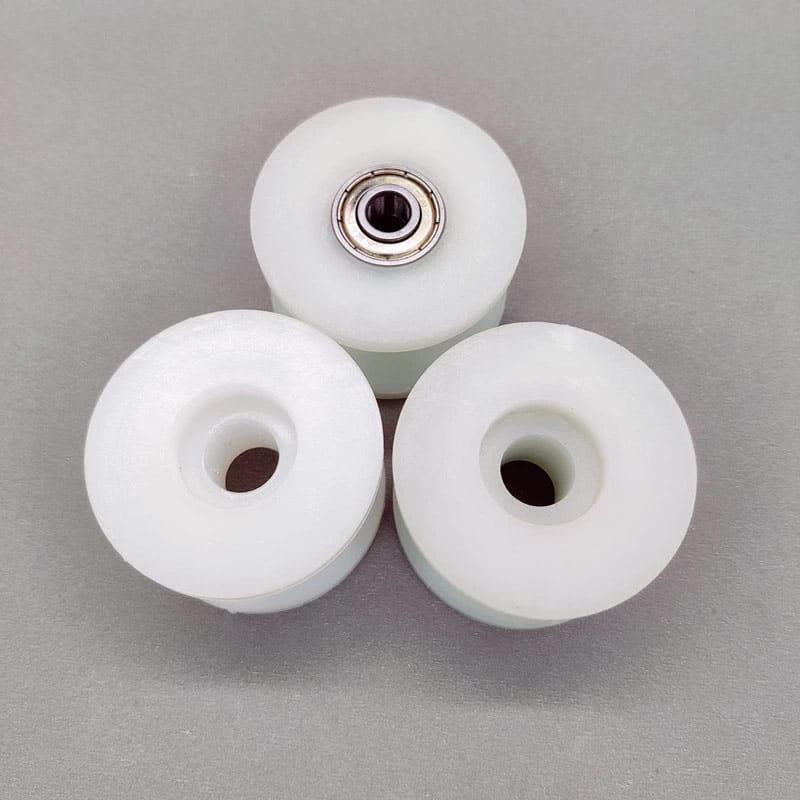
Huadao’s custom nylon plastic pulley with bearing is a relevant product reference for buyers who need U groove, V groove, bearing assembly, or non-standard dimensions. For broader machined components around the same equipment, custom CNC machined plastic parts can also support spacers, guide wheels, sleeves, and related parts.
Where Nylon Plastic Pulleys Are Used
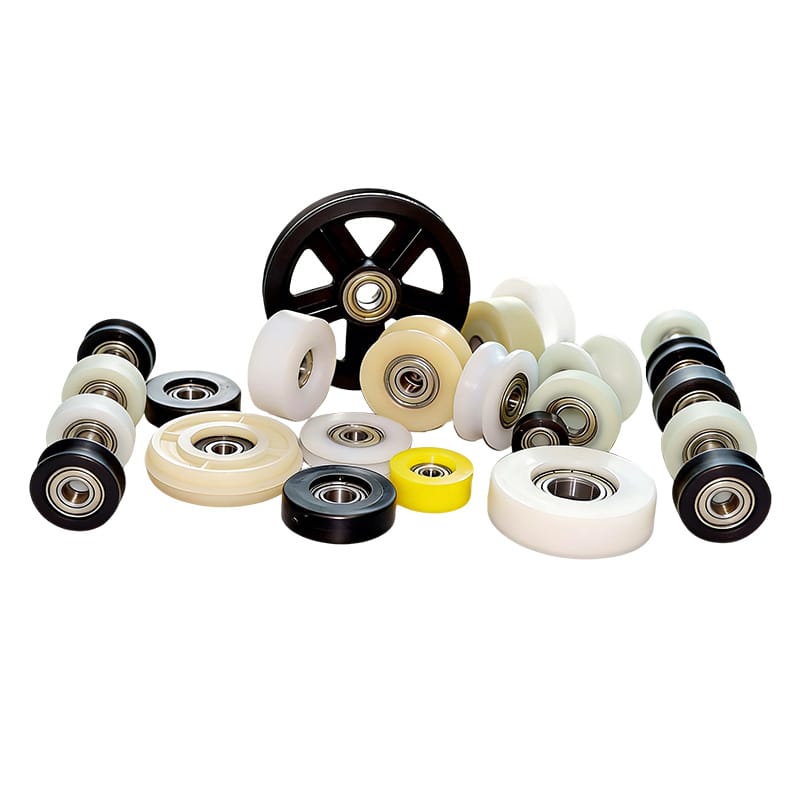
A nylon plastic pulley is commonly used in conveyor systems, packaging equipment, automation machinery, sliding doors, lifting guides, cable guides, textile machinery, logistics equipment, and light-duty mechanical transmission areas. The exact application determines whether the pulley needs a bearing, a plain bore, a keyway, a flange, a U groove, a V groove, or a flat running surface.
For general background, readers can review the concept of a pulley, the function of a mechanical bearing, and the material family known as nylon. If the pulley runs in a conveyor line, the broader idea of a conveyor system may also be useful. These references are only starting points; the final nylon plastic pulley design should be based on the real working condition.
Key Design Details to Confirm
The most important design details are usually not visible in a simple product name. A nylon plastic pulley may require a precise bearing seat, controlled groove geometry, a clean shaft hole, and enough wall thickness to carry load without cracking or deforming. Buyers should confirm which surfaces are functional and which dimensions can be more flexible.
- Outside diameter, groove diameter, width, and pulley thickness
- U groove, V groove, flat surface, flange, or custom profile
- Bearing model, bearing fit, shaft diameter, and installation method
- Radial load, speed, duty cycle, and direction of force
- Contact material, such as belt, cable, rope, chain guide, or product surface
- Exposure to dust, water, oil, cleaning agents, outdoor air, or abrasive particles
If the nylon plastic pulley is replacing a failed part, the wear pattern tells an important story. Side wear may indicate alignment problems. Groove wear may show that the contact material does not match the profile. Bearing seat damage may suggest overload, poor press fit, or vibration. A broken flange may point to impact, side load, or insufficient wall thickness. Sharing this information helps the supplier improve the replacement instead of copying the same problem.
| Design Question | Why It Matters |
|---|---|
| Is the pulley guiding, supporting, or transmitting motion? | The function changes load, groove, and bearing requirements. |
| Does the pulley use a bearing or plain bore? | The fit and running clearance are completely different. |
| What contacts the groove? | Belt, rope, cable, or product contact changes surface design. |
| Is there side load? | Side load may require flange strength or profile adjustment. |
| Will it run continuously? | Continuous operation requires more attention to heat and wear. |
Material and Bearing Considerations
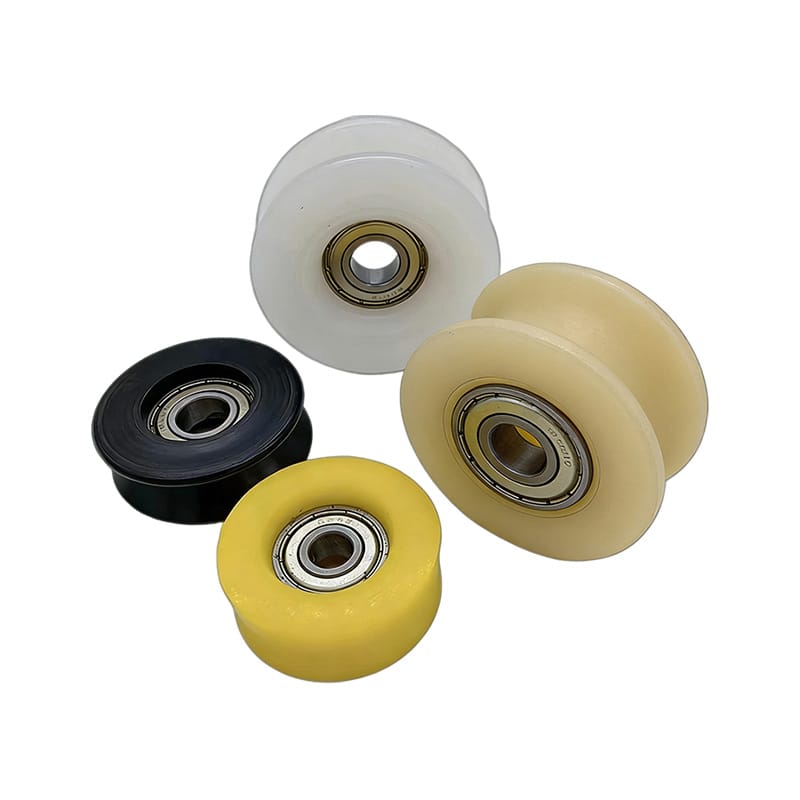
Nylon is a strong candidate for many pulley applications because it combines toughness, wear resistance, and machinability. Still, a nylon plastic pulley may not be the best choice for every environment. If the part needs tighter dimensional stability, POM may be worth comparing. If the equipment needs very low friction sliding parts beside the pulley, UHMWPE may be relevant. Huadao’s POM vs nylon parts guide and UHMWPE and HDPE plastic mechanical parts page can help buyers compare related materials.
The bearing seat deserves special attention. A bearing pressed too tightly into plastic can deform the pulley or affect bearing operation. A bearing seat that is too loose can move under load and damage the bore. If the nylon plastic pulley will be assembled with a standard bearing, include the bearing model, tolerance expectations, and installation process in the inquiry. If the bearing is supplied by the buyer, send the exact bearing dimensions or datasheet.
Groove shape should match the contact material. A V groove may help locate a belt or rope, while a U groove can support rounded contact more smoothly. A flat pulley surface may be better when broad contact is needed. For a nylon plastic pulley used in a cable guide or conveyor guide, the edge radius and surface finish can affect wear, noise, and tracking. This is why a drawing with a simple outside diameter is often not enough.
For systems that also include rollers, guides, or wear strips, related Huadao resources may help buyers review the full assembly. Useful references include the plastic conveyor rollers selection guide, custom plastic chain guide rail selection guide, and UHMWPE conveyor wear strip selection guide.
Quotation Checklist for Custom Pulleys
To request a custom nylon plastic pulley, send a 2D drawing, 3D file, sample, or clear photos from several angles. Include outside diameter, groove dimensions, total width, bearing seat, shaft hole, required quantity, and expected working condition. If the part is used with a belt, rope, cable, or guide rail, include dimensions or photos of the mating part. If the pulley has failed before, describe how it failed and where the damage appeared.
- Drawing or sample photos with critical dimensions marked
- Groove type, groove angle or radius, and contact material
- Bearing model, shaft diameter, and assembly method
- Load, speed, duty cycle, and temperature
- Environment, including dust, moisture, chemicals, or outdoor exposure
- Prototype quantity, batch quantity, and whether repeat orders are expected
A well-designed nylon plastic pulley should fit the machine, support the contact material, hold the bearing correctly, and survive the real service environment. Treating the pulley as a functional rotating component makes the sourcing process more reliable than choosing only by size. For custom projects, Huadao can manufacture nylon plastic pulley parts and related engineering plastic components according to drawings, samples, or working conditions, helping buyers match practical equipment requirements before production.