Table of Contents
Plastic outrigger pads are used under stabilizer feet to spread load, protect ground surfaces, and support mobile equipment during field work. They are common for cranes, bucket trucks, aerial platforms, concrete pumps, utility vehicles, and service equipment with outriggers. Good plastic outrigger pads are not chosen only by length and width; they must match stabilizer load, ground condition, material stiffness, thickness, handling, and storage needs.
Start With Load and Ground Conditions
The main job of plastic outrigger pads is load distribution. A stabilizer foot concentrates force into a relatively small area. The pad spreads that force over more ground surface, helping protect asphalt, concrete, gravel, or compacted soil. The correct pad depends on equipment reaction load, stabilizer foot size, ground firmness, and whether the setup is temporary or repeated daily.
Buyers should avoid selecting plastic outrigger pads only from a catalog size. A pad that works on concrete may be inadequate on softer ground. A pad that is easy to carry may be too thin for higher load. A pad that spreads load well may be too large for vehicle storage. Practical selection starts by balancing equipment support with field handling.
In field use, plastic outrigger pads are often moved between job sites with very different surfaces. A pad used on dry concrete one day may be placed on wet soil or gravel the next. Buyers should think beyond the ideal surface and specify pads for the range of conditions operators actually face.
The stabilizer foot shape should be included in the discussion. A round foot, square foot, or narrow contact edge can load the pad differently. Plastic outrigger pads may need a larger area, more thickness, or a special surface when the foot contact is concentrated rather than broad and flat.
Material, Area, and Thickness Work Together
HDPE and UHMWPE are common material options because they offer impact resistance, weather resistance, and manageable weight compared with many metal alternatives. Still, material alone does not define performance. Area affects ground pressure, thickness affects stiffness, and surface design affects handling. Plastic outrigger pads should be reviewed as a complete support part.
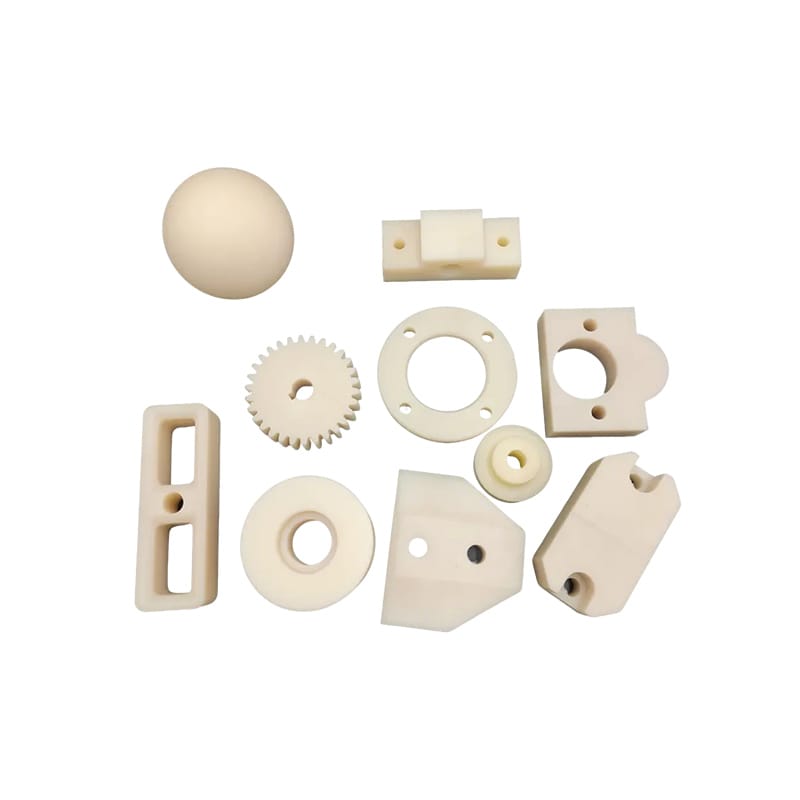
Huadao supplies plastic outrigger pads and related UHMWPE and HDPE plastic mechanical parts. Buyers who need custom holes, handles, blocks, or wear-resistant shapes can also review CNC machined plastic wear parts and custom CNC machined plastic parts.
Deflection is a practical concern. Some flexibility is normal, but excessive bending can make operators lose confidence and may concentrate stress near the stabilizer foot. Plastic outrigger pads should have enough thickness and stiffness for the expected load while remaining portable enough for routine handling.
Surface texture should match the work environment. A smooth pad may be easier to clean, while a textured pad may improve handling and contact. Plastic outrigger pads used in mud, rain, or dusty construction sites need surfaces that operators can manage safely during repeated setup and removal.
Weather exposure can also influence selection. Pads stored outdoors or used in cold, wet, or sunny conditions should be reviewed for material suitability and handling. Plastic outrigger pads are often chosen for field convenience, so long-term outdoor use should be part of the specification when relevant.
| Selection Factor | What to Check | Why It Matters |
|---|---|---|
| Pad area | Length and width | Controls load spreading. |
| Thickness | Stiffness under load | Reduces excessive bending. |
| Material | HDPE, UHMWPE, or custom plastic | Affects impact resistance and weight. |
| Handle | Rope, slot, or machined grip | Improves field handling. |
Design Details for Field Handling
Field use matters. Operators may carry pads across uneven ground, drag them from storage, clean mud from the surface, or place them quickly during setup. Rounded edges, handle position, surface texture, and weight can affect whether the pad is actually used correctly. Good plastic outrigger pads should be strong enough for the load and practical enough for daily use.
Some pads need recessed centers, marked placement areas, anti-slip texture, or custom colors for identification. Others need a simple flat design for easy cleaning and stacking. If the pad is stored on a truck, thickness and handle shape should match the available storage space. These details are not cosmetic; they affect field workflow.
Handling details can decide whether the pad is used consistently. If a pad is too heavy, lacks a usable handle, or does not fit the storage rack, crews may avoid using it correctly. A custom handle or adjusted size can make plastic outrigger pads safer and easier to manage without changing the main support function.
Identification can be useful when several pad sizes are used in the same fleet. Color, markings, or part numbers help operators choose the right plastic outrigger pads for the machine. This reduces the chance that a smaller pad is used under equipment that needs a larger support area.
Operators often prefer pads that are easy to position under pressure. A small handle change, rounded edge, or clearer center mark can make setup faster and reduce dragging damage. These practical details help plastic outrigger pads fit real job-site behavior.
Common Sizing and Failure Mistakes
One common mistake is copying a cracked pad without understanding why it failed. Cracks can come from sharp stabilizer feet, insufficient thickness, impact during handling, cold-weather brittleness, or uneven ground support. Bending can suggest the pad is too thin for the span. Deep surface dents can suggest high point load or inadequate contact area.
General background on ground pressure, mobile cranes, HDPE, and UHMWPE can help buyers understand the material and load discussion. Operators should still follow equipment safety procedures and site requirements.
Failure photos should show both the top and bottom surfaces. Top dents may show foot contact problems, while underside scratches may show dragging or uneven ground. Corner cracks, handle damage, and bending marks each point to different improvements. This kind of review helps plastic outrigger pads become better field tools instead of simple consumables.
Storage damage is easy to overlook. Pads thrown into a truck bed with sharp tools or heavy metal parts may be damaged before they reach the job site. If plastic outrigger pads are expected to last, the storage method should protect corners, handles, and contact surfaces.
Concise Quote Checklist
For a useful quote, send equipment type, stabilizer foot size, target pad size, thickness, expected load, ground condition, handle preference, quantity, color, and any marking requirement. Photos of the stabilizer foot and storage position are helpful, especially if the plastic outrigger pads must fit an existing vehicle layout.
The best plastic outrigger pads are specified around load, ground, material, thickness, and handling. A clear inquiry helps the supplier recommend a pad that supports the equipment while remaining practical for operators to transport, place, clean, and store.
If the pads will be purchased for a fleet, standardizing sizes may simplify storage and training. If different machines have different stabilizer feet, custom plastic outrigger pads may still be necessary. The right decision depends on whether interchangeability or machine-specific fit is more important.
For sample approval, check not only dimensions but also handling, stacking, and fit under the stabilizer foot. Plastic outrigger pads that are awkward to carry or store may create field problems even when the material strength is acceptable.