Table of Contents
- Why Roller Material Matters
- Where Plastic Conveyor Rollers Fit
- Material Options
- Design Details to Confirm
- Quotation Checklist
Plastic conveyor rollers look like simple rotating parts, but they influence noise, belt tracking, product handling, maintenance frequency, and the load on bearings or shafts. When a roller is too heavy, too soft, too flexible, or poorly matched to the conveyor environment, the whole line can become harder to keep stable. This guide explains how OEM buyers and maintenance teams can choose plastic conveyor rollers for real industrial conditions.
Why Roller Material Matters
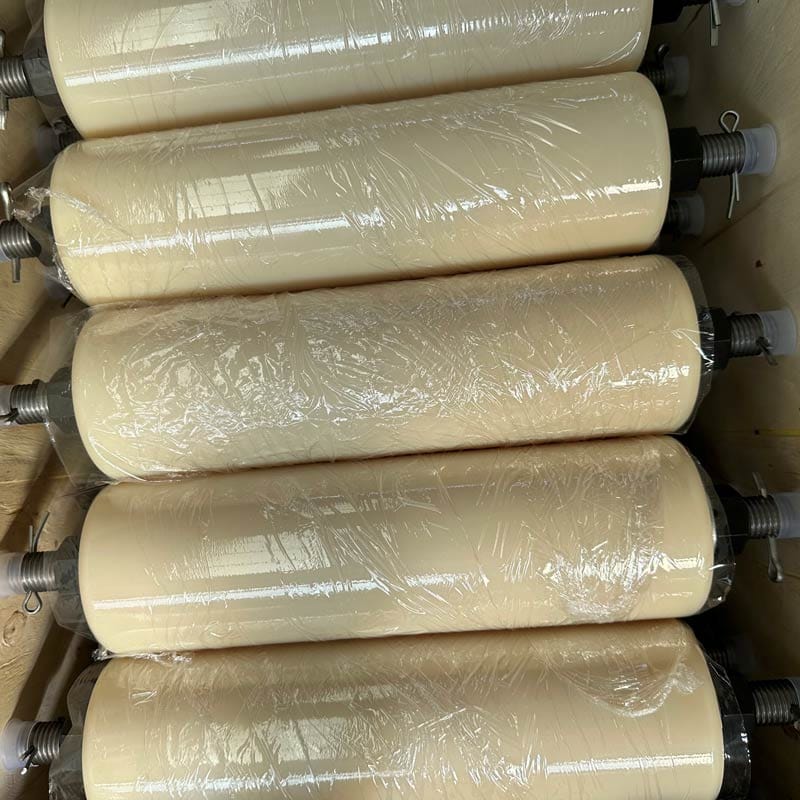
Plastic conveyor rollers are often selected because they can reduce weight, lower operating noise, resist corrosion, and protect conveyed products from harsh metal contact. In packaging lines, logistics systems, food-related equipment, light manufacturing, and automated handling, plastic conveyor rollers can be a practical alternative to heavier rollers when the load and speed are suitable.
The material decision should begin with the conveyor’s working condition. Plastic conveyor rollers used in a clean packaging line do not face the same demand as rollers exposed to dust, moisture, impact, abrasive particles, or frequent washdown. Start with the load, speed, shaft design, bearing arrangement, and product contact surface before choosing the material name.
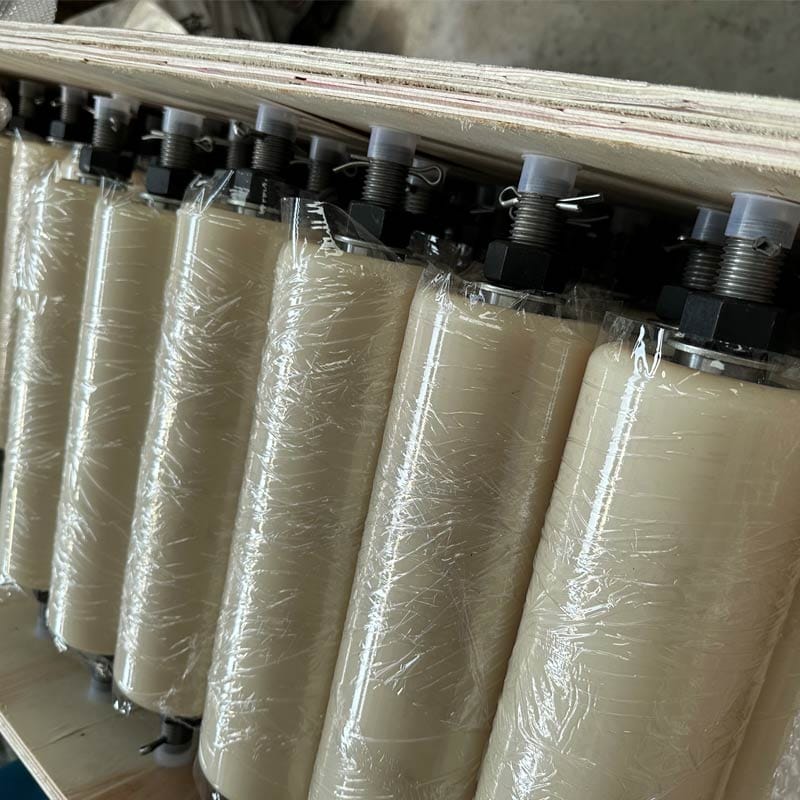
For buyers comparing related components, Huadao’s custom nylon conveyor roller page shows a typical custom roller product, while the custom CNC machined plastic parts service is useful for non-standard sleeves, spacers, end caps, and roller supports.
Where Plastic Conveyor Rollers Fit
Plastic conveyor rollers are commonly used where the conveyor carries cartons, trays, packaged goods, light industrial products, or components that need smoother and quieter movement. They can also be used as guide rollers, idler rollers, return rollers, or support rollers depending on the system layout. In some installations, plastic conveyor rollers are chosen because they are easier to customize for special widths, shaft holes, grooves, or bearing seats.
For a basic overview of conveyor systems, readers can review the general definition of a conveyor system. For the friction and wear concepts behind roller selection, tribology is a useful reference. Buyers can also review general background on material-handling equipment and mechanical bearings. These sources provide general background, while the final roller design should be based on the specific equipment and material handling process.
Material Options
Nylon is a common choice for plastic conveyor rollers because it offers toughness, wear resistance, and good mechanical strength. POM can be useful when dimensional stability and a smooth machined surface are important. UHMWPE may be considered when low friction and abrasion resistance are priorities, although very tight precision tolerances may need extra discussion. PU may be used for covered rollers or impact-friendly contact surfaces when grip, damping, or product protection matters.
| Material | Typical Advantage | Best-Fit Roller Use |
|---|---|---|
| Nylon | Strength and wear resistance | Guide rollers, idlers, support rollers |
| POM | Stable machining and low friction | Precision rollers and small mechanical rollers |
| UHMWPE | Low friction and abrasion resistance | Sliding or low-noise handling areas |
| PU | Elastic contact and damping | Grip rollers, cushioning rollers, soft-contact surfaces |
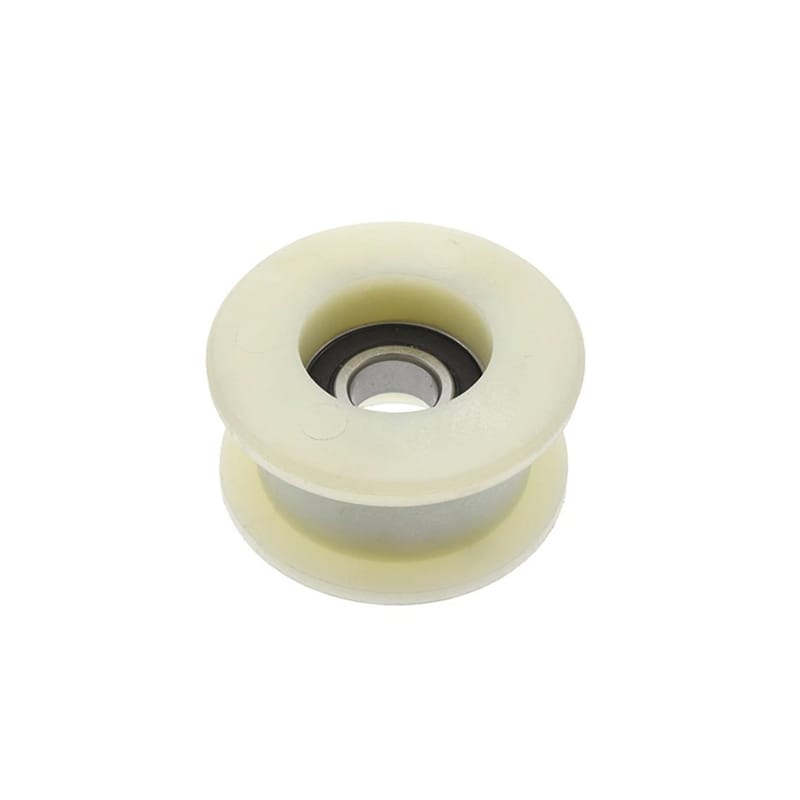
Plastic conveyor rollers should not be selected by material alone. A buyer should also define shaft diameter, bearing type, roller length, wall thickness, surface finish, and whether the roller will be machined from solid stock, assembled with bearings, or made with a molded structure. Huadao’s custom nylon plastic pulley with bearing is a useful related example for bearing-seat and rotating plastic component design.
Design Details to Confirm
Good plastic conveyor rollers depend on small design details. Confirm whether the roller rotates on a fixed shaft or with the shaft. Check whether the bearing is pressed into plastic, held by a shoulder, or assembled with a sleeve. If the roller contacts a belt, chain, carton, or product surface, the outer diameter and surface finish matter. If the roller supports load, the wall thickness and shaft span matter.
- Roller outside diameter, length, and allowable runout
- Shaft hole, bearing seat, or end cap structure
- Load per roller and expected duty cycle
- Conveyor speed and continuous or intermittent movement
- Exposure to water, oil, cleaning agents, dust, or abrasion
- Whether the roller needs grooves, shoulders, flanges, or anti-slip surfaces
If the same conveyor also needs wear strips or guide rails, it is worth reviewing Huadao’s UHMWPE conveyor wear strip selection guide and plastic chain guide rail selection guide. Plastic conveyor rollers often work beside these components in the same material handling line.
Another practical point is installation tolerance. Plastic conveyor rollers may expand, deflect, or wear differently from metal rollers, so the drawing should not simply copy an old metal part without review. If the roller is too tight on the shaft, heat and drag can increase. If the roller is too loose, the conveyor may develop vibration, uneven tracking, or product movement problems. This is why custom plastic conveyor rollers should be discussed as a rotating assembly rather than only as a plastic tube.
Surface contact also matters. A roller moving cardboard cartons can use a different surface than a roller supporting sharp-edged parts or abrasive material. Some plastic conveyor rollers need a smooth surface for low friction, while others need a groove, shoulder, or covered contact area to control movement. If the conveyed product is sensitive to marks, scratches, or static handling problems, tell the supplier before production. A small surface detail can change how the whole conveyor behaves.
Quotation Checklist
To request custom plastic conveyor rollers, send a drawing or sample photos, the working length, shaft or bearing dimensions, load, speed, quantity, and environment. If the roller is replacing a failed part, include photos of the wear pattern and explain how long the previous part lasted. That information helps the supplier decide whether the issue is material, clearance, bearing support, alignment, or surface contact.
For a new design, it is helpful to provide the conveyor layout and the role of the roller in the system. Plastic conveyor rollers used as side guides, belt supports, return rollers, or product-transfer rollers may require different materials and dimensions. If the conveyor runs continuously, share the duty cycle. If the line stops and starts frequently, mention impact and acceleration. These details help the manufacturer suggest plastic conveyor rollers that match the real service condition instead of guessing from size alone.
Plastic conveyor rollers are most successful when treated as functional parts, not just round plastic tubes. With the right material and geometry, plastic conveyor rollers can support smoother handling, easier maintenance, and more stable operation in many industrial conveyor systems.