Table of Contents
- Why Plastic Bushings Are Used in Industrial Equipment
- Start With the Movement, Not the Material Name
- Material Selection for Plastic Bushings
- Key Design Details Buyers Should Confirm
- When CNC Machining Is Better Than Molding
- Common Problems Caused by the Wrong Bushing Choice
- Information to Send for an Accurate Quote
- Practical Selection Checklist
- Conclusion
When a shaft, pin, hinge, guide post, or rotating assembly begins to wear too quickly, the problem is often blamed on the larger machine. In many cases, the small sleeve between moving surfaces is doing more work than anyone notices. That is why plastic bushings deserve careful attention during equipment design, maintenance replacement, and OEM sourcing.
Plastic bushings are used to reduce friction, support movement, protect mating parts, and improve service life in industrial equipment. They may be simple in shape, but the wrong material or tolerance can cause heat buildup, noise, shaft scoring, poor alignment, or early failure. This guide explains how to choose plastic bushings for real working conditions, what information to prepare before requesting a quote, and when a custom machined solution makes sense.
Why Plastic Bushings Are Used in Industrial Equipment
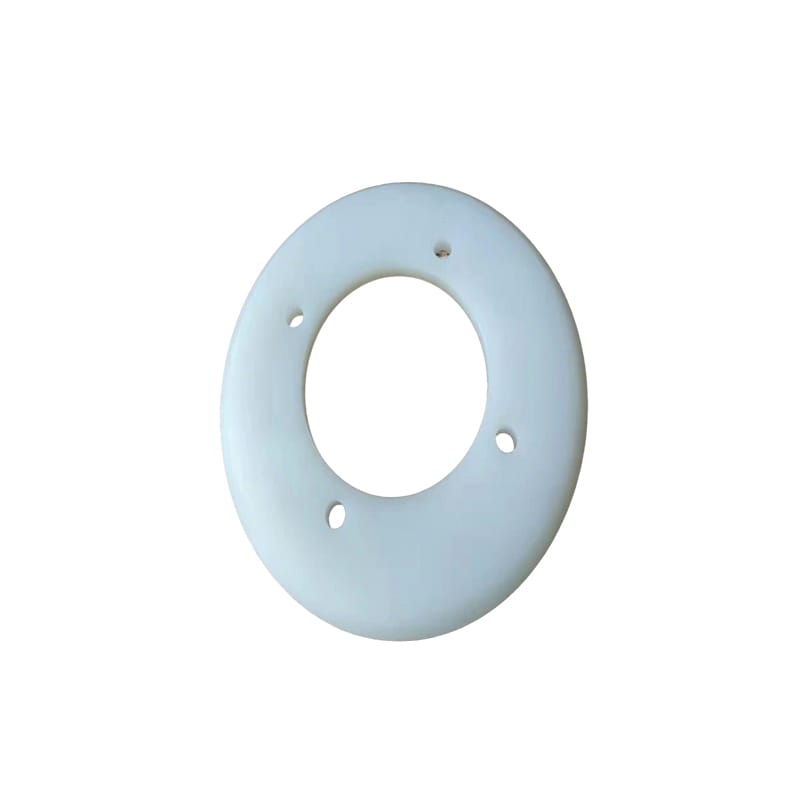
Plastic bushings are often selected when equipment needs smoother movement, lower weight, corrosion resistance, or reduced noise compared with many metal-to-metal contact designs. Plastic bushings are common in conveyors, packaging equipment, agricultural machinery, automation systems, material handling equipment, textile machinery, food processing lines, and repair projects where a standard catalog part cannot match the installation space.
In a moving assembly, plastic bushings can act as sacrificial wear parts. Instead of allowing a shaft, bracket, or frame to suffer damage, the bushing absorbs sliding contact and can be replaced during planned maintenance. This is especially valuable when the surrounding structure is expensive, hard to access, or difficult to machine again.
For buyers comparing different custom components, Huadao’s custom CNC machined plastic parts service is often suitable for sleeves, spacers, wear blocks, and non-standard bushing shapes made from engineering plastics.
Start With the Movement, Not the Material Name
A common sourcing mistake is to request plastic bushings by material name before defining the working condition. Nylon, POM, UHMWPE, HDPE, and PU can all be useful, but they do not behave the same way under load, moisture, impact, heat, and continuous sliding.
Before choosing material, describe the movement. Is the part rotating around a shaft, sliding on a guide rod, supporting an oscillating arm, or working as a spacer with occasional movement? Is the load radial, axial, or mixed? Does the assembly run continuously or only during short cycles? These answers shape the correct bushing design more than the product name alone.
For a basic technical reference, a bushing is closely related to the broader idea of a plain bearing, where sliding contact is used instead of rolling elements. In industrial sourcing, however, the practical decision is not just the bearing type. Plastic bushings must match the material, shaft condition, clearance, lubrication, and operating environment.
Material Selection for Plastic Bushings
Different plastic bushings solve different problems. The table below gives a practical starting point for material discussions. Final selection for plastic bushings should still consider the drawing, shaft material, temperature, speed, load, and chemical exposure.
| Material | Useful Strengths | Typical Bushing Use | Selection Notes |
|---|---|---|---|
| POM / Acetal | Dimensional stability, smooth machining, low friction | Precision sleeves, spacers, guide bushings | Good when fit and repeatable dimensions matter |
| Nylon | Toughness, wear resistance, mechanical strength | Industrial bushings, pulleys, rollers, sleeves | Consider moisture absorption in humid or wet environments |
| UHMWPE | Low friction, high abrasion resistance, impact resistance | Sliding bushings, guide sleeves, wear-contact parts | Excellent for sliding contact, less ideal for very tight precision tolerances |
| HDPE | Chemical resistance, impact resistance, lightweight structure | General support bushings and simple sleeves | Practical for corrosion-prone or light-duty environments |
| PU | Elasticity, damping, abrasion resistance | Cushioning bushings and impact-related parts | Useful where vibration, shock, or flexible contact is important |
For parts that require a clean machined finish and controlled dimensions, POM CNC turning parts can be a useful reference. For applications involving shock absorption or flexible support, Huadao’s custom polyurethane bushing product page is more relevant.
Key Design Details Buyers Should Confirm
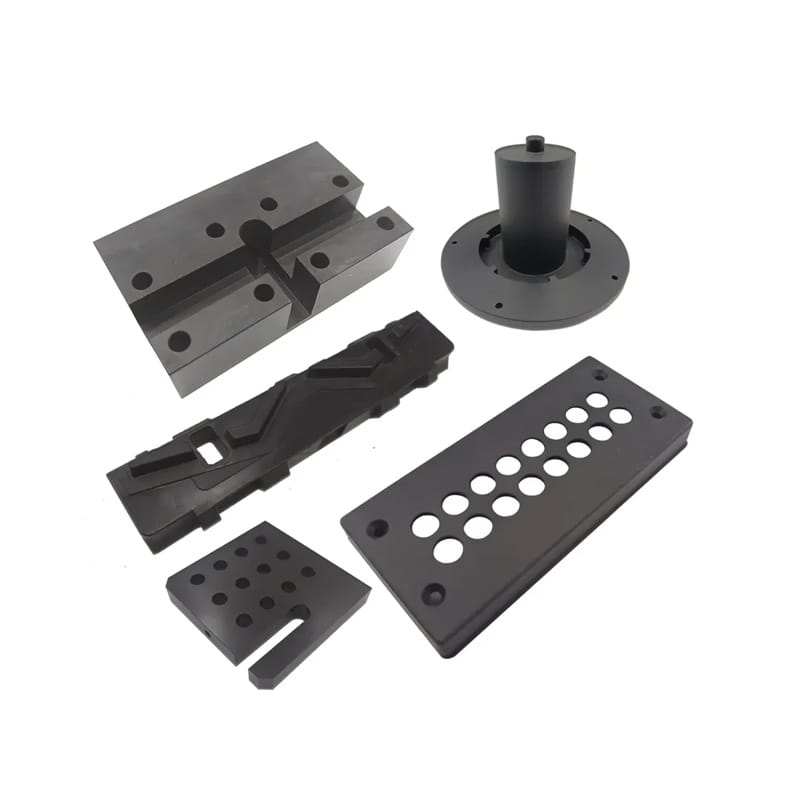
Well-performing plastic bushings depend on more than material choice. The design needs enough clearance for movement, enough wall thickness for load, and suitable edges for installation. If a bushing is pressed into a housing, the outside diameter and interference fit must be discussed carefully. If it rotates on a shaft, the inside diameter, shaft finish, and lubrication condition become more important.
- Inside diameter and shaft tolerance
- Outside diameter and housing fit
- Flange size, groove, shoulder, or step structure
- Wall thickness and length-to-diameter ratio
- Chamfered edges for easier assembly
- Lubrication grooves or holes if needed
- Critical surfaces that contact the shaft or housing
Plastics are not metals. They can expand, compress, absorb moisture, creep under long-term stress, or deform during machining if the shape is too thin. For this reason, plastic bushings should not copy metal tolerances automatically. A functional tolerance strategy is usually better: keep tight control where assembly and movement require it, and allow practical tolerance where the dimension is not critical.
When CNC Machining Is Better Than Molding
Many plastic bushings are produced by CNC turning or machining, especially when the order involves prototypes, replacement parts, low-volume production, or non-standard dimensions. CNC machining allows plastic bushings to be adjusted for wall thickness, hole size, groove position, and flange design without investing in a mold first.
Injection molding may be suitable when the design is stable and the quantity is high enough to justify tooling. For early-stage OEM development, maintenance replacement, or equipment modification, CNC machining is often the more flexible route. Huadao’s article on custom CNC plastic parts explains this decision in more detail for buyers comparing manufacturing routes.
For larger industrial wear components around the same equipment system, UHMWPE and HDPE plastic mechanical parts may also be considered alongside plastic bushings, especially where sliding contact, protection plates, spacers, and guide parts are used together.
Common Problems Caused by the Wrong Bushing Choice
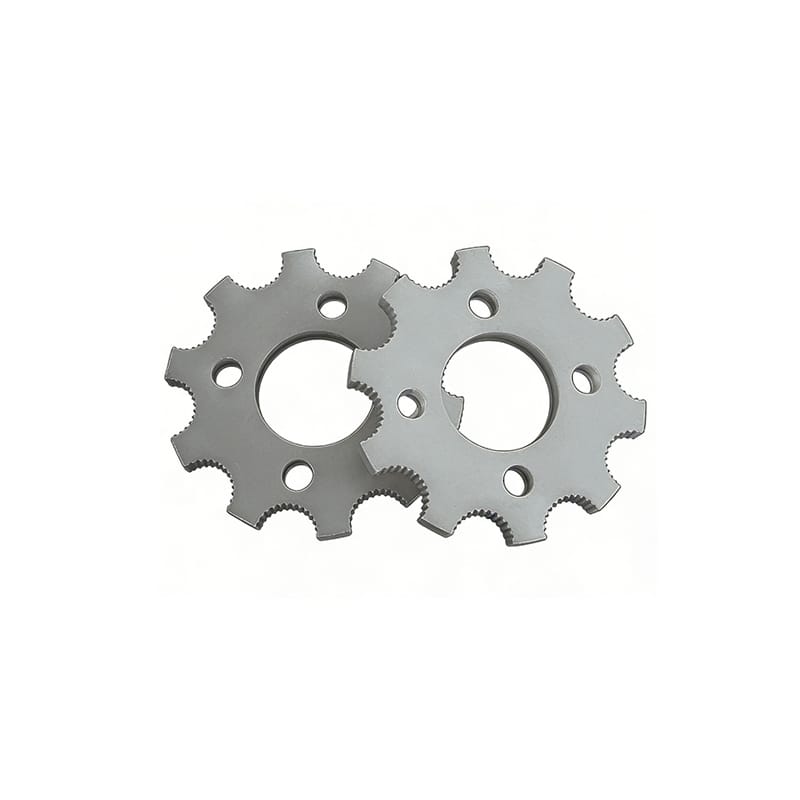
When plastic bushings fail early, the cause is not always poor manufacturing. Often the part was designed or specified without enough operating information. A sleeve that works well in dry intermittent motion may behave differently in wet, abrasive, or high-temperature conditions. A material that machines cleanly may not be the best option for impact or vibration.
- Too little clearance, causing heat buildup and seizure
- Too much clearance, causing vibration or poor alignment
- Material too soft for the load or too brittle for impact
- Moisture absorption changing the fit over time
- Rough shaft surface accelerating wear
- No chamfer, making installation damage more likely
- Ignoring chemicals, cleaning agents, dust, or outdoor exposure
For material behavior references, buyers can review general information about polyoxymethylene, nylon, and UHMWPE. These references are useful for understanding material families, while final engineering decisions should still be based on the exact grade and application conditions.
Information to Send for an Accurate Quote
A complete inquiry helps the supplier recommend better plastic bushings and avoid repeated clarification. If a drawing is available, mark the critical dimensions and installation surfaces. If only a worn sample is available, send photos from several angles and explain which areas are damaged or changed by wear.
- 2D drawing, 3D file, sample, or clear photos
- Inside diameter, outside diameter, length, and flange dimensions
- Shaft material, shaft finish, and movement type
- Load direction, speed, and duty cycle
- Working temperature and exposure to water, oil, dust, or chemicals
- Lubricated or dry-running condition
- Quantity, prototype needs, and expected repeat orders
If the bushing is part of a larger redesign, include installation photos. This helps the supplier understand whether the part is mainly carrying load, reducing friction, isolating vibration, protecting a shaft, or spacing an assembly. For broader project support, buyers can use Huadao’s customized rubber and plastic parts service or contact the team directly through the contact page.
Practical Selection Checklist
Before approving plastic bushings for production, review the part in the context of the full assembly. Plastic bushings that look correct on the drawing may still fail if the shaft is rough, the housing is misaligned, or maintenance teams cannot install them without damage.
| Question | Why It Matters |
|---|---|
| Is the movement rotation, sliding, or oscillation? | Different motion types create different wear patterns. |
| Which dimensions control fit? | Critical dimensions need tighter inspection than non-functional edges. |
| Will the part run dry or lubricated? | Friction and heat behavior depend strongly on lubrication. |
| Is the environment wet, dusty, hot, or chemical-exposed? | Material stability and wear resistance may change by environment. |
| How will the part be installed and replaced? | Chamfers, flanges, and access space affect maintenance success. |
Conclusion
Plastic bushings are small parts with a direct influence on equipment reliability, noise, friction, and maintenance cost. Choosing them well means looking beyond the material name and understanding the real movement, load, shaft condition, environment, and installation method.
For OEM buyers, maintenance engineers, and equipment manufacturers, the best approach is to define the function first, then choose material, tolerance, and processing method around that function. Huadao can manufacture custom plastic bushings and related CNC machined plastic components according to drawings, samples, or working conditions, helping buyers match practical industrial requirements before production.