Table of Contents
For rubber pads, a specific review is needed when the application involves workstation pads exposed to intermittent oil splashes. The central decision is to verify grip after contamination instead of assuming dry friction persists. A drawing, a material name and a low unit price do not resolve that decision on their own. The buyer needs a practical way to connect the proposed part with the assembly condition in which it must work.
This guide explains how to turn that concern into a drawing review, a sample trial and a clear purchase specification. It is intended for engineers and procurement teams evaluating rubber pads, with the equipment or product designer setting the final performance limits. No universal tolerance, load rating or service-life figure is assumed.
Rubber pads: define the approval decision
For rubber pads, start with the required outcome: verify grip after contamination instead of assuming dry friction persists. Write that outcome in a form that can be observed on the finished assembly. Include the operating situation, the part that mates with it and the point at which the result will be accepted. A supplier can respond more precisely when the function is visible than when the only instruction is to make the part “better” or “more durable”.
The application here is workstation pads exposed to intermittent oil splashes. Separate its normal duty from occasional events such as startup, maintenance, cleaning or a format change. Those events may expose a weakness that does not appear in a short nominal-condition inspection. For a rubber pads project, record which events are essential to the approval and which can be investigated later. This keeps the sample program focused without leaving the main uncertainty unresolved.
What changes the behavior of rubber pads
Oil can change both the compound and the contact interface. A pad that feels secure when dry may slide on a thin fluid film without obvious damage.
The practical implication is to evaluate the relevant interface, not just the isolated component. Changing hardness alone may not solve a slip problem driven by oil between the pad and the bench. That observation should guide the sample review. Before changing material, geometry or supplier, determine whether the issue comes from the part itself, the mating hardware, the assembly procedure or the way the result is measured. Changing several of these at once can produce a different result without showing which change actually mattered.
Keep a short assumption list for rubber pads. For every assumption that affects fit or function, identify an owner and a way to check it. Examples include an unverified mating dimension, an undefined contact condition or an unknown material grade. Resolve the highest-impact uncertainty before releasing expensive tooling or a large batch. An assumption that remains open should stay visible in the quotation and sample plan.
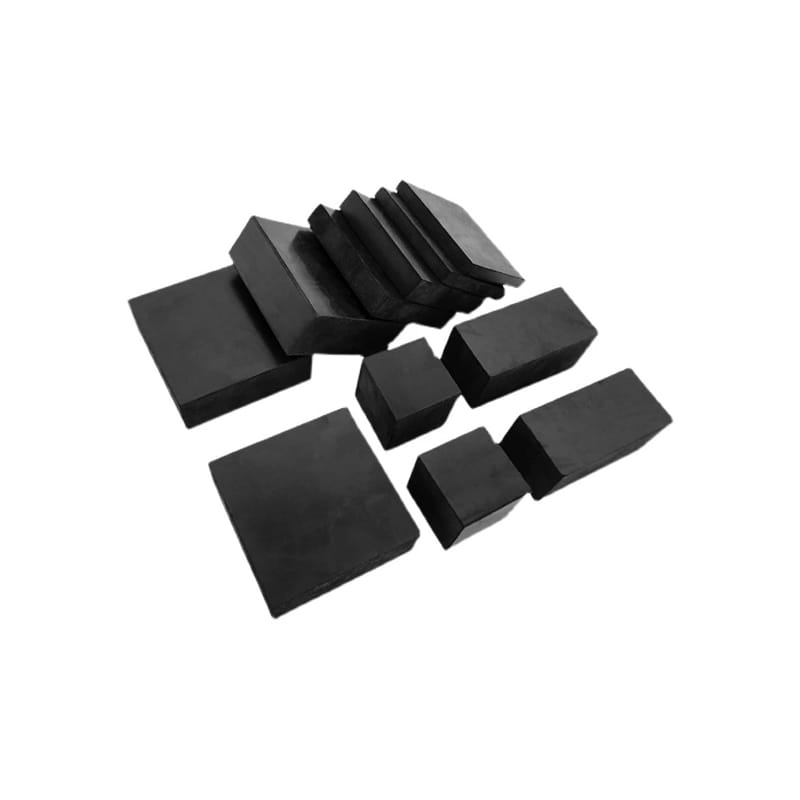
Application detail to resolve for rubber pads
Use a contamination trial that reflects the real surface condition. A thin film on a smooth painted bench can behave differently from a soaked pad on rough steel. Keep the contaminant amount and cleaning sequence consistent when comparing candidates. Record whether the pad slips, the supported item slips on the pad or both move together. Those observations identify which contact needs improvement and help avoid changing the wrong surface.
Drawing requirements for rubber pads
Describe the oil, contact surfaces, cleaning method, load footprint and whether movement is permitted.
A useful drawing for rubber pads also distinguishes the features that locate the component from those that only provide clearance. Identify the measurement reference and the condition in which the dimension applies. Where an assembly view communicates the load or contact path better than an isolated part view, include it. An annotated photograph can support the drawing, but it should not replace a dimension or a material callout that needs to be controlled.
Compound identity and installed deformation for rubber pads
For a custom elastomer part, polymer family, compound formulation and installed deformation belong in the same technical discussion. Color and hardness do not uniquely identify a material. Ask the supplier to state the proposed compound and the basis for its suitability. Keep a clear distinction between a material screening result and an assembly-level approval. Where fluid exposure, repeated motion or sustained compression is involved, use a defined validation method rather than a hand-feel comparison.
Specify the compound and the installed geometry for rubber pads
Rubber is a family of formulated materials, and hardness is only one characteristic. Two compounds with similar hardness can respond differently to fluids, repeated strain or sustained deformation. Pair compound identification with the actual installed geometry and contact conditions. A simple flat specimen can support material screening, but the finished shape may add thin sections, corners or constraints that need separate evaluation. Keep those stages distinct so a successful coupon test is not mistaken for approval of the complete molded component.
Separate installation from sustained service for rubber pads
Record the installation condition and the later service condition separately. A joint may initially seat correctly and then change under continuous load or repeated movement. The useful acceptance evidence therefore includes a defined dwell or duty sequence, followed by the same measurements made before the sequence. Retightening during a trial can conceal the behavior being investigated. If retightening is part of normal maintenance, document its timing and method. If it is not, do not introduce it merely to make the sample pass. Compare retained spacing and function with the actual assembly requirement.
Compare evidence before committing to production
The following comparison helps a buyer of rubber pads decide what evidence is still missing. Each route answers a different question. A completed dimensional report should not be used as a substitute for an application trial when the concern is contact, movement, exposure or assembly behavior.
| Review route | What it establishes | What remains to be checked |
|---|---|---|
| Drawing and specification review | Agreement on geometry, grade and the intended interface | Behavior of the physical component in the actual assembly |
| Identified sample inspection | Measured characteristics under a stated method and condition | Performance through the operating or exposure sequence |
| Assembly or application trial | Compare clean, contaminated and cleaned samples on representative surfaces using a controlled practical grip evaluation. | Repeatability across the approved production configuration |
| Production lot acceptance | Identity, condition and agreed evidence for the delivered batch | Any changed duty, revision or unapproved material substitution |
Build a representative rubber pads trial
Compare clean, contaminated and cleaned samples on representative surfaces using a controlled practical grip evaluation.
Identify the samples and record their starting condition before testing. Use the intended mating parts, tools and assembly sequence where they affect the result. For rubber pads, the first trial should answer the main question rather than combine every possible change. Compare a proposed change with a retained reference under the same conditions. If both the material and geometry must change, record that limitation so the result is not incorrectly attributed to only one variable.
Interpreting test results for rubber pads
Changing hardness alone may not solve a slip problem driven by oil between the pad and the bench.
When a project involving rubber pads does not meet the intended outcome, preserve the sample and review the evidence in order. Confirm identity and revision first, then measurement method, assembly condition and exposure. Compare the result with the retained reference and inspect the mating component. A dimensional deviation and an assembly-method error require different corrective actions. Replacing the supplier or tightening every tolerance before this review can add cost without addressing the cause.
Prepare a quotation package for rubber pads
Request compound compatibility evidence and a sample test with the customer’s actual contaminant before choosing a pad texture.
Give every supplier of rubber pads the same technical package and quantity assumptions. Separate prototype, first-article and repeat-production requirements. Identify included hardware, finishing, packaging and inspection work. Ask the supplier to state exceptions rather than leaving them hidden in a broad promise of compliance. A comparable quote identifies the work being purchased as well as the unit price.
Repeat orders and change control for rubber pads
After approval, retain the reference information for rubber pads with the part number. A repeat order should state the accepted drawing revision and material, and identify any change in duty or assembly. Review supplier-proposed substitutions before they enter production. If an old revision is still usable for a limited purpose, keep its disposition explicit so it does not become mixed with the current design.
Related products and technical reading for rubber pads
For a related manufacturing route, review Huadao’s Custom Molded Rubber Parts and Customized Rubber Product range. The customization service describes the design-to-sample workflow. Discuss project-specific availability and requirements before treating a listed capability as approval for a particular application.
For background terminology and material or design considerations, consult Parker O-Ring Handbook resource page. Use the current grade documentation and the applicable project specification for numerical design values. The checklists in this article are an original procurement and engineering review framework, not a replacement for a material data sheet or an equipment design approval.
Discuss the drawing and sample plan with Huadao
If your project involves rubber pads, send Huadao the drawing revision, the application conditions, expected quantities and the main uncertainty to resolve. For workstation pads exposed to intermittent oil splashes, explain that the objective is to verify grip after contamination instead of assuming dry friction persists. Include the mating-part information and any sample or test evidence already available.
Use the inquiry form below to request a feasibility review and a project-specific quotation for rubber pads. Ask Huadao to identify unresolved assumptions before tooling or production begins.
Frequently asked questions
What should be confirmed first for rubber pads?
Start with the application and the decision to verify grip after contamination instead of assuming dry friction persists. Oil can change both the compound and the contact interface. A pad that feels secure when dry may slide on a thin fluid film without obvious damage. The first approval should therefore connect the proposed component with the real interface and operating condition, rather than rely only on appearance or a generic material description.
What drawing information is needed for rubber pads?
Describe the oil, contact surfaces, cleaning method, load footprint and whether movement is permitted. Include the approved revision and the mating-part information needed to interpret those features. Mark unresolved inputs explicitly so the supplier can raise questions before committing to production.
How should samples be evaluated for rubber pads?
Compare clean, contaminated and cleaned samples on representative surfaces using a controlled practical grip evaluation. Identify the sample and agree on the acceptance criteria before testing. Retain the starting measurements and repeat the same method after the relevant assembly, operating or exposure sequence.
What can a visual check miss when reviewing rubber pads?
Changing hardness alone may not solve a slip problem driven by oil between the pad and the bench. Visual inspection remains useful for condition and obvious damage, but it should be paired with the measurement or application check that addresses the functional concern.
What should a quotation for rubber pads include?
Request compound compatibility evidence and a sample test with the customer’s actual contaminant before choosing a pad texture. The proposal should also identify the drawing revision, material designation, quantity, sample requirements, included inspection work and any exceptions that still need buyer approval.