Custom Molded Rubber Parts for Industrial Applications

최신 회사 뉴스, 기술 발전, 맞춤형 고무 및 플라스틱 제조 분야의 업계 동향을 최신 상태로 유지하세요.
 

Introduction

In industrial equipment, many small components carry important functions. A seal prevents leakage. A bushing reduces vibration. A rubber pad absorbs impact. A plug protects an opening from dust or moisture. A gasket helps maintain pressure inside an assembly. Although these parts are often small, they can directly affect equipment stability, safety, and long-term maintenance costs.

Custom molded rubber parts are designed for applications where standard rubber components cannot fully meet the required size, shape, material, hardness, or performance. For equipment manufacturers, maintenance companies, and industrial buyers, custom rubber molding provides a practical way to produce parts that fit specific machines and working environments.

Whether the application requires vibration control, sealing, cushioning, insulation, protection, or surface contact, the right molded rubber component can improve equipment reliability and reduce unnecessary downtime.

What Are Custom Molded Rubber Parts?

Custom molded rubber parts are rubber components produced with a mold according to specific drawings, samples, or application requirements. Unlike standard rubber parts, they are manufactured to match the exact structure and performance needs of a product or machine.

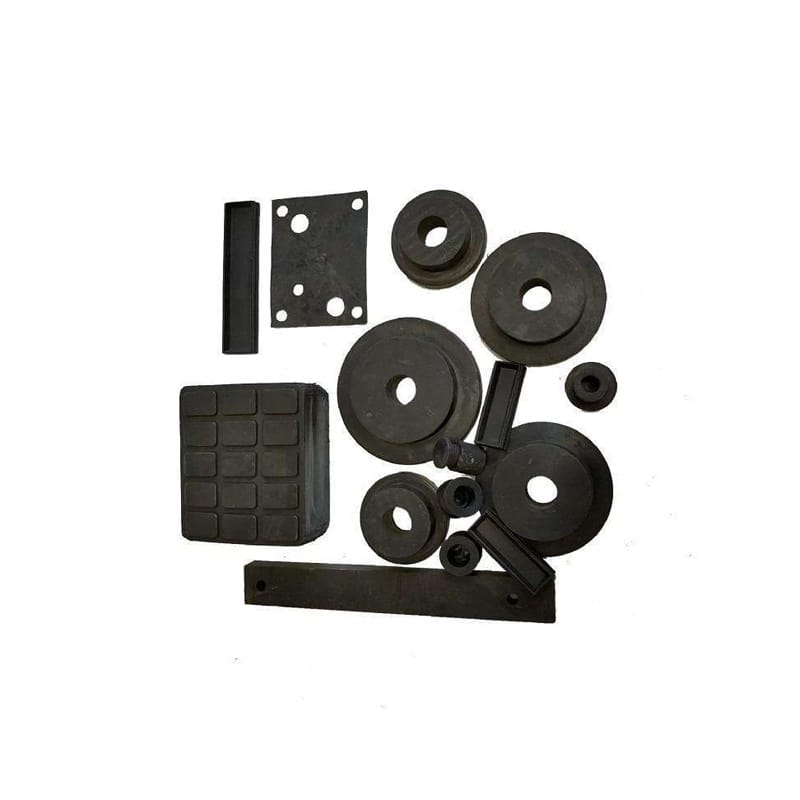
These parts can be simple or complex. Some are flat rubber pads, seals, or plugs. Others may include holes, grooves, lips, ribs, metal inserts, threaded parts, or special profiles. The final design depends on how the part will be installed and what function it needs to perform.

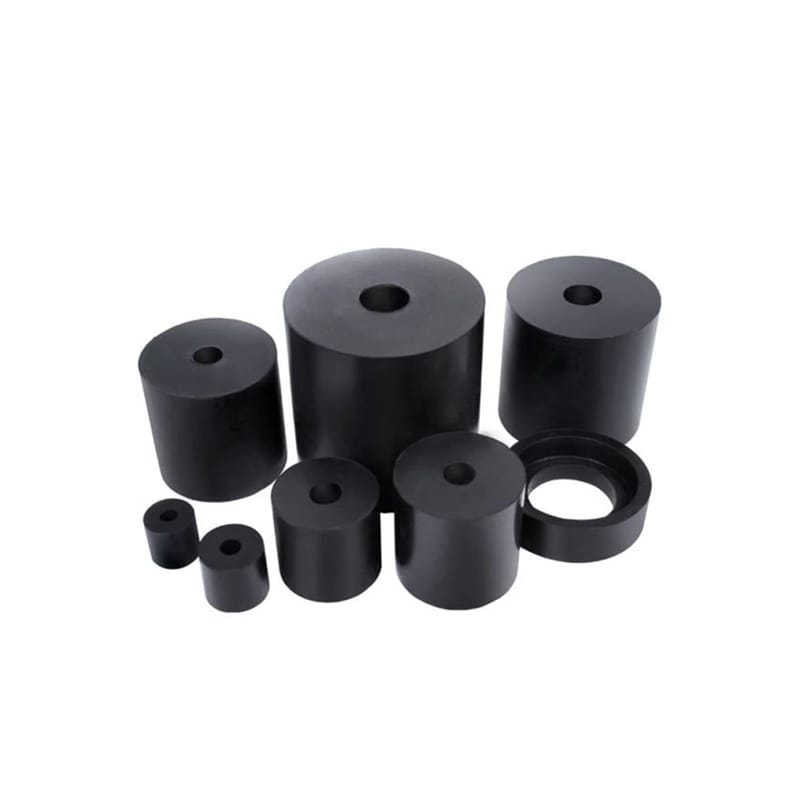
Common custom molded rubber parts include rubber gaskets, rubber seals, rubber bushings, rubber plugs, rubber pads, rubber sleeves, rubber feet, rubber dampers, rubber bumpers, rubber washers, rubber bellows, and rubber parts bonded with metal or plastic components.

For OEM projects, custom rubber molding is especially useful because it allows the part to be developed according to the equipment design instead of forcing the equipment to adapt to an existing standard component.

Why Industrial Buyers Need Custom Rubber Molding

Many industrial machines operate in demanding environments. They may face oil, water, chemicals, heat, outdoor weather, compression, friction, vibration, or repeated movement. A standard rubber part may fit the size but fail under actual working conditions if the material or structure is not suitable.

Custom rubber molding helps solve this problem by matching the rubber part to the real application. The buyer can define the size, material, hardness, tolerance, color, surface finish, and performance requirement.

For example, a rubber gasket used near oil must have better oil resistance. A rubber bumper used in heavy equipment must have enough hardness and compression strength. A rubber seal exposed to outdoor weather should resist ozone, aging, and temperature changes. A rubber bushing used in machinery should balance vibration control and load support.

This is why custom molded rubber parts are widely used in machinery manufacturing, automation equipment, transportation systems, construction machinery, agricultural equipment, packaging machines, and industrial maintenance projects.

Main Functions of Custom Molded Rubber Parts

Sealing and Leakage Prevention

Rubber is widely used for sealing because it can compress and fill small gaps between two surfaces. Custom molded rubber seals and gaskets are often used to prevent air, water, oil, dust, or other substances from entering or leaking out of equipment.

A good sealing part must have the right material, hardness, compression behavior, and dimensional accuracy. If the rubber is too hard, it may not seal properly. If it is too soft, it may deform too much and lose long-term sealing pressure.

Vibration Reduction

Rubber has natural damping properties, which makes it useful for vibration control. Custom molded rubber bushings, mounts, pads, and dampers can reduce vibration transfer between mechanical parts.

This helps protect equipment structures, lower noise, and improve operating stability. In machinery with motors, pumps, conveyors, vibrating systems, or moving assemblies, rubber vibration parts are often essential.

Shock Absorption

Rubber parts can absorb impact and reduce direct collision between rigid components. Molded rubber bumpers, buffer pads, and protective blocks are often used where machines stop, press, close, lift, or move repeatedly.

By reducing impact force, these components help protect frames, brackets, panels, and other expensive mechanical structures.

Surface Protection

Custom rubber pads, feet, sleeves, covers, and edge protectors help prevent scratching, friction, and mechanical damage. They are useful when equipment needs a protective contact layer between metal parts, workpieces, or support surfaces.

Dust and Moisture Protection

Rubber plugs, caps, boots, and covers are used to protect holes, connectors, shafts, cables, and equipment openings. They help prevent dust, moisture, dirt, and debris from entering sensitive areas.

Insulation and Noise Control

Rubber can also provide electrical insulation and noise reduction in suitable applications. Molded rubber parts may be used to isolate components, reduce vibration noise, or protect operators from direct contact with rigid surfaces.

Common Types of Custom Molded Rubber Parts

Product TypeMain FunctionCommon Application
Rubber GasketsSealing and pressure retentionCovers, flanges, housings, equipment joints
Rubber SealsLeakage and dust preventionMachinery, pumps, panels, enclosures
Rubber BushingsVibration control and load supportMechanical linkages, equipment joints
Rubber PadsCushioning and surface protectionMachinery bases, support points, contact surfaces
Rubber PlugsHole protection and sealingTubes, panels, equipment openings
Rubber BumpersImpact absorptionDoors, machinery stops, protection points
Rubber SleevesProtection and insulationShafts, cables, pipes, connectors
Rubber FeetAnti-slip and vibration reductionEquipment bases and appliances
Rubber-Metal PartsStructural support and shock absorptionMounts, industrial equipment, vehicles

These parts can be customized based on size, shape, material, hardness, color, and installation method.

Materials Used for Custom Molded Rubber Parts

Material selection is one of the most important steps in rubber product development. Different rubber materials have different strengths. The correct material depends on the operating environment and performance requirement.

Rubber MaterialKey AdvantageSuitable Applications
Natural RubberExcellent elasticity and tensile strengthShock absorption, vibration parts, general cushioning
SBR RubberGood abrasion resistance and cost efficiencyGeneral industrial rubber parts
NBR RubberStrong oil and grease resistanceOil seals, gaskets, machinery parts
EPDM RubberWeather, ozone, and aging resistanceOutdoor seals, waterproof parts, weather-exposed components
Silicone RubberHeat resistance and soft flexibilityHigh-temperature seals, food-grade or delicate applications
Neoprene RubberBalanced oil, weather, and aging resistanceIndustrial pads, protective parts, seals
FluororubberHigh chemical and temperature resistanceSpecial sealing and demanding industrial environments
PolyurethaneHigh wear resistance and load capacityRollers, pads, scraping parts, high-friction components

For most industrial buyers, the best material is not the most expensive one. It is the material that matches the actual working conditions. If the part will contact oil, NBR may be more suitable. If it will be used outdoors, EPDM may perform better. If it needs heat resistance, silicone or other high-temperature materials may be considered.

Rubber Hardness and Why It Matters

Rubber hardness affects how the part compresses, seals, supports load, and resists wear. It is usually measured by Shore A.

A softer rubber part can provide better flexibility and sealing contact. It is useful for gaskets, soft pads, suction parts, and delicate surface protection. A harder rubber part provides stronger support and better shape stability. It is often used for bumpers, load-bearing pads, and structural protection parts.

However, hardness must be selected carefully. If a gasket is too hard, it may not seal effectively. If a bumper is too soft, it may collapse under impact. If a bushing is too hard, it may transmit too much vibration. If it is too soft, it may not support the assembly properly.

For custom molded rubber parts, hardness should be chosen according to the function of the part, not only according to appearance or previous experience.

Key Design Factors for Custom Rubber Parts

Part Geometry

The shape of the rubber part affects both performance and production. Thin walls, sharp corners, deep grooves, undercuts, and complex cavities may increase molding difficulty. A practical design should balance function, moldability, and long-term durability.

Tolerance Requirements

Rubber is flexible and has different shrinkage behavior from metal or plastic. Therefore, tolerance design must be realistic. For sealing surfaces, mounting holes, and assembly dimensions, tighter control may be needed.

Compression Range

For gaskets, pads, bumpers, and bushings, compression range is important. The rubber must compress enough to perform its function but not so much that it loses shape or fails early.

Surface Finish

Some parts need a smooth surface for sealing. Others may need texture for grip or anti-slip performance. Surface finish should be discussed before mold design.

Metal or Plastic Inserts

Some rubber parts require metal plates, bolts, bushings, threaded inserts, or plastic fittings. These parts are commonly used where rubber needs to connect with equipment structures. Bonding quality and insert position must be controlled carefully.

Working Environment

Temperature, oil, chemicals, water, sunlight, ozone, dust, and repeated movement all affect rubber performance. The part design should be based on real working conditions.

Manufacturing Process of Custom Molded Rubber Parts

Requirement Review

The process starts with drawings, samples, photos, or application information. The manufacturer reviews product dimensions, material needs, hardness, quantity, tolerance, and working environment.

If the buyer does not have a complete drawing, a physical sample or detailed description can help the manufacturer evaluate the structure and recommend a solution.

Material Selection

The rubber compound is selected according to the required performance. Material choice affects elasticity, oil resistance, temperature resistance, aging resistance, compression behavior, and service life.

Mold Design and Production

For custom parts, the mold must be designed according to product shape, shrinkage, parting line, demolding method, and production quantity. Mold quality has a direct impact on product consistency.

Rubber Molding

Custom rubber parts are commonly produced through compression molding, transfer molding, or injection molding. The best method depends on the part structure, material, precision requirement, and production volume.

Trimming and Finishing

After molding, excess flash is removed. Some parts may also require cutting, punching, surface treatment, bonding, or assembly with other components.

검사

Quality inspection may include dimensions, hardness, appearance, surface finish, compression behavior, bonding strength, and other customer-specific requirements.

Compression Molding, Transfer Molding, and Injection Molding

Different molding methods are used for different production needs.

Molding MethodMain FeatureSuitable For
Compression MoldingRubber is placed into an open mold and compressed under heatMedium-volume parts, larger parts, simple to moderate structures
Transfer MoldingRubber is pushed into the mold cavity through a transfer chamberParts with inserts, more detailed shapes, better consistency
Injection MoldingRubber is injected into a closed mold under pressureHigher-volume production and precise repeatability

Compression molding is often practical for many custom rubber components. Transfer molding is useful when the part has inserts or more detailed features. Injection molding is more efficient for larger production runs where consistency and speed are important.

Custom Molded Rubber Parts vs Standard Rubber Parts

Comparison ItemStandard Rubber PartsCustom Molded Rubber Parts
크기Fixed sizesMade to required dimensions
ShapeLimited optionsDesigned for specific equipment
재료Usually limitedSelected by working condition
경도Standard rangeCan be customized
FitMay require adjustmentBetter installation compatibility
성능General useApplication-specific
Best ForSimple replacementOEM, industrial machinery, special equipment

Standard parts are useful when the application is simple and common. Custom molded rubber parts are better when equipment requires a specific structure, material performance, or stable long-term fit.

Information Buyers Should Provide for Custom Orders

To improve communication and reduce errors, buyers should prepare clear product information before requesting a quotation.

Important details include:

Product drawing or physical sample
Main dimensions and tolerance requirements
Rubber material if known
Hardness requirement
Application environment
Working temperature
Contact with oil, water, chemicals, or outdoor weather
Load, pressure, or compression condition
Installation method
Quantity and expected repeat orders
Color and surface finish requirements
Any testing or certification needs

If the buyer is unsure about the material or hardness, the application environment can help the manufacturer make a suitable recommendation.

Common Problems in Custom Rubber Products

Wrong Material Selection

A part may fail early if the rubber material does not match the working environment. For example, general rubber may swell when exposed to oil, while some materials may crack faster outdoors.

Poor Dimensional Control

If the part is too large, too small, or inconsistent between batches, assembly problems may occur. Mold design and process control are important for stable dimensions.

Excessive Flash

Flash is common in molded rubber production, but excessive flash can affect appearance, sealing, and assembly. Proper trimming and mold maintenance are needed.

Surface Defects

Bubbles, cracks, dents, and uneven surfaces may reduce product quality. For sealing parts, surface defects can directly cause leakage.

Weak Rubber-Metal Bonding

For rubber-metal parts, bonding failure can lead to serious performance problems. Surface preparation, adhesive selection, and molding conditions must be controlled carefully.

Inconsistent Hardness

If hardness varies too much between batches, the part may compress differently and affect equipment performance.

How Custom Rubber Parts Improve Equipment Reliability

Custom molded rubber parts improve equipment reliability by matching the part to the application. Instead of using a general component that only fits roughly, the buyer can use a part designed for the required load, environment, and installation structure.

This helps reduce leakage, vibration, noise, impact damage, dust entry, and surface wear. It also improves assembly efficiency because the part fits the equipment more accurately.

For OEM equipment manufacturers, consistent rubber parts support stable product quality. For maintenance companies, the right custom rubber component can reduce repeat repairs. For industrial users, better rubber parts can help keep machines running longer with fewer interruptions.

How to Choose a Custom Rubber Parts Manufacturer

A reliable manufacturer should have experience with rubber material selection, mold development, dimensional control, and industrial application support.

When evaluating a supplier, buyers should consider whether the manufacturer can work from drawings or samples, recommend suitable materials, customize hardness, produce rubber-metal bonded parts, inspect key dimensions, support repeat orders, and communicate clearly about application requirements.

It is also helpful to work with a manufacturer that can supply related rubber and plastic products, such as rubber buffer springs, suction cups, gaskets, seals, bushings, molded rubber parts, and plastic injection molded components. This can simplify sourcing for buyers with multiple component needs.

결론

Custom molded rubber parts are essential components in industrial equipment and OEM manufacturing. They provide sealing, vibration reduction, shock absorption, surface protection, insulation, dust prevention, and equipment support.

To choose the right molded rubber product, buyers should consider material, hardness, shape, tolerance, compression behavior, working environment, installation method, and production quality. A well-designed custom rubber part can improve equipment reliability, reduce maintenance problems, and support long-term stable operation.

For industrial buyers, machinery manufacturers, and maintenance teams, custom rubber molding offers a flexible and practical solution when standard rubber components cannot meet real application demands.

FAQ

What are custom molded rubber parts?

Custom molded rubber parts are rubber components produced with a mold according to specific drawings, samples, or application requirements. They are used for sealing, cushioning, vibration control, protection, and industrial equipment assembly.

What materials are used for molded rubber parts?

Common materials include natural rubber, SBR, NBR, EPDM, silicone, neoprene, fluororubber, and polyurethane. The best material depends on temperature, oil exposure, weather resistance, wear resistance, and application needs.

Can molded rubber parts be made from samples?

Yes. Many custom rubber parts can be developed from physical samples, photos, or basic dimensions when complete drawings are not available.

What affects the quality of custom rubber parts?

Material selection, mold design, rubber hardness, dimensional control, curing process, surface finish, trimming quality, and inspection standards all affect final product quality.

When should I choose custom rubber parts instead of standard parts?

Custom rubber parts are recommended when standard parts cannot meet the required size, shape, material performance, hardness, installation fit, or working environment.

최신 제품 정보 얻기

官网익수