Table of Contents
- Why Buyers Compare POM and Nylon
- Where POM Parts Work Well
- Where Nylon Parts Work Well
- Decision Table
- Drawing and Quotation Tips
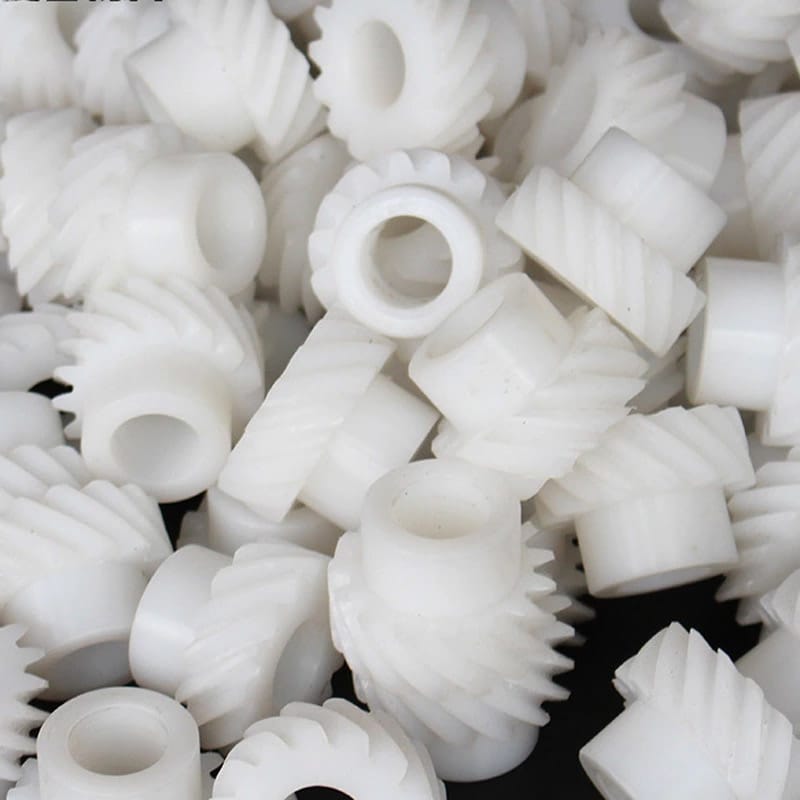
POM vs nylon parts is a common comparison for machined plastic components, gears, bushings, rollers, guide blocks, pulleys, and wear parts. Both materials are widely used in industrial equipment, but they are not interchangeable. Choosing between POM vs nylon parts should be based on dimensional stability, wear, moisture, load, impact, surface finish, and the way the part will be produced.
Why Buyers Compare POM and Nylon
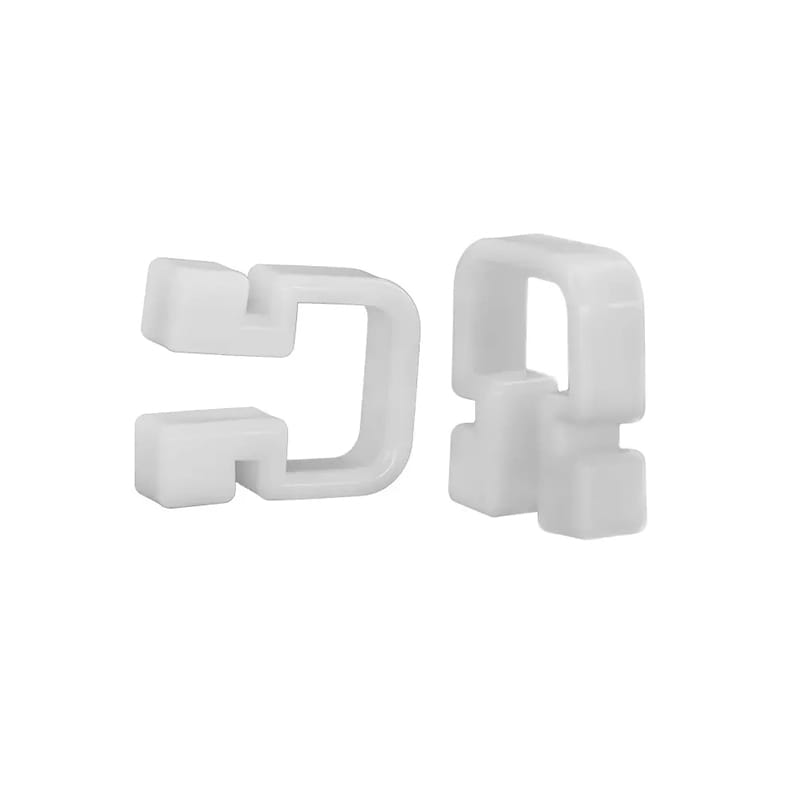
OEM buyers compare POM vs nylon parts because both materials can be machined into accurate industrial components and both can reduce weight compared with many metal parts. They can also lower friction, reduce noise, and protect mating components. The difference is how each material behaves under moisture, load, friction, and repeated movement.
POM, also called acetal, is often selected for smooth machining, low friction, and stable dimensions. Nylon is often selected for toughness, wear resistance, and mechanical strength. When comparing POM vs nylon parts, a buyer should avoid choosing only from a catalog description. The better approach is to map the material to the actual machine function.
For background, readers can review general references on polyoxymethylene and nylon. For manufacturing context, CNC milling and injection moulding explain two common production routes. Final material choice still depends on the exact grade and working condition.
Where POM Parts Work Well
POM is often useful when the part needs a clean machined surface, controlled dimensions, and smooth sliding or rotating movement. In POM vs nylon parts decisions, POM is frequently considered for small gears, sleeves, spacers, bushings, precision blocks, and turning parts where fit matters. Huadao’s POM CNC turning parts page is a relevant example for buyers working with round or lathe-machined components.
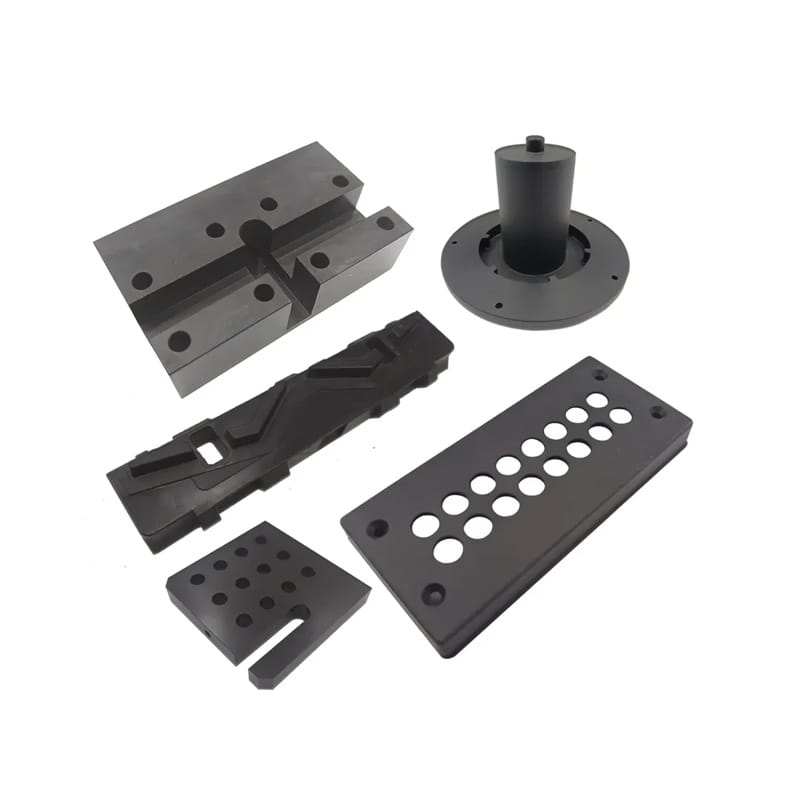
POM is not automatically the answer for every precision-looking part. If the part must absorb impact, handle high shock load, or work in a rough abrasive condition, nylon or another engineering plastic may be a better candidate. This is why POM vs nylon parts should be reviewed with the load, assembly method, and movement type together.
Where Nylon Parts Work Well
Nylon is widely used for industrial rollers, gears, pulleys, guide components, and wear-resistant parts. In POM vs nylon parts comparisons, nylon is often favored when the part needs toughness and mechanical strength. It can be a good choice for components that see repeated contact, load, or motion, provided moisture absorption and dimensional change are considered.
Huadao’s custom nylon conveyor roller, custom nylon plastic pulley with bearing, and PA nylon injection molded parts show several ways nylon can be used in industrial equipment. For larger machined shapes, custom CNC machined plastic parts is also relevant.
Decision Table
The table below gives a practical starting point. It is not a substitute for engineering review, but it helps procurement teams ask better questions when comparing POM vs nylon parts for a custom project.
| Requirement | Often Consider POM | Often Consider Nylon |
|---|---|---|
| Dimensional stability | Strong candidate | Check moisture and tolerance needs |
| Impact and toughness | Review carefully | Strong candidate |
| Low friction sliding | Good candidate | Good candidate depending on load and grade |
| Precision turning | Often preferred | Possible with proper design |
| Wear under load | Depends on surface and load | Often useful in industrial equipment |
When the application involves conveyor contact, guides, or wear surfaces, it may also be worth comparing UHMWPE or HDPE. Huadao’s UHMWPE and HDPE plastic mechanical parts page and the custom CNC plastic parts DFM guide provide useful internal references for broader material decisions.
Moisture is one of the details that often separates POM vs nylon parts in practice. Nylon can absorb moisture, and that can affect dimensions in some assemblies. In a loose guide part, this may not matter much. In a tight bushing, gear, or bearing seat, it may matter a great deal. POM is often more dimensionally stable in this respect, which is why POM vs nylon parts should be reviewed together with tolerance and environment instead of only strength.
Impact is another key factor. If the component receives shock load, handles vibration, or works where equipment alignment is imperfect, nylon may be more forgiving. POM can still be useful in many moving parts, but POM vs nylon parts should be compared against the type of force the part will see. A smooth precision spacer, a loaded roller, and a gear tooth do not fail in the same way.
Production volume can also influence the decision. For prototypes, repair parts, and low-volume custom work, CNC machining allows POM vs nylon parts to be tested without committing to a mold. For stable high-volume designs, injection molding may be considered if the shape and material are suitable. Buyers should ask whether the first goal is quick verification, repeat production, tighter cost control, or long-term durability.
Drawing and Quotation Tips
To get a useful quotation, send the drawing, sample photos, critical tolerances, load, temperature, movement type, contact surface, and expected quantity. If the part is replacing metal, explain why the change is being considered: noise, weight, corrosion, friction, safety, or easier maintenance. That reason can change the choice between POM vs nylon parts.
If there is no drawing, send measurements from several positions and explain which surfaces are functional. A supplier can often help with POM vs nylon parts only after understanding where the part contacts a shaft, housing, chain, belt, or mating component. Mark any dimensions that cannot change, and separate them from non-critical outside features. This makes the quotation more accurate and helps the manufacturer suggest POM vs nylon parts that support the working function.
- Mark shaft holes, bearing seats, and sliding surfaces as critical dimensions
- Explain whether the part rotates, slides, guides, spaces, or supports load
- Describe water, oil, dust, chemicals, and cleaning exposure
- Tell the supplier if prototypes or small batch production are needed first
POM vs nylon parts is not a one-size answer. POM is often attractive for stable, smooth, machined parts, while nylon is often attractive for tough, load-bearing, wear-related components. The best choice comes from matching material behavior to the equipment function, then designing the part around manufacturable tolerances and real service conditions.